Self-DoS due to template injection via email field in password reset form on access.acronis.com
The password reset form on access.acronis.com showed template injection via the email field, causing a self-DoS; the program saw no direct security implications.

- Disclosed after 10 months
Summary by the program
Self-DoS is possible on https://access.acronis.com due to template injection in password reset form. At the moment, we do not see any security implications as a direct result of this behavior.
The report
Summary
HI acronis security team , how are you I hope everyone is OK in the other side of the screen . I found Template Injection in [https://access.acronis.com/reset_password/new] via the mail input .
Steps To Reproduce:
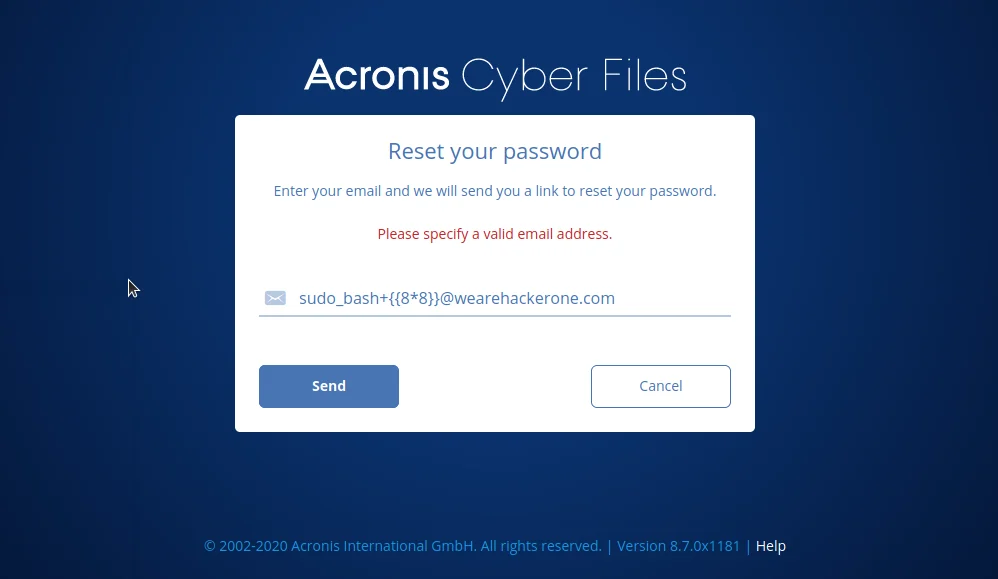
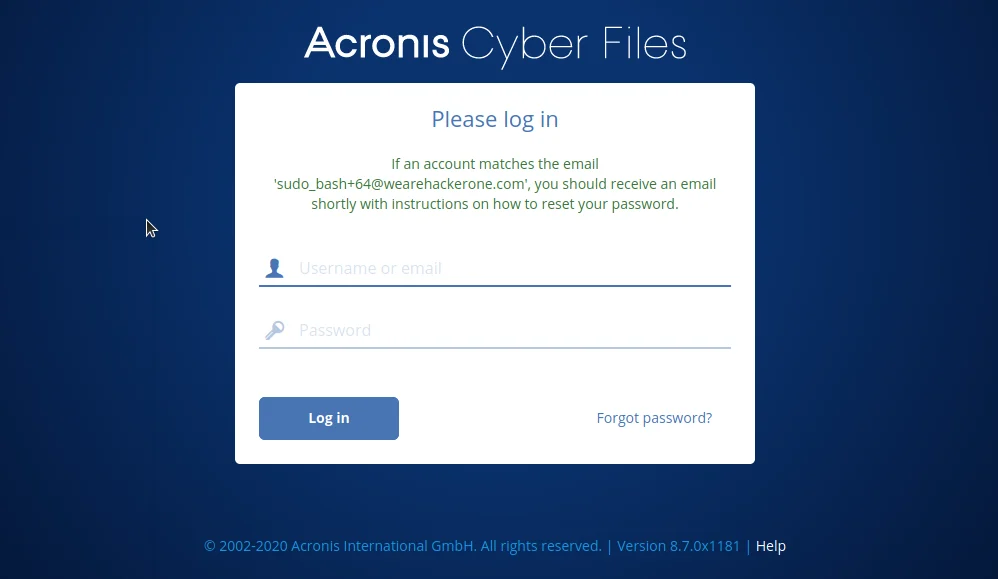
- Open [https://access.acronis.com/reset_password/new] and Enter the mail Payload : sudo_bash{{8*8}}@wearehackerone.com
- After submite the mail , The resulte will Reflect in the page with the mail adress .
Impact
- AngularJs CCTI may lead to xss .
Attachments
Not written yet. The AI write-up for this report has not been written yet. The Original tab links to the source.
How it worked
Root cause
Likely the application passed the email input into a template engine without proper sanitisation, allowing template expressions to be evaluated.
Impact
The template injection could only cause a self-denial of service for the user submitting the form; the program stated it saw no direct security implications.
What the attacker needed
Access to the password reset page
Explained by bugbounty.wiki with AI from the original and checked against quotes from it; it can still be wrong. Read the original before relying on a detail.
Not written yet. The AI write-up for this report has not been written yet. The Original tab links to the source.
A template injection happens when a website treats user input as part of a template. Here, an email containing a small arithmetic expression was reflected in the page, causing a self-DoS for that user. The program saw no direct security implications.
What is DoS?
A request that exhausts resources or crashes a component. Many programs forbid testing it; reports usually show it from code, not by attacking.


