XXE through injection of a payload in the XMP metadata of a JPEG file
The avatar upload feature parsed JPEG files with an XML parser that allowed external entities, so an attacker could inject an XMP metadata payload to make the server fetch an external DTD and potentially read local files. The researcher confirmed the vulnerability by receiving a callback from the server and later escalated it to return the contents of /etc/passwd.

- Triaged in 24 hours
- Fixed in 12 days
- Disclosed after 19 days
Summary by the program
Researcher identified an XXE issue via a JPEG file upload. Researcher worked with us to validate the vulnerability, managed to escalate to return the contents of /etc/passwd and confirmed the issue was then fixed. Informatica responded by initially disabling the feature and then further blocking access to the vulnerable endpoint. Our thanks to moebius for the report, and the detailed writeup associated with it. Some technical details have been redacted in the below.
Should there be any queries, please contact us via [email protected]
The report
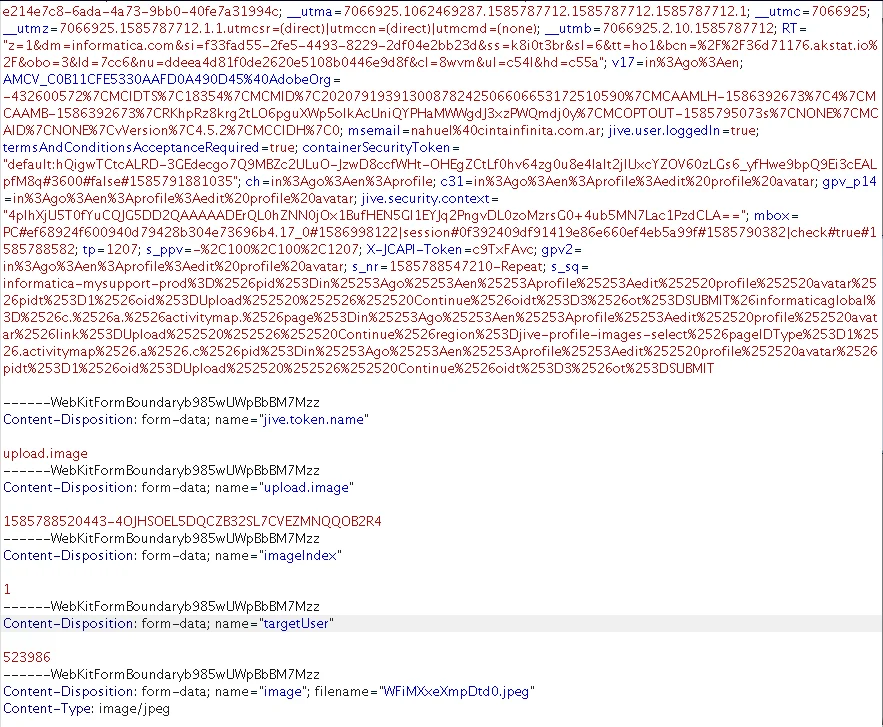
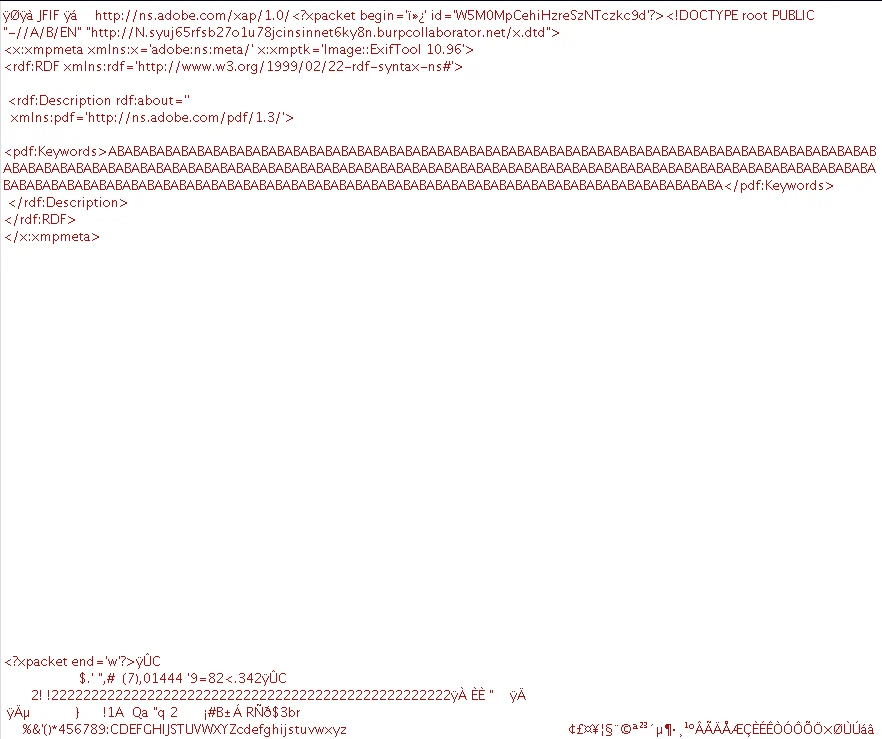
Users are able to change their avatar picture. The avatar picture upload functionality is prone to a XXE attack when parsing the image file. Specifically, the XXE attack is executed through the injection of a payload in the "XMP metadata" of the uploaded JPEG file.
Proof of concept (note the "Burp Collaborator Payload pointing to an External DTD"):
POST /edit-profile-avatar!uploadImage.jspa HTTP/1.1
Host: ███████informatica.com

  [...REDACTED...PLEASE.SEE.SCREENSHOTS.FOR.FULL.PAYLOAD]
And I received the following calls (note the User-Agent "Java██████" confirming the vulnerability):
Interaction 0
Type: HTTP
Client IP: ███████
Timestamp: 2020-Apr-02 01:44:27 UTC
Protocol: HTTP

RAW HTTP request:

GET /x.dtd HTTP/1.1
Cache-Control: no-cache
Pragma: no-cache
User-Agent: Java██████
Host: N.syuj65rfsb27o1u78jcinsinnet6ky8n.burpcollaborator.net
Accept: text/html, image/gif, image/jpeg, *; q=.2, */*; q=.2 Connection: keep-alive
Similar calls were received from another IP address: 146.112.138.73
Furthermore, the affected host should not be allowed to start a new connection to the Internet.
Impact
This issue can be abused to read arbitrary files and list directory contents from the filesystem of the XML processor application. I didn't try any reading, but JAVA (JSPA is a JAVA Servlet File) is calling my external service, so the vulnerability is confirmed.
Attachments
Not written yet. The AI write-up for this report has not been written yet. The Original tab links to the source.
How it worked
Root cause
Likely the XML parser used to process XMP metadata in uploaded JPEG files was configured to allow external entity resolution, enabling XXE.
What the attacker needed
Ability to upload an avatar image; attacker-controlled server for DTD
The fix
The feature was initially disabled and then access to the vulnerable endpoint was blocked, and the issue was confirmed fixed.
How it was found
- The attacker uploads a JPEG file with a crafted XMP metadata payload that references an external DTD.
- The server processes the image and its XML parser resolves the external entity, making an HTTP request to the attacker's Burp Collaborator server.
- The attacker observes the incoming request with a Java User-Agent, confirming the vulnerability.
Explained by bugbounty.wiki with AI from the original and checked against quotes from it; it can still be wrong. Read the original before relying on a detail.
Not written yet. The AI write-up for this report has not been written yet. The Original tab links to the source.
When a website accepts an image file, it may read hidden information inside the file, such as metadata. If the software that reads this metadata is not careful, it can be tricked into fetching other files or web addresses. Here, the attacker put special instructions in the image's metadata, and the server followed them, proving it could be made to access external resources.
What is XXE?
An XML parser resolves entities the attacker defines, reading local files or making the server send requests.




