attack in not an authorized user
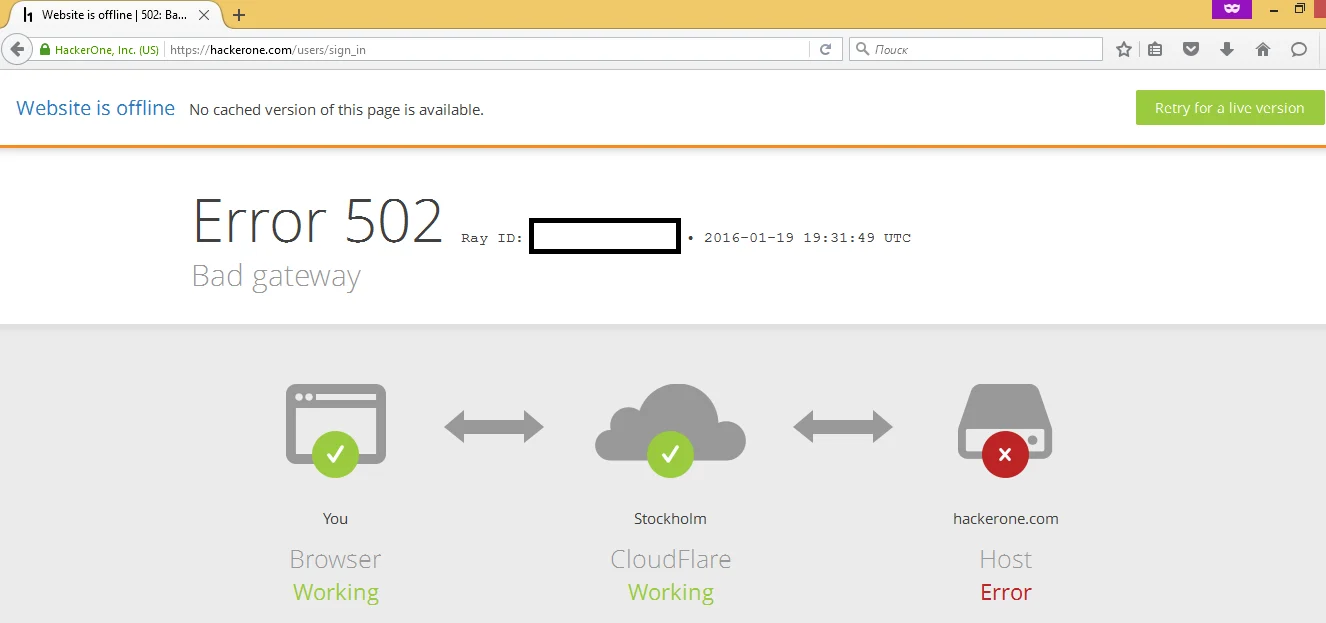
A very long URL caused CloudFlare to return a 502 error, and for signed-out users this resulted in a persistent 'website offline' page until cookies were cleared. The issue was mitigated by increasing the load balancer proxy buffer size.

- Triaged in 28 hours
- Fixed in 15 days
- Disclosed after 28 days
Summary by the program
Fabricating a large HackerOne url resulted in a 502 response from CloudFlare as the initial header was too large to process for our load balancer proxied by CloudFlare. If the user requesting the url was signed in it would result in a broken reports page. But if the user was signed out this would result in a CloudFlare page stating "This website is offline" which would persist until a browser restart or cookie removal.
Increasing the load balancer proxy buffer size mitigated the issue.
Summary by the researcher
███████████████████████████ ███████▀▀▀░░░░░░░▀▀▀███████ ████▀░░░░░░░░░░░░░░░░░▀████ ███│░░░░░░░░░░░░░░░░░░░│███ ██▌│░░░░░░░░░░░░░░░░░░░│▐██ ██░└┐░░░░░░░░░░░░░░░░░┌┘░██ ██░░└┐░░░░░░░░░░░░░░░┌┘░░██ ██░░┌┘▄▄▄▄▄░░░░░▄▄▄▄▄└┐░░██ ██▌░│██████▌░░░▐██████│░▐██ ███░│▐███▀▀░░▄░░▀▀███▌│░███ ██▀─┘░░░░░░░▐█▌░░░░░░░└─▀██ ██▄░░░▄▄▄▓░░▀█▀░░▓▄▄▄░░░▄██ ████▄─┘██▌░░░░░░░▐██└─▄████ █████░░▐█─┬┬┬┬┬┬┬─█▌░░█████ ████▌░░░▀┬┼┼┼┼┼┼┼┬▀░░░▐████ █████▄░░░└┴┴┴┴┴┴┴┘░░░▄█████ ███████▄░░░░░░░░░░░▄███████ ██████████▄▄▄▄▄▄▄██████████ ███████████████████████████
The report
example (exit account) go to http://myfuneral.ru/hackerone.php your location https://hackerone.com/users/sign_in and Error 502 Ray ID: ***************** • 2016-01-19 19:31:49 UTC Bad gateway
I think this was due to the fact that enrolled in the cookie with an invalid redirection ssesiyami (after authorization of the user was redirected to the link which is in hackerone.php, but this site does not do)
короче все в сессию записалась трудная ссылка , которую hackerone.com не может нормально воспринимать , чтобы после авторизации направить пользователя по пути редикта
Attachments
Not written yet. The AI write-up for this report has not been written yet. The Original tab links to the source.
How it worked
Root cause
Likely the load balancer's proxy buffer was too small to handle the oversized request header, causing a 502 error.
Impact
Signed-out users could be shown a persistent offline page, and signed-in users saw a broken reports page, but the issue was mitigated by increasing the buffer size.
What the attacker needed
Victim clicks a link; victim may be signed in or out
How it was found
- Visit the provided external page that redirects to HackerOne with a very long URL.
- Observe the 502 Bad Gateway error from CloudFlare.
- If signed out, see a persistent 'website offline' page until browser restart or cookie removal.
Explained by bugbounty.wiki with AI from the original and checked against quotes from it; it can still be wrong. Read the original before relying on a detail.
Not written yet. The AI write-up for this report has not been written yet. The Original tab links to the source.
A web server has a limit on how large a request can be. If someone sends a very long web address, the server may fail and show an error page. Here, that error page stuck around for signed-out users until they cleared their browser cookies.
What is DoS?
A request that exhausts resources or crashes a component. Many programs forbid testing it; reports usually show it from code, not by attacking.




