IDOR vulnerability in unreleased HackerOne Copilot feature
A GraphQL mutation for deleting LLM conversations did not check that the conversation belonged to the requesting user. An attacker with a second account could delete another user's conversation by supplying its identifier.

- Fixed in 3 days
- Paid in 3 days
- Disclosed after 5 days
Summary:
Hello HackerOne security team :-)
For a while now I have been monitoring H1 js files. I've just noticed some new GraphQL queries about HackerOne Copilot. While this feature has not yet been released, the vulnerability must be fixed.
DestroyLlmConversation GraphQL mutation is vulnerable to IDOR.
Steps To Reproduce
- Navigate to
https://hackerone.com/opportunities/all - Execute this JS command to show
Hackerone CopilotGUI
document.querySelectorAll('div').forEach(e => {
    e.classList.remove('hidden');
    e.classList.remove('dark:text-white');
});
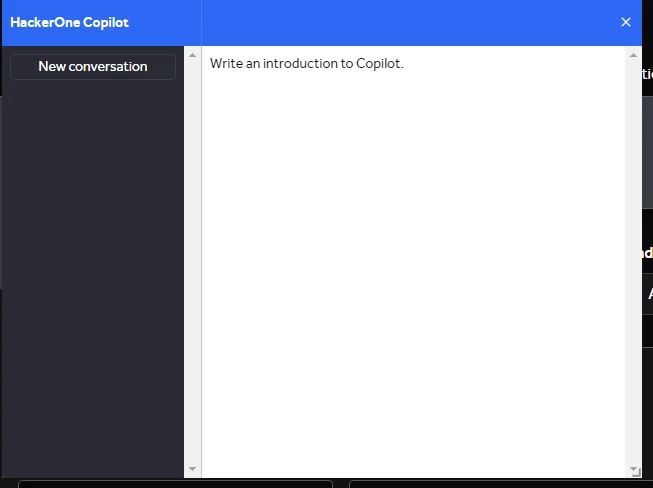
- Hackerone Copilot GUI will appear, here you can create a new conversation. Looks like you can't talk to LLM at the moment.
- After creating a new conversation, look for
"operationName":"NewConversation",graphql request in yourProxy Historyand store somewhere the value ofdata.newConversation.llm_conversation.idfrom the response. - From the second (attacker) account, send the following graphql request:
{"operationName":"DestroyLlmConversation","variables":{"llmConversationId":"#"},"query":"\n mutation DestroyLlmConversation($llmConversationId: ID!) {\n destroyConversation(input: { llm_conversation_id: $llmConversationId }) {\n destroyed\n }\n }\n"}
- Go back to the victim account, refresh the page, execute the script again, and notice that the conversation is gone.
Impact
This vulnerability allows the attacker to remove any LLM conversation in the unreleased HackerOne Copilot feature. This feature has not been released yet although this might still be vulnerable in the future when this feature is released.
Not written yet. The AI write-up for this report has not been written yet. The Original tab links to the source.
How it worked
Root cause
Likely the destroyConversation mutation looked up the conversation by the supplied identifier without verifying it belonged to the authenticated user.
Impact
An attacker could delete any LLM conversation in the unreleased Copilot feature, though the feature is not yet live and may still be vulnerable once released.
What the attacker needed
Two accounts; victim's conversation identifier; unreleased feature reachable via UI script
How it was found
- Open the opportunities page and run a script to reveal the hidden Copilot interface.
- Create a new conversation in the Copilot interface.
- Find the NewConversation GraphQL request in proxy history and note the conversation identifier from the response.
- From a second account, send a DestroyLlmConversation GraphQL request using that identifier.
- Return to the first account, refresh, and see the conversation is gone.
Explained by bugbounty.wiki with AI from the original and checked against quotes from it; it can still be wrong. Read the original before relying on a detail.
Not written yet. The AI write-up for this report has not been written yet. The Original tab links to the source.
Every conversation has a unique identifier, like a ticket number. The server accepted a delete request for any identifier without checking who owned it. So anyone who learned another person's identifier could delete that person's conversation.
What is IDOR?
One user can read or change another user's data, usually by changing an identifier the server trusts without checking who is asking. One of the most paid bug classes on web programs.

