**Unauthenticated IDOR allows modification of payment customer billing information**
The payment billing information edit endpoint lacked authentication and authorization checks, allowing anyone with a payment identifier to access and modify customer billing details. An unauthenticated attacker could change stored billing name and address information persistently.

- Triaged in 4 days
- Fixed in 7 days
- Disclosed after 44 days
The application contains an access control issue in the payment billing information edit functionality. An unauthenticated user can access the payment edit endpoint and modify the billing information associated with a payment without any authorization check.
The issue occurs because the application allows access to the edit page using only the payment identifier in the URL. The server does not verify whether the requester is logged in or has permission to modify the customer information linked to that payment.
Steps to reproduce:
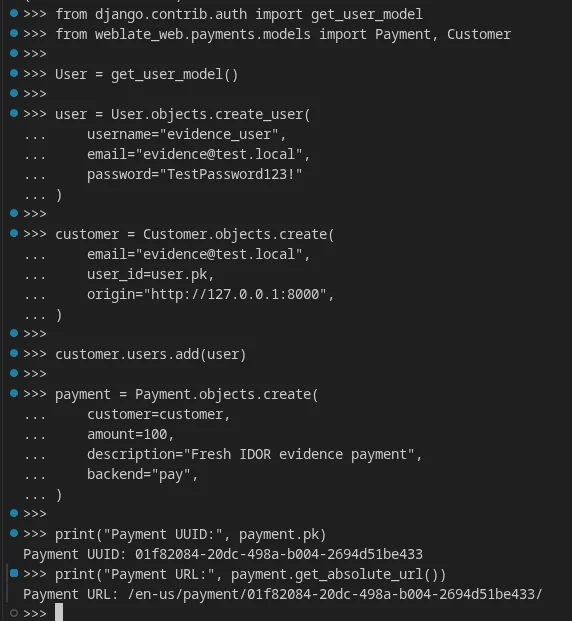
- Create a payment object and note the payment UUID.
Example:
01f82084-20dc-498a-b004-2694d51be433
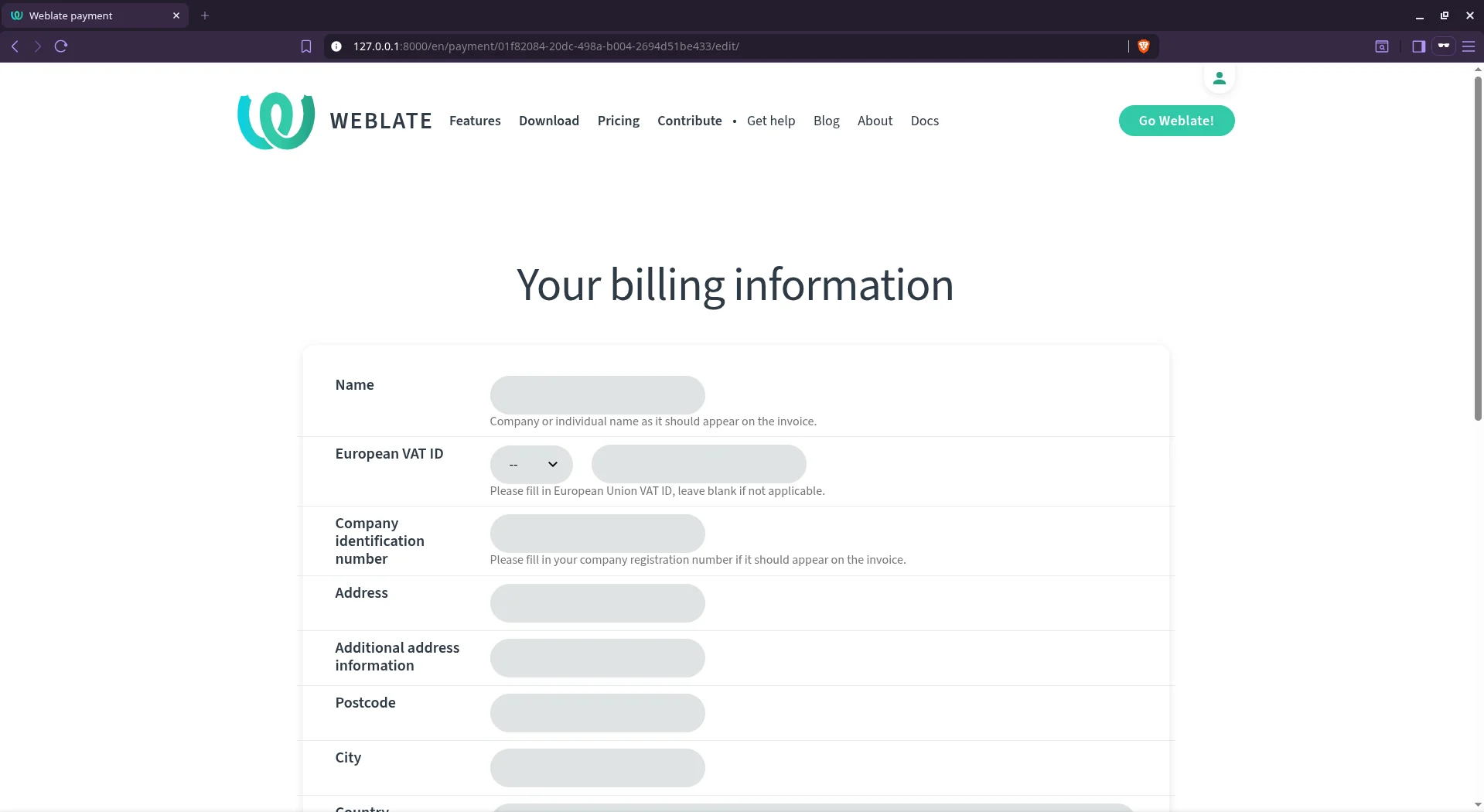
- Open the following URL in a browser where you are not logged in:
http://127.0.0.1:8000/en/payment/01f82084-20dc-498a-b004-2694d51be433/edit/
-
Observe that the payment billing information edit page is accessible without authentication.
-
Modify the billing information fields.
Example changes:
Name:
IDOR_EVIDENCE_TEST

Address:
IDOR_ADDRESS_TEST
-
Submit the form.
-
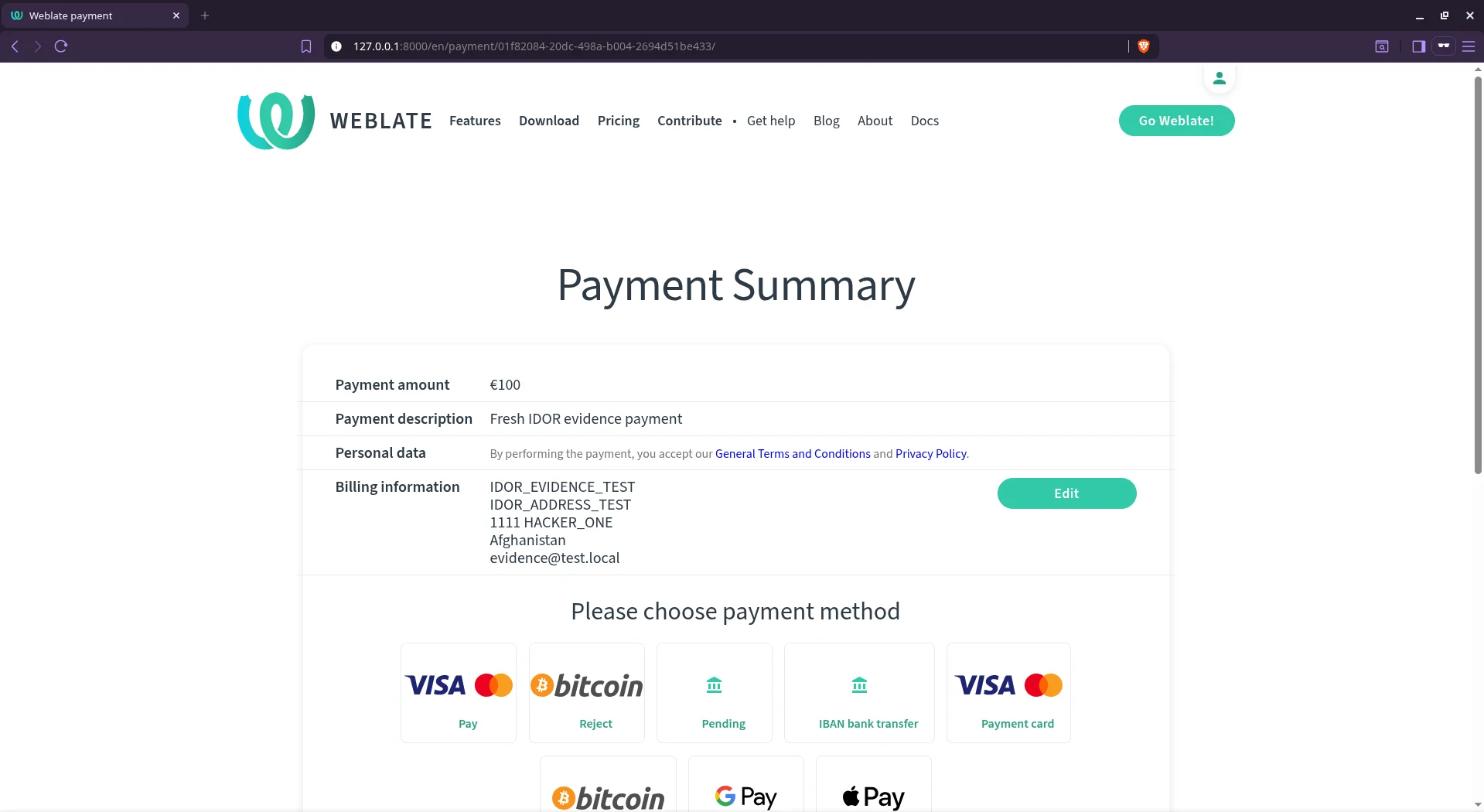
The application accepts the request and updates the customer billing information.
-
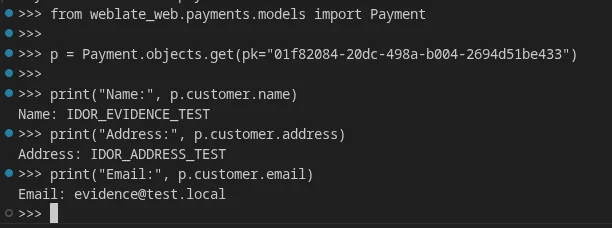
Verify that the changes are stored by checking the customer record. The modified values remain saved:
Name: IDOR_EVIDENCE_TEST
Address: IDOR_ADDRESS_TEST
This demonstrates that an unauthenticated attacker can modify persistent customer billing information by accessing the payment edit endpoint directly.
The root cause appears to be missing authorization checks before allowing modification of the customer object associated with the payment.
Impact
An attacker can modify customer billing information without authentication by accessing the payment edit endpoint directly.
Successful exploitation allows unauthorized changes to stored customer data, including billing name and address information. These changes are persistent and affect the data saved in the application database.
Potential impacts include:
- Modification of customer billing records
- Incorrect customer information being stored and displayed
- Integrity loss of payment-related customer data
- Possible disruption of billing, invoicing, or payment-related workflows if modified information is used by the system
The issue affects the integrity of customer data because an unauthenticated attacker can make unauthorized changes without requiring account access or permission.
Attachments
Not written yet. The AI write-up for this report has not been written yet. The Original tab links to the source.
How it worked
Root cause
Likely missing authentication and authorization checks before allowing modification of the customer object associated with a payment.
Impact
An unauthenticated attacker could modify persistent customer billing information, causing integrity loss and potentially disrupting billing or invoicing workflows.
What the attacker needed
Knowledge of a payment UUID; no login required
How it was found
- Create a payment object and note its payment UUID.
- Open the payment edit URL in a browser while not logged in.
- Observe that the billing information edit page is accessible without authentication.
- Modify the billing information fields.
- Submit the form and see that the application accepts the request and updates the customer billing information.
- Verify that the changes are stored by checking the customer record.
Explained by bugbounty.wiki with AI from the original and checked against quotes from it; it can still be wrong. Read the original before relying on a detail.
Not written yet. The AI write-up for this report has not been written yet. The Original tab links to the source.
This is an access control flaw where a web page meant for editing payment details did not check if the visitor was logged in or allowed to make changes. Anyone who knew or guessed a payment's unique identifier could open the edit page and alter the customer's billing name and address. The changes were saved permanently, so the attacker did not need an account at all.
What is IDOR?
One user can read or change another user's data, usually by changing an identifier the server trusts without checking who is asking. One of the most paid bug classes on web programs.



