Subdomain takeover of main domain of https://www.cyberlynx.lu/
A subdomain of the main domain was pointing to a Wix DNS service that was unclaimed, allowing anyone to register it. An attacker could claim the subdomain and take full control of it.

- Triaged in 4 days
- Fixed in 3 months
- Paid in 4 days
- Disclosed after 3 months
Summary
Hi Acronis Security Team , Hope you well.
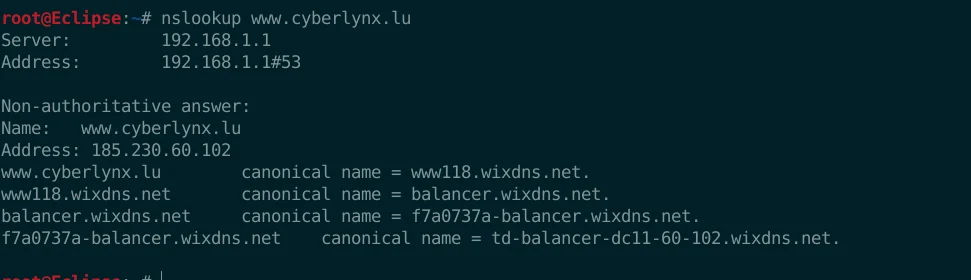
I found one of your subdomains which is www.cyberlynx.lu (One of your Acquisition) is pointing towards
www.cyberlynx.lu	canonical name = www118.wixdns.net.
www118.wixdns.net	canonical name = balancer.wixdns.net.
balancer.wixdns.net	canonical name = f7a0737a-balancer.wixdns.net.
f7a0737a-balancer.wixdns.net	canonical name = td-balancer-dc11-60-102.wixdns.net.
see the following:-
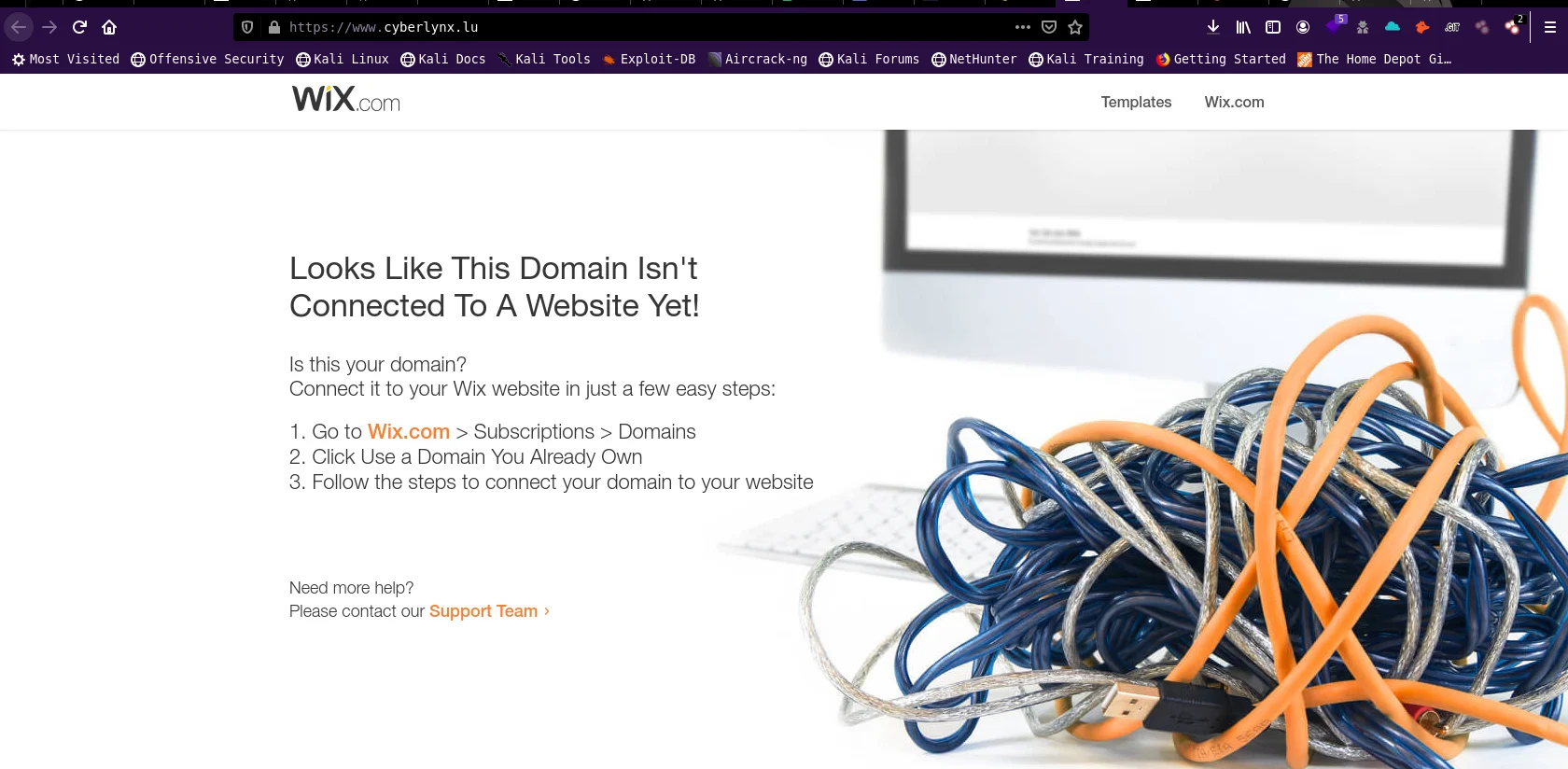
And it is unclaimed
##Steps To Reproduce: 1. Go to http://site.therealreal.com , Gives 404 2. the domain pointing towards to WIX cdn 3. Anyone can claim this subdomain
##Similar report at H1:-
Please let me know if need more info , OR need for poc video Best Regards. @doosec101
Impact
An attacker can claim this subdomain by requesting a process of registering this abandoned subdomain to his name. And attacker can fully take over this subdomain and do whatever he wants. this can cause huge damage to the website's main domain as well as to the company.
I Recommend removing the Cname and DNS connecting to it.
Context
Acronis runs a bug bounty programme on HackerOne, and the scope includes domains that came in through acquisitions. One of those is cyberlynx.lu, and the report concerns its www host, www.cyberlynx.lu. The researcher found that this host was not serving content from Acronis infrastructure at all: it was a CNAME chain ending at Wix's DNS load balancers, and the Wix site behind it was unclaimed. That combination is the classic precondition for a subdomain takeover.
A subdomain takeover happens when a DNS record for a hostname points at a third party service (a CDN, a hosting platform, a SaaS product) and the corresponding resource on that service no longer exists or was never claimed. The DNS record stays in place, so anyone who can create a resource on the third party service under the same name can have the victim's hostname resolve to content they control. The browser then treats that content as belonging to the victim's domain.
Setup
No accounts, roles or special tooling are described. The researcher only needed DNS resolution of the hostname and a browser to load the resulting page. The precondition is the DNS state itself: a CNAME from the Acronis-controlled www.cyberlynx.lu to a Wix endpoint whose site had not been claimed.
Finding it
The researcher resolved www.cyberlynx.lu and followed the CNAME chain. The full chain, as recorded in the report, is:
www.cyberlynx.lu	canonical name = www118.wixdns.net.
www118.wixdns.net	canonical name = balancer.wixdns.net.
balancer.wixdns.net	canonical name = f7a0737a-balancer.wixdns.net.
f7a0737a-balancer.wixdns.net	canonical name = td-balancer-dc11-60-102.wixdns.net.
Each line is a CNAME hop. The first hop takes the Acronis hostname off Acronis DNS and into wixdns.net, Wix's DNS zone. The remaining hops are Wix's own internal routing: a numbered front end (www118), a generic balancer, a per-site balancer identified by the hash f7a0737a, and finally a data-centre-specific balancer (dc11-60-102). The chain ends at a Wix balancer; the report does not explain what the hash identifies.
The researcher then loaded the hostname and got a 404, and concluded that the site was unclaimed. The two screenshots in the report show the DNS resolution and the resulting page.
A 404 from the Wix edge for a hostname that is CNAMEd into Wix is the signal: Wix is answering for the name, but no site is bound to it. Because Wix lets users attach custom domains to sites they create, an unclaimed name in Wix's DNS is a name someone else can attach to a site of their own.
Exploitation
The report gives the reproduction as three steps.
Step 1: Load the hostname and observe the 404
1. Go to http://site.therealreal.com , Gives 404
The step as written names a different host, site.therealreal.com, which does not match the www.cyberlynx.lu host discussed everywhere else in the report. The observable behaviour it describes is the one that matters: requesting the host returns a 404 rather than a live site. That 404 is what distinguishes an abandoned Wix binding from a working one.
Step 2: Confirm the DNS points at Wix
2. the domain pointing towards to WIX cdn
This is the CNAME chain shown above. The hostname is delegated to Wix's DNS, so Wix, not Acronis, decides what the name resolves to at the edge.
Step 3: Claim the name
3. Anyone can claim this subdomain
The researcher does not include a claim procedure, a Wix account setup or a screenshot of a successful claim. The claim rests on the fact that the name is unclaimed on Wix and that Wix allows custom domains to be attached to a site by whoever registers it. The report also links a similar public HackerOne report as precedent:
https://hackerone.com/reports/1183296
Root cause
The mistake is a dangling DNS record. www.cyberlynx.lu still carries a CNAME into wixdns.net, but the Wix site that the record was created for is gone or was never claimed, so Wix answers with a 404 and the name is free for anyone to attach to a new Wix site. The report does not explain how the record came to be left in place.
Existing defences did not stop it because DNS delegation to a third party removes the record from the owner's control: once the CNAME exists, the only party who can refuse a claim is Wix, and Wix has no way to know that www.cyberlynx.lu belongs to Acronis rather than to the next person who types it into the custom domain field. The 404 is the only warning, and it is easy to miss unless someone resolves the hostname and looks.
Impact
As the researcher puts it, an attacker can claim the subdomain by registering the abandoned name, and can then fully take over the subdomain and do whatever they want with it. Because the hostname is on the company's main domain, the report argues this can cause huge damage both to the website's main domain and to the company. The concrete consequences are not spelled out beyond that: the report does not enumerate phishing, cookie theft, malware hosting or brand abuse, and it does not demonstrate a claim.
Fix
The recommendation in the report is direct: remove the CNAME and the DNS record connecting to it. In practice that means deleting the www.cyberlynx.lu CNAME so the name no longer resolves into wixdns.net, after which there is nothing for an attacker to claim.
Variants to test
- Resolve every hostname in scope and look for CNAMEs into third party platforms (Wix, GitHub Pages, Heroku, Shopify, Fastly, Azure and similar). A positive result is a chain that ends at a provider edge rather than at infrastructure the target owns.
- For each such hostname, request it and check the response. A 404, a provider-specific "site not found" page, or a default placeholder from the platform is the signal that the backing resource is missing.
- Check acquisition domains specifically. Names inherited through mergers are the ones most likely to have been left pointing at services nobody in the current organisation remembers.
- Check the
wwwhost and other common labels (blog,shop,support,docs) on each domain, since these are the ones most often attached to hosted platforms.
Hunting notes
This class of bug hides in DNS, not in application code, so the recon signal is the CNAME chain itself. Pull the full chain for every in-scope hostname, flag any hop into a hosting or CDN provider's DNS zone, and then fetch the hostname to see whether the provider serves a real site or an error. A provider error page for a name that is clearly the target's is the strongest single indicator.
Acquisition domains are a productive place to look, because ownership changes leave records behind. The researcher's evidence here was the CNAME chain plus the 404, which is enough to show the name is dangling; the report does not include a completed claim, so the report does not include a completed claim, only the DNS state and the precedent report.
What happened, in plain words
Acronis is a company that makes backup and security software. Like many companies, it runs a bug bounty programme on HackerOne: a scheme where outside researchers who find security problems can report them and sometimes get paid. The programme covers Acronis's own websites and also domains that came to Acronis through buying other companies. One of those bought-in domains is cyberlynx.lu, and this report is about its www address, www.cyberlynx.lu.
A quick word on what a domain and a subdomain are, because everything here depends on them. A domain is the name you type to reach a website, like example.com. A subdomain is a name placed in front of it, like www.example.com or blog.example.com. The part in front is just a label; the domain owner decides what each label points to.
What the researcher found is that www.cyberlynx.lu was not being served by Acronis's own computers at all. Instead, the name was set up to hand visitors over to Wix, a website-building service where anyone can create a site. And the Wix site that this name was supposed to point to was not claimed by anyone. That combination is the classic setup for a bug called a subdomain takeover.
To understand a subdomain takeover, imagine you leave a forwarding note on your front door saying "my post now goes to this other address". If the other address is empty and anyone can move in, then anyone can start receiving your post and pretending to be you. In the same way, a DNS record (the internet's forwarding note) can point a company's name at a third-party service, and if the resource on that service is gone or was never claimed, a stranger can claim it and have the company's own name show their content. The visitor's browser then treats that content as belonging to the company's domain.
Setup
The report does not describe any accounts, roles or special tools. The researcher only needed two things: a way to look up what the name resolves to (DNS resolution), and a browser to load the resulting page. The important precondition is the DNS state itself: a CNAME from the Acronis-controlled www.cyberlynx.lu to a Wix endpoint whose site had not been claimed.
Two terms to unpack before going further. DNS (Domain Name System) is the internet's address book: it turns names people type into the addresses computers use. A CNAME (canonical name) is a specific kind of DNS record that says "this name is really another name, go look that one up instead". It is a forwarding entry, and it can be chained: name A points to name B, which points to name C, and so on until something finally gives a real address.
Finding it
The researcher looked up www.cyberlynx.lu and followed the CNAME chain, hop by hop. The full chain, as recorded in the report, is:
www.cyberlynx.lu canonical name = www118.wixdns.net.
www118.wixdns.net canonical name = balancer.wixdns.net.
balancer.wixdns.net canonical name = f7a0737a-balancer.wixdns.net.
f7a0737a-balancer.wixdns.net canonical name = td-balancer-dc11-60-102.wixdns.net.
Line by line, in plain words:
- The first line says
www.cyberlynx.luis an alias forwww118.wixdns.net. This is the key hop: it takes the Acronis name out of Acronis's own DNS and intowixdns.net, which is Wix's DNS zone (a zone is simply the set of DNS records one organisation manages). - The second line says
www118.wixdns.netis an alias forbalancer.wixdns.net. A balancer is a machine that spreads incoming traffic across several servers;www118looks like a numbered front end. - The third line says
balancer.wixdns.netis an alias forf7a0737a-balancer.wixdns.net. Thef7a0737apart is a hash, a short code that identifies one particular site. - The fourth line says that per-site balancer is an alias for
td-balancer-dc11-60-102.wixdns.net, which looks like a balancer tied to a specific data centre (dc11-60-102).
So the remaining hops are Wix's own internal routing. The chain ends at a Wix balancer; the report does not explain what the hash identifies.
The researcher then loaded the hostname in a browser and got a 404. A 404 is the standard web error meaning "not found": the server answered, but there is no page at that address. From that, the researcher concluded the site was unclaimed. The two screenshots in the report show the DNS resolution and the resulting page.
A 404 from Wix for a hostname that is CNAMEd into Wix is the signal: Wix is answering for the name, but no site is bound to it. Because Wix lets users attach custom domains to sites they create, an unclaimed name in Wix's DNS is a name someone else can attach to a site of their own.
Exploitation
The report gives the reproduction as three steps.
Step 1: Load the hostname and observe the 404
1. Go to http://site.therealreal.com , Gives 404
This step is written with a different host, site.therealreal.com, which does not match the www.cyberlynx.lu host discussed everywhere else in the report. The behaviour it describes is the one that matters: requesting the host returns a 404 rather than a live site. That 404 is what distinguishes an abandoned Wix binding from a working one. In everyday terms, it is the difference between a forwarding address where someone still lives and one where the door is open and the flat is empty.
Step 2: Confirm the DNS points at Wix
2. the domain pointing towards to WIX cdn
This refers to the CNAME chain shown above. A CDN (content delivery network) is a network of servers spread around the world that serves website content close to visitors; Wix runs its own such infrastructure. The point is that the hostname is delegated to Wix's DNS, so Wix, not Acronis, decides what the name resolves to at the edge. Once that delegation exists, Acronis's own DNS no longer controls the answer.
Step 3: Claim the name
3. Anyone can claim this subdomain
The researcher does not include a claim procedure, a Wix account setup or a screenshot of a successful claim. The claim rests on the fact that the name is unclaimed on Wix and that Wix allows custom domains to be attached to a site by whoever registers it. The report also links a similar public HackerOne report as precedent:
https://hackerone.com/reports/1183296
A precedent here means an earlier, publicly disclosed report of the same kind of bug, cited to show that the pattern is known and accepted.
Root cause
The mistake is a dangling DNS record. "Dangling" means the record still exists but the thing it points to does not. www.cyberlynx.lu still carries a CNAME into wixdns.net, but the Wix site that the record was created for is gone or was never claimed, so Wix answers with a 404 and the name is free for anyone to attach to a new Wix site.
Existing defences did not stop it because DNS delegation to a third party removes the record from the owner's control. Once the CNAME exists, the only party who can refuse a claim is Wix, and Wix has no way to know that www.cyberlynx.lu belongs to Acronis rather than to the next person who types it into the custom domain field. The 404 is the only warning, and it is easy to miss unless someone resolves the hostname and looks.
Impact
As the researcher puts it, an attacker can claim the subdomain by registering the abandoned name, and can then fully take over the subdomain and do whatever they want with it. Because the hostname is on the company's main domain, the report argues this can cause huge damage both to the website's main domain and to the company. The concrete consequences are not spelled out beyond that: the report does not enumerate phishing, cookie theft, malware hosting or brand abuse, and it does not demonstrate a claim.
Fix
The recommendation in the report is direct: remove the CNAME and the DNS record connecting to it. In practice that means deleting the www.cyberlynx.lu CNAME so the name no longer resolves into wixdns.net, after which there is nothing for an attacker to claim.
Variants to test
- Resolve every hostname in scope and look for CNAMEs into third party platforms (Wix, GitHub Pages, Heroku, Shopify, Fastly, Azure and similar). A positive result is a chain that ends at a provider edge rather than at infrastructure the target owns.
- For each such hostname, request it and check the response. A 404, a provider-specific "site not found" page, or a default placeholder from the platform is the signal that the backing resource is missing.
- Check acquisition domains specifically. Names inherited through mergers are the ones most likely to have been left pointing at services nobody in the current organisation remembers.
- Check the
wwwhost and other common labels (blog,shop,support,docs) on each domain, since these are the ones most often attached to hosted platforms.
Hunting notes
This class of bug hides in DNS, not in application code, so the recon signal is the CNAME chain itself. Pull the full chain for every in-scope hostname, flag any hop into a hosting or CDN provider's DNS zone, and then fetch the hostname to see whether the provider serves a real site or an error. A provider error page for a name that is clearly the target's is the strongest single indicator.
Acquisition domains are a productive place to look, because ownership changes leave records behind. The researcher's evidence here was the CNAME chain plus the 404, which is enough to show the name is dangling; the report does not include a completed claim, so the report does not include a completed claim, only the DNS state and the precedent report.
Glossary
- Bug bounty programme: a scheme where a company pays outside researchers for reporting security problems in its systems.
- HackerOne: the platform where this report was submitted and disclosed.
- Domain: the main name of a website, such as
example.com. - Subdomain: a name placed in front of a domain, such as
www.example.com. - DNS (Domain Name System): the internet's address book, turning names into the addresses computers use.
- DNS record: a single entry in that address book, saying what a name points to.
- CNAME (canonical name): a DNS record that says one name is an alias for another, so the lookup continues at the other name.
- CNAME chain: several CNAME records followed one after another until a real address is reached.
- DNS zone: the set of DNS records one organisation manages.
- DNS resolution: the act of looking up what a name points to.
- Subdomain takeover: a bug where a company's name points at a third-party service whose resource is unclaimed, letting anyone claim it and serve content under the company's name.
- Dangling DNS record: a record that still exists but points at something that no longer exists or was never claimed.
- CDN (content delivery network): a network of servers spread around the world that serves website content close to visitors.
- Balancer: a machine that spreads incoming traffic across several servers.
- Hash: a short code derived from data, here used to identify one particular site.
- 404: the standard web error meaning the server answered but there is no page at that address.
- Wix: a website-building service where anyone can create a site and attach a custom domain to it.
- Custom domain: a domain or subdomain a user attaches to a site hosted on a platform such as Wix.
- Unclaimed: a name on a hosting platform that no user has attached to a site, so anyone can claim it.
- Precedent: an earlier, publicly disclosed report of the same kind of bug, cited to support a new one.
- Severity: the rating a programme gives a bug, here medium.
- Bounty: the money paid for a valid report, here 100.00 USD.