subdomain take over at recommendation.algolia.com
The subdomain recommendation.algolia.com had a CNAME record pointing to recommendation.us, a domain that was for sale. An attacker could buy that domain and take over the subdomain to host malicious content.
 Originally disclosed on HackerOne
- Triaged in 4 hours
- Fixed in 4 hours
- Disclosed after 5 hours
##Description hello sir, your subdomain recommendation.algolia.com cname is recommendation.us and recommendation.us is for sell which can lead to subdomain take over ##steps to reproduce
- check the cname of recommendation.algolia.com
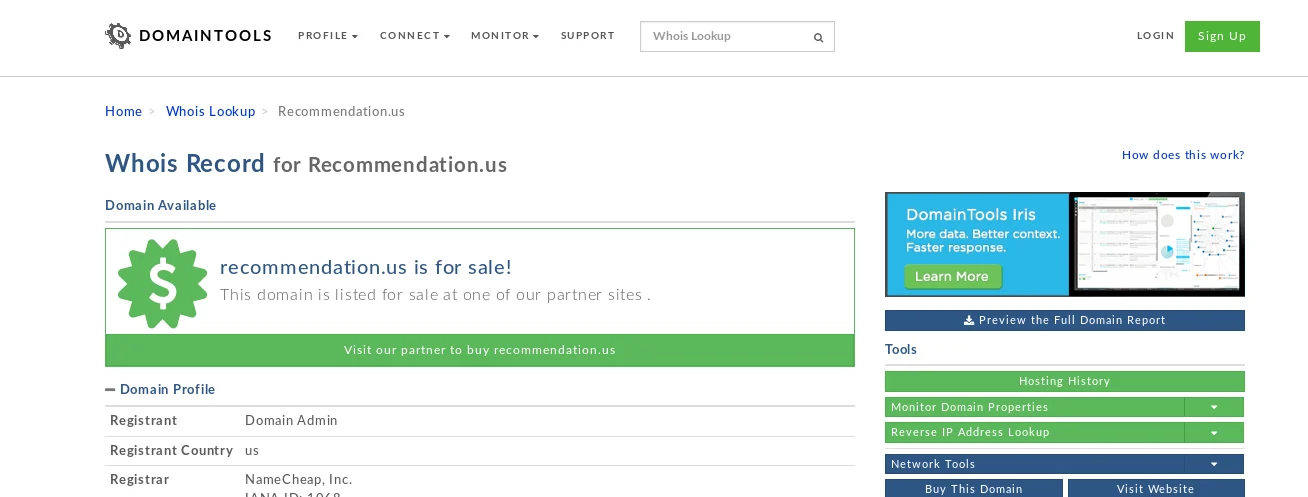
- see that the cname "recommendation.us" is for sell using lookup tool
##poc:
Impact
Attackers are able to purchase recommendation.us then they will be able to takeover recommendation.algolia.com and post porn pictures or phishing forums
What the report shows
The target is the Algolia subdomain recommendation.algolia.com. The researcher noticed that this hostname is a CNAME pointing at recommendation.us, and that the domain recommendation.us was listed for sale. A dangling CNAME to a domain that nobody in the organisation controls is the classic precondition for a subdomain takeover.
The reproduction is short and consists of two steps:
- Check the CNAME of
recommendation.algolia.com. - Use a lookup tool to see that the CNAME target,
recommendation.us, is for sale.
The proof of concept is a screenshot of a lookup for the domain.
The report was disclosed on 14 August 2019, rated medium severity with a CVSS score of 4.3, and classified as a violation of secure design principles. The report does not record a bounty amount or a remediation step.
Root cause
The likely mistake is a DNS record that was never cleaned up. The CNAME points at recommendation.us, and that domain is listed for sale. Because the target was for sale, anyone willing to pay the asking price could acquire it and inherit control over everything the CNAME resolves to.
Impact
The report states that an attacker who purchases recommendation.us would be able to take over recommendation.algolia.com and use it to host pornographic images or phishing forums. The report does not claim any specific user data exposure or cookie theft.
How this kind of bug works
A subdomain takeover happens when a DNS record on the victim's zone points at a resource that the victim no longer controls, and that resource can be claimed by a third party. The common shapes are:
- A CNAME to a domain name that has expired or was never registered.
- A CNAME to a SaaS provider (hosting, CDN, status pages, marketing tools) where the project or bucket behind the hostname has been deleted, so the provider will hand the same name to the next customer.
- A record pointing at an IP address that is now unallocated and can be obtained from the hosting provider.
The mechanism is the same in each case: the DNS answer is still authoritative for the victim's name, but the content behind it is chosen by whoever claims the target. Browsers treat the result as first-party content on the victim's origin, so cookies scoped to the parent domain, CSP allowances and user trust all apply.
Defences are process and inventory: keep a register of every DNS record and the service it points at, remove records when a service is decommissioned, and verify ownership claims at the provider before a hostname can be attached.
How to test for it
- Enumerate hostnames for the target through certificate transparency logs, passive DNS, search engine results and wordlists.
- Resolve each hostname and record the CNAME chain and final answer. Look for targets on third-party platforms, and for targets that fail to resolve at all.
- For each dangling target, check whether the name is registered. A WHOIS or DNS lookup showing the domain is available, parked for sale, or expired is a strong signal.
- For SaaS targets, request the hostname and read the error page. Provider-specific "no such app", "bucket not found" or "project not found" responses indicate the resource behind the record no longer exists.
- Confirm claimability without actually claiming anything: check whether the provider lets a new account register the same project or bucket name, and whether the dangling hostname is still attached to it.
A positive result is a hostname on the target's domain whose DNS target is unclaimed and whose provider will let you attach that exact name. Common false positives are wildcard DNS records that answer for every name, CNAMEs to domains that are registered but simply not serving content, and providers that reserve deleted names for a grace period or require domain verification before attachment. A record pointing at a registered domain that the target still owns is not a takeover, even if the site is down.
How it is fixed
- Remove DNS records that point at decommissioned or unowned resources.
- Re-register or renew any domain that a production record depends on.
- At the provider level, require proof of domain ownership before a hostname can be bound to a project, bucket or app.
- Monitor DNS for records whose targets stop resolving or become available, and alert on them.
- Treat DNS inventory as part of asset management, with the same review cycle as code changes.
Hunting notes
This bug class hides in the long tail of DNS: forgotten marketing microsites, status and help-centre hostnames, staging environments, and records left behind after a migration to a new SaaS vendor. Certificate transparency is the highest-yield starting point because it captures names that never appear in the main application. Passive DNS history helps you spot a CNAME that changed target, which often means the old target was abandoned.
To get a report accepted, show the full chain: the record on the target's zone, the target that is unclaimed, and evidence that the target can be claimed by anyone. A screenshot of an availability or for-sale listing, as in this report, is enough to demonstrate the precondition; a provider error page naming the missing resource is stronger. Avoid actually taking over the hostname or serving content from it, and describe the realistic abuse (phishing, brand damage, cookie scope) rather than overstating it.
What happened, in plain words
Every website name, like algolia.com, is looked up in a system called DNS. DNS is the internet's phone book: you type a name, and DNS tells your browser which server to talk to. A subdomain is a name that sits in front of the main one, so recommendation.algolia.com is a subdomain of algolia.com. Companies use subdomains to run separate services, such as a help centre or a recommendation feature, without mixing them into the main site.
A CNAME (short for Canonical Name) is a DNS entry that says "this name is really just another name, go and look that one up instead". Think of it like a mail forwarding note: post sent to your old address is redirected to a new one. If the new address stops existing and someone else moves in, your post ends up with them.
That is exactly what the researcher found here. The subdomain recommendation.algolia.com had a CNAME pointing at the domain recommendation.us. The domain recommendation.us was listed for sale. Anyone could buy it. And whoever buys it inherits the traffic that the CNAME sends there, which means they effectively control what recommendation.algolia.com shows to visitors.
This is called a subdomain takeover. The name still belongs to the company, but the content behind it is chosen by a stranger.
What the report shows
The target is the Algolia subdomain recommendation.algolia.com. The researcher noticed that this hostname is a CNAME pointing at recommendation.us, and that the domain recommendation.us was listed for sale. A dangling CNAME to a domain that nobody in the organisation controls is the classic precondition for a subdomain takeover.
The reproduction is short and consists of two steps:
- Check the CNAME of
recommendation.algolia.com. - Use a lookup tool to see that the CNAME target,
recommendation.us, is for sale.
The first step shows the CNAME exists; the second shows the target domain is for sale.
The proof of concept is a screenshot of a lookup for the domain. WHOIS is a public lookup service that tells you who registered a domain, or whether it is registered at all.
The report was disclosed on 14 August 2019, rated medium severity with a CVSS score of 4.3, and classified as a violation of secure design principles. CVSS is a standard scoring system for how serious a security flaw is; 4.3 out of 10 is in the medium band. The report does not record a bounty amount or a remediation step.
Root cause
The likely mistake is a DNS record that was never cleaned up. The CNAME points at recommendation.us, and that domain is listed for sale. Because the target was for sale, anyone willing to pay the asking price could acquire it and inherit control over everything the CNAME resolves to.
Impact
The report states that an attacker who purchases recommendation.us would be able to take over recommendation.algolia.com and use it to host pornographic images or phishing forums. Phishing is a fake page that imitates a real service to trick people into typing passwords or payment details. The report does not claim any specific user data exposure or cookie theft.
In general, how this kind of bug works
A subdomain takeover happens when a DNS record on the victim's zone points at a resource that the victim no longer controls, and that resource can be claimed by a third party. The common shapes are:
- A CNAME to a domain name that has expired or was never registered.
- A CNAME to a SaaS provider (hosting, CDN, status pages, marketing tools) where the project or bucket behind the hostname has been deleted, so the provider will hand the same name to the next customer.
- A record pointing at an IP address that is now unallocated and can be obtained from the hosting provider.
The mechanism is the same in each case: the DNS answer is still authoritative for the victim's name, but the content behind it is chosen by whoever claims the target. Browsers treat the result as first-party content on the victim's origin, so cookies scoped to the parent domain, CSP allowances and user trust all apply. A cookie is a small piece of data a site stores in your browser to remember you, for example to keep you logged in; if a stranger controls a subdomain, cookies set for the parent domain may be sent to them.
Defences are process and inventory: keep a register of every DNS record and the service it points at, remove records when a service is decommissioned, and verify ownership claims at the provider before a hostname can be attached.
In general, how to test for it
- Enumerate hostnames for the target through certificate transparency logs, passive DNS, search engine results and wordlists. Certificate transparency logs are public records of every security certificate issued for a website name, so they reveal names that are easy to miss.
- Resolve each hostname and record the CNAME chain and final answer. Look for targets on third-party platforms, and for targets that fail to resolve at all.
- For each dangling target, check whether the name is registered. A WHOIS or DNS lookup showing the domain is available, parked for sale, or expired is a strong signal.
- For SaaS targets, request the hostname and read the error page. Provider-specific "no such app", "bucket not found" or "project not found" responses indicate the resource behind the record no longer exists.
- Confirm claimability without actually claiming anything: check whether the provider lets a new account register the same project or bucket name, and whether the dangling hostname is still attached to it.
A positive result is a hostname on the target's domain whose DNS target is unclaimed and whose provider will let you attach that exact name. Common false positives are wildcard DNS records that answer for every name, CNAMEs to domains that are registered but simply not serving content, and providers that reserve deleted names for a grace period or require domain verification before attachment. A record pointing at a registered domain that the target still owns is not a takeover, even if the site is down.
In general, how it is fixed
- Remove DNS records that point at decommissioned or unowned resources.
- Re-register or renew any domain that a production record depends on.
- At the provider level, require proof of domain ownership before a hostname can be bound to a project, bucket or app.
- Monitor DNS for records whose targets stop resolving or become available, and alert on them.
- Treat DNS inventory as part of asset management, with the same review cycle as code changes.
In general, hunting notes
This bug class hides in the long tail of DNS: forgotten marketing microsites, status and help-centre hostnames, staging environments, and records left behind after a migration to a new SaaS vendor. Certificate transparency is the highest-yield starting point because it captures names that never appear in the main application. Passive DNS history helps you spot a CNAME that changed target, which often means the old target was abandoned.
To get a report accepted, show the full chain: the record on the target's zone, the target that is unclaimed, and evidence that the target can be claimed by anyone. A screenshot of an availability or for-sale listing, as in this report, is enough to demonstrate the precondition; a provider error page naming the missing resource is stronger. Avoid actually taking over the hostname or serving content from it, and describe the realistic abuse (phishing, brand damage, cookie scope) rather than overstating it.
Glossary
- DNS: the internet's naming system that translates website names into the addresses of servers.
- Subdomain: a name placed in front of a main domain, such as
recommendation.algolia.comunderalgolia.com. - CNAME: a DNS record that points one name at another name, like a forwarding note.
- Dangling CNAME: a CNAME whose target is no longer controlled or registered by the organisation.
- Subdomain takeover: taking control of a company's subdomain by claiming the unowned resource its DNS record points at.
- WHOIS: a public lookup service showing who registered a domain, or whether it is registered.
- CVSS: a standard 0 to 10 score for the severity of a security flaw.
- Phishing: a fake page or message that imitates a real service to steal credentials or payment details.
- Cookie: a small piece of data a site stores in your browser, often to keep you logged in.
- Certificate transparency logs: public records of issued website certificates, useful for finding forgotten hostnames.
- SaaS: software sold as an online service, where a provider hosts the application for you.
- False positive: a finding that looks like a problem but is not actually exploitable.




