IDOR leads to Edit Anyone's Blogs / Websites
A user's blog/website settings could be edited by another account because the save request trusted a hidden blog identifier supplied by the client. An attacker with their own account could swap in a victim's identifier and overwrite the victim's website information.

- Triaged in 5 days
- Fixed in 13 days
- Paid in 13 days
- Disclosed after 2 months
Summary by the researcher
If you want to follow me, here is my linkedin & twitter accounts: https://twitter.com/alicanact60 https://tr.linkedin.com/in/alicanact60
@mygf
The report
Hello there, I hope all is well!
Steps:
- Go to
https://intensedebate.com/signupand create 2 accounts. - Login as victim and go to
https://www.intensedebate.com/edit-user-profile - Click
Add Blog / Websitetext and fill the form > clickSave Settingsbutton - Go to
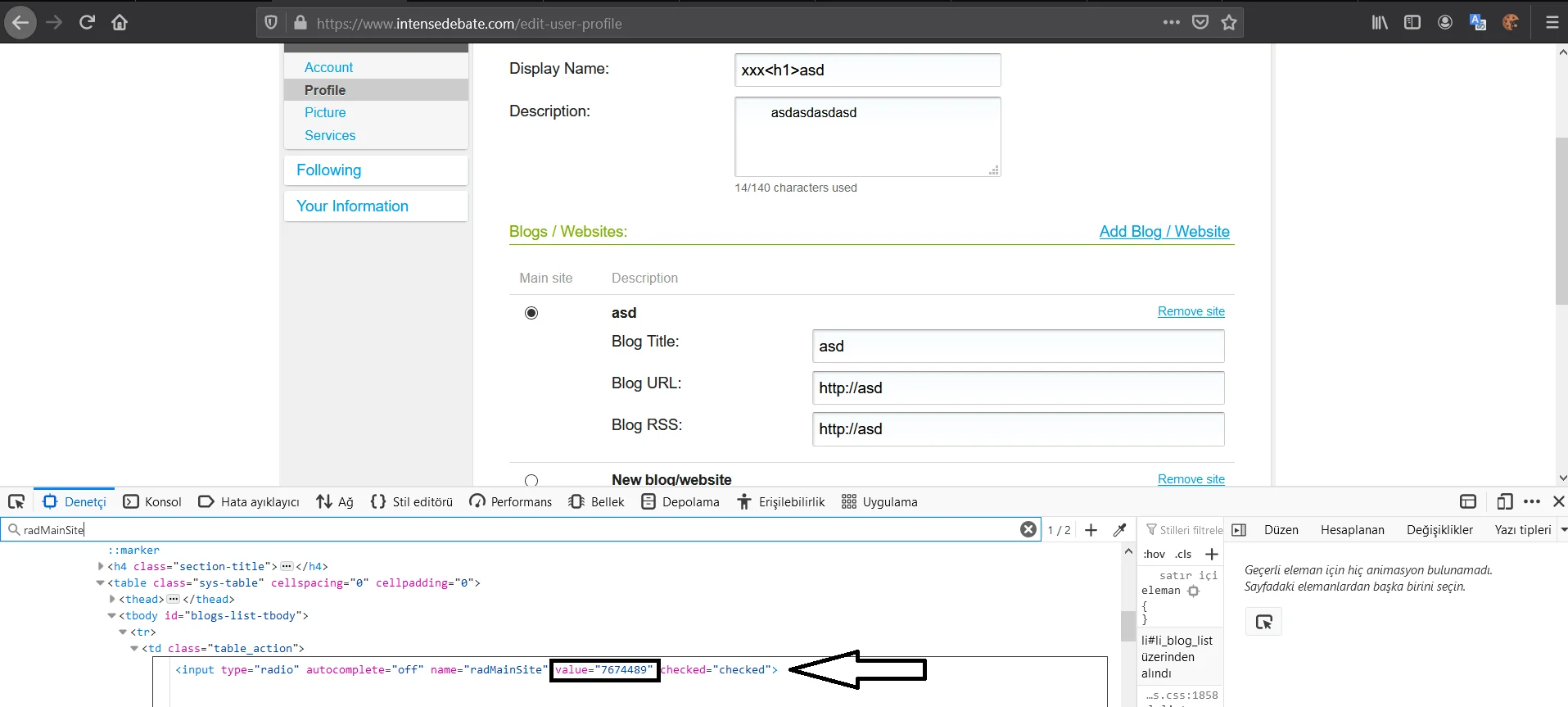
https://www.intensedebate.com/edit-user-profile, again and searchradMainSitetext in page source and copy value.
- Then login as attacker.
- Go to
https://www.intensedebate.com/edit-user-profile> clickAdd Blog / Websitetext and fill the form > clickSave Settingsbutton - Go to
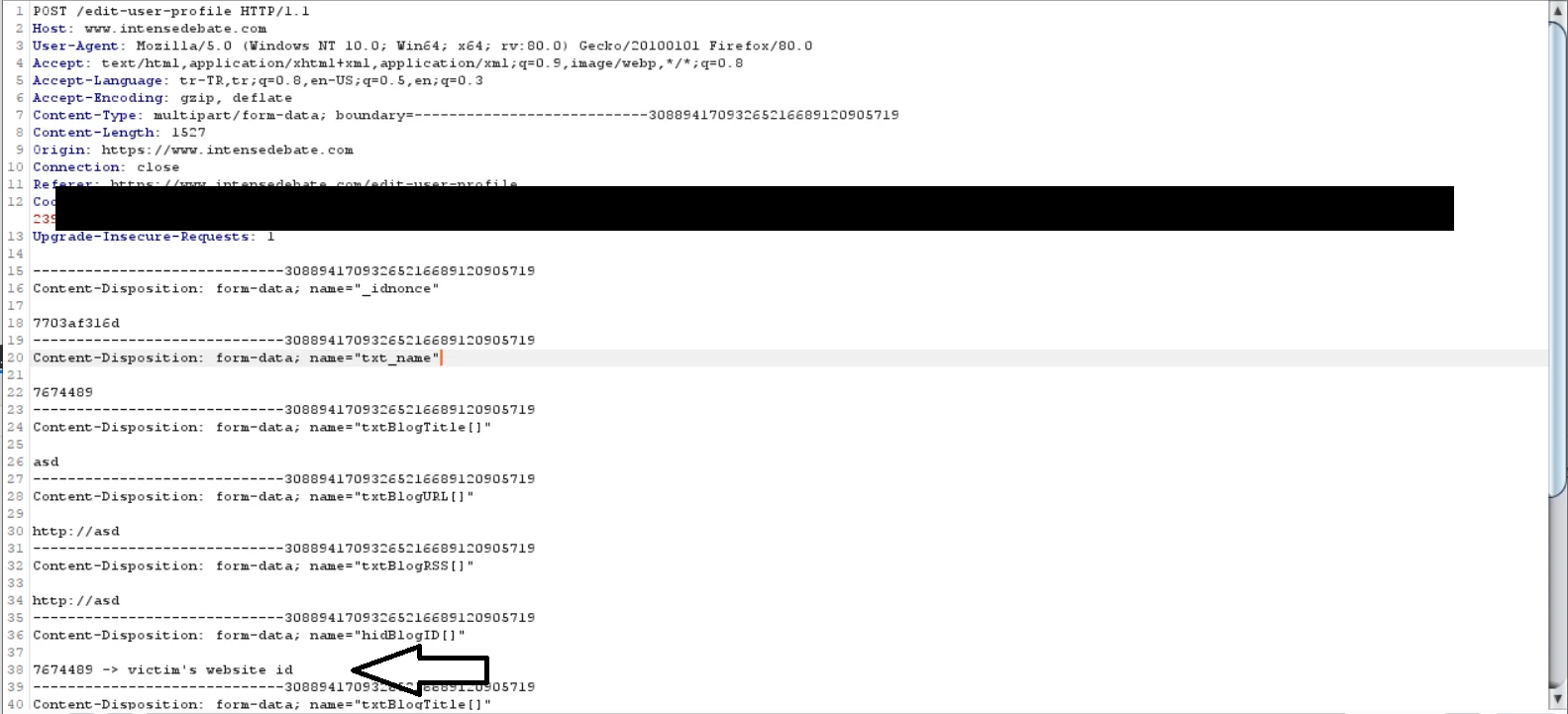
https://www.intensedebate.com/edit-user-profile, again and clickSave Settingsbutton > open burp suite and changehidBlogIDparameter with victim'shidBlogID. - Forward the request and go to victim's account. Check your website informations. You will see it's changed.
PoC:
Impact
Changing victim's website/blog informations.
Best Regards, @mygf
Attachments
Not written yet. The AI write-up for this report has not been written yet. The Original tab links to the source.
How it worked
Impact
An attacker could change another user's website/blog information.
What the attacker needed
Two free accounts; attacker can intercept requests
How it was found
- Create two accounts on the site.
- As the victim, add a blog/website via the profile edit page and save it.
- Read the victim's hidden blog identifier from the page source.
- As the attacker, add and save a blog/website of your own.
- Intercept the save request and replace the hidden blog identifier with the victim's.
- Forward the request and confirm the victim's website information has changed.
Explained by bugbounty.wiki with AI from the original and checked against quotes from it; it can still be wrong. Read the original before relying on a detail.
Not written yet. The AI write-up for this report has not been written yet. The Original tab links to the source.
When you save your profile settings, the site sends a hidden number that says which blog entry to update. The site did not check that this number belonged to the person sending the request, so anyone could put in someone else's number and change their details. This kind of flaw is called an IDOR: the server trusts an identifier from the user instead of checking ownership.
What is IDOR?
One user can read or change another user's data, usually by changing an identifier the server trusts without checking who is asking. One of the most paid bug classes on web programs.






