[ios] Address bar spoofing in Brave for iOS
A web page could make Brave for iOS show a spoofed address bar with a trusted domain, which could mislead users about the site.

- Fixed in 15 hours
- Paid in 14 hours
- Disclosed after 6 days
Hey
Summary:
I've found an address bar spoofing vulnerability in the latest version of Brave for iOS.
Products affected:
Brave for iOS 1.2.16
(Android maybe?)
PoC:
<script>
  var spoof = function(){
      document.write("<h1>This is not Google</h1>");
      document.location = "https://google.com:1234";
      setInterval(function(){document.location="https://google.com:1234";},9800);
  };
</script>

<input type="button" value="Spoof" onclick="spoof();" />
Supporting Material/References:
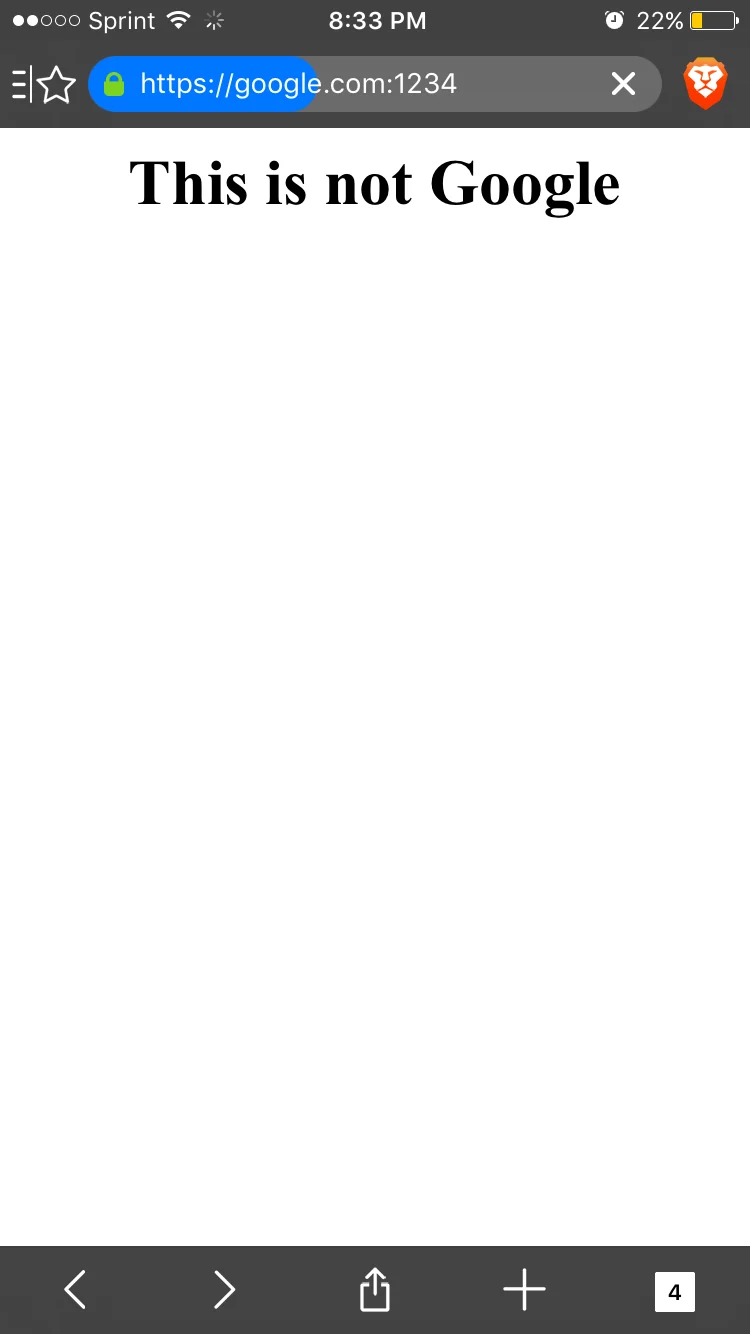
Regards, Ibram
Not written yet. The AI write-up for this report has not been written yet. The Original tab links to the source.
How it worked
Root cause
Likely the browser did not properly update or lock the address bar when a page repeatedly changed its location to a URL with a non-standard port.
Impact
An attacker could convince users they are on a trusted site.
What the attacker needed
Victim uses Brave for iOS; victim visits a malicious page; victim taps a button
How it was found
- Open a malicious web page in Brave for iOS.
- Tap the button that triggers the spoofing script.
- The script writes fake content and repeatedly sets the location to a trusted domain with a port.
- Observe the address bar spoofing effect described in the report.
Explained by bugbounty.wiki with AI from the original and checked against quotes from it; it can still be wrong. Read the original before relying on a detail.
Not written yet. The AI write-up for this report has not been written yet. The Original tab links to the source.
The address bar shows which website you are on. This report shows a malicious page could make it show a trusted name like google.com even though the page was not really Google.
What is Open redirect?
A trusted site forwards users to any address an attacker picks; rarely paid alone, often the missing link in a chain.





