OPEN REDIRECTION at every 302 HTTP CODE
The site trusted a client-supplied forwarding header when building its redirect target, so a crafted request could send the browser to an attacker-chosen domain. This makes phishing links look like they come from the legitimate site.
 Originally disclosed on HackerOne
- Disclosed after 48 days
#Summary i guess every 302 HTTP CODE on
https://publishers.basicattentiontoken.org possible to OpenRedirection
Steps To Reproduce:
- I edited the request when i got redirected from this request url
587fb66a-9fdb-4419-9d05-f38ce41666ca = PUBLISHER_ID
https://publishers.basicattentiontoken.org/publishers/587fb66a-9fdb-4419-9d05-f38ce41666ca
- Add this header to the request and page willbe direct to injectedurl
X-FORWARDED-HOST : injectedurl.com
Proof :
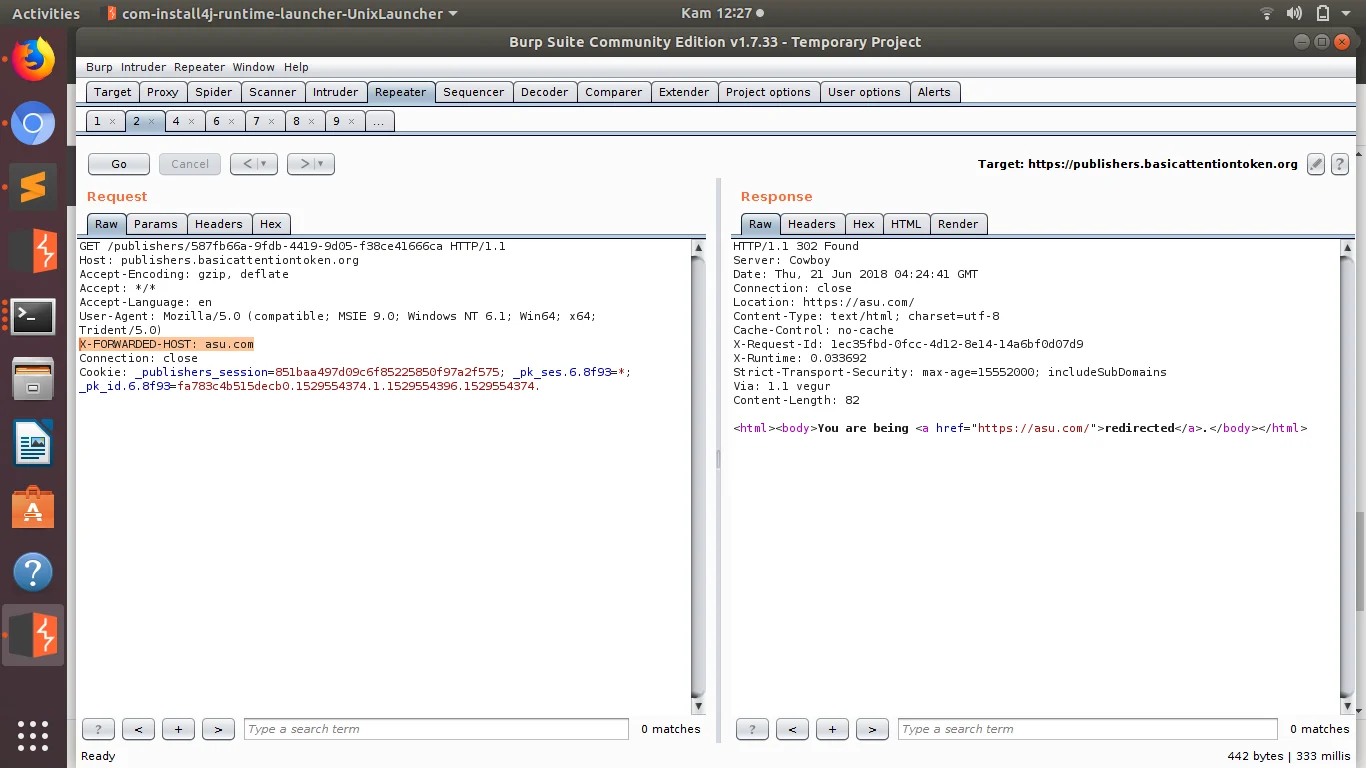
Supporting Material/References:
- BurpSuite
- TextEditor
Impact
A web application accepts a user-controlled input that specifies a link to an external site, and uses that link in a Redirect. This simplifies phishing attacks.
Not written yet. The AI write-up for this report has not been written yet. The Original tab links to the source.
How it worked
Impact
An attacker could craft links that redirect victims to an external site, which simplifies phishing.
What the attacker needed
Victim clicks a crafted link; attacker can set a request header
How it was found
- Open the publisher page that triggers a redirect to the expired token page.
- Edit the request that triggers the redirect.
- Add a forwarding host header pointing at an external domain.
- Observe the response redirect the browser to that external domain.
Explained by bugbounty.wiki with AI from the original and checked against quotes from it; it can still be wrong. Read the original before relying on a detail.
Not written yet. The AI write-up for this report has not been written yet. The Original tab links to the source.
When a site redirects, it builds the address partly from the request. Here the site trusted a header the attacker can add, so the redirect could point at their own site, making phishing links look legitimate.
What is Open redirect?
A trusted site forwards users to any address an attacker picks; rarely paid alone, often the missing link in a chain.




