Improper Validation of the Referrer header leading to Open URL Redirection
The Referer header on a Cloudflare challenge endpoint was not validated, so a crafted request caused a redirect to an attacker-controlled domain. An attacker could trick a logged-in user into clicking a link that redirects them to a malicious site, potentially exposing session cookies.
 Originally disclosed on HackerOne
- Disclosed after 31 days
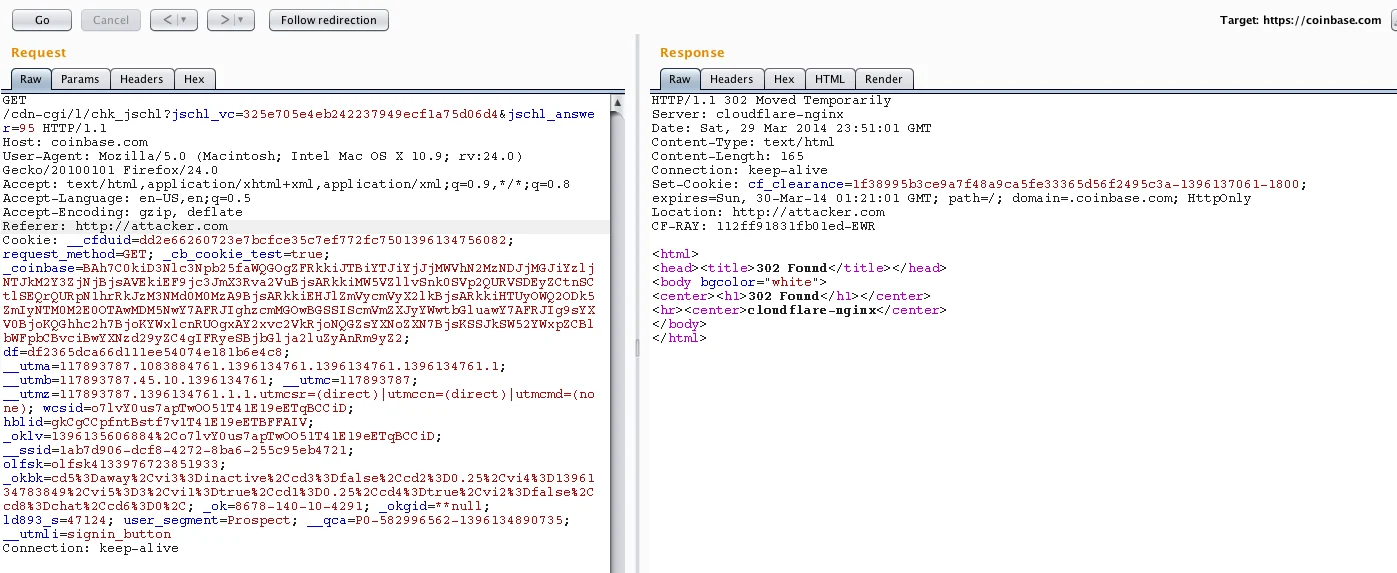
Using a proxy tool such as Burp, set the Target as https://coinbase.com. Then, send the following request:
GET /cdn-cgi/l/chk_jschl HTTP/1.1 Host: coinbase.com Referer: http://attacker.com Content-Length: 2
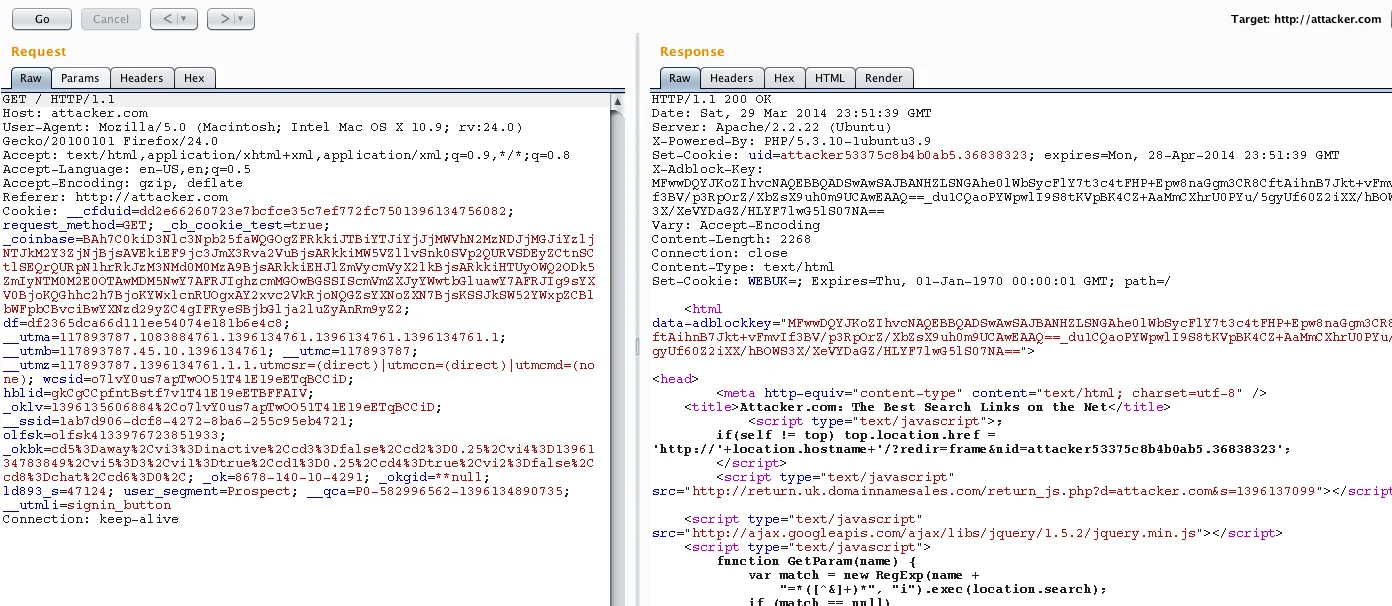
Notice the attacker's domain in the Referrer header. This value is not being validated on the server side and as a result, the user is redirected to http://www.attacker.com
Attack Scenario:
- An attacker hosts his own website www.attacker.com.
- He has a link on this website https://coinbase.com/cdn-cgi/l/chk_jschl.
- The attacker tricks a legitimate coinbase user to click on this link.
- When the user clicks on the link, he gets redirected to the attacker controlled website.
- Now, if the coinbase user is authenticated to the coinbase website in the same browser, all the cookies from the browser are sent to the attacker controlled website.
- The attacker now has access to the user's session cookies which he can use to impersonate the coinbase user and take complete control over the user's account.
Attachments
Not written yet. The AI write-up for this report has not been written yet. The Original tab links to the source.
How it worked
Root cause
Likely the server used the Referer header value directly in a redirect without validating that it pointed to a trusted domain.
Impact
The report claims a logged-in user could be redirected to a malicious site, exposing session cookies and enabling account takeover.
What the attacker needed
Victim clicks a crafted link; victim is logged in to the target site
How it was found
- Set the target to coinbase.com in a proxy tool.
- Send a request to the challenge endpoint with a Referer header pointing to an attacker domain.
- Observe that the server redirects the user to the attacker domain.
Explained by bugbounty.wiki with AI from the original and checked against quotes from it; it can still be wrong. Read the original before relying on a detail.
Not written yet. The AI write-up for this report has not been written yet. The Original tab links to the source.
When you visit a website, your browser sometimes sends a 'Referer' header that tells the site where you came from. This report shows that a specific page on coinbase.com used that header to decide where to send you next, without checking if it was safe. So an attacker could make the page send you to their own website, and if you were logged in, your browser might share your login cookies with them.
What is Open redirect?
A trusted site forwards users to any address an attacker picks; rarely paid alone, often the missing link in a chain.








