Unclaimed official s3 bucket of tendermint(tendermint-packages) which is used by many other blockchain companies in their code
An official-looking S3 bucket name used by Tendermint and referenced by other blockchain projects was unclaimed, so anyone could register it. An attacker could host their own content there and serve it to developers or companies that install packages from that bucket.
gaurav-bhatia Follow with hecked and 172draco
 Originally disclosed on HackerOne
- Triaged in 8 months
- Fixed in 12 months
- Paid in 12 months
- Disclosed after 15 months
Summary:
I have found an official unclaimed s3 bucket of tendermint i.e. http://tendermint-packages.s3-website-us-west-1.amazonaws.com/ which is also used by many other blockchain companies and developers .
Steps To Reproduce:
- Create a s3 bucket with name tendermint-packages and us west1 region
- Make the settings and change it as a static website
- You have successfully taken the s3 bucket .
POC
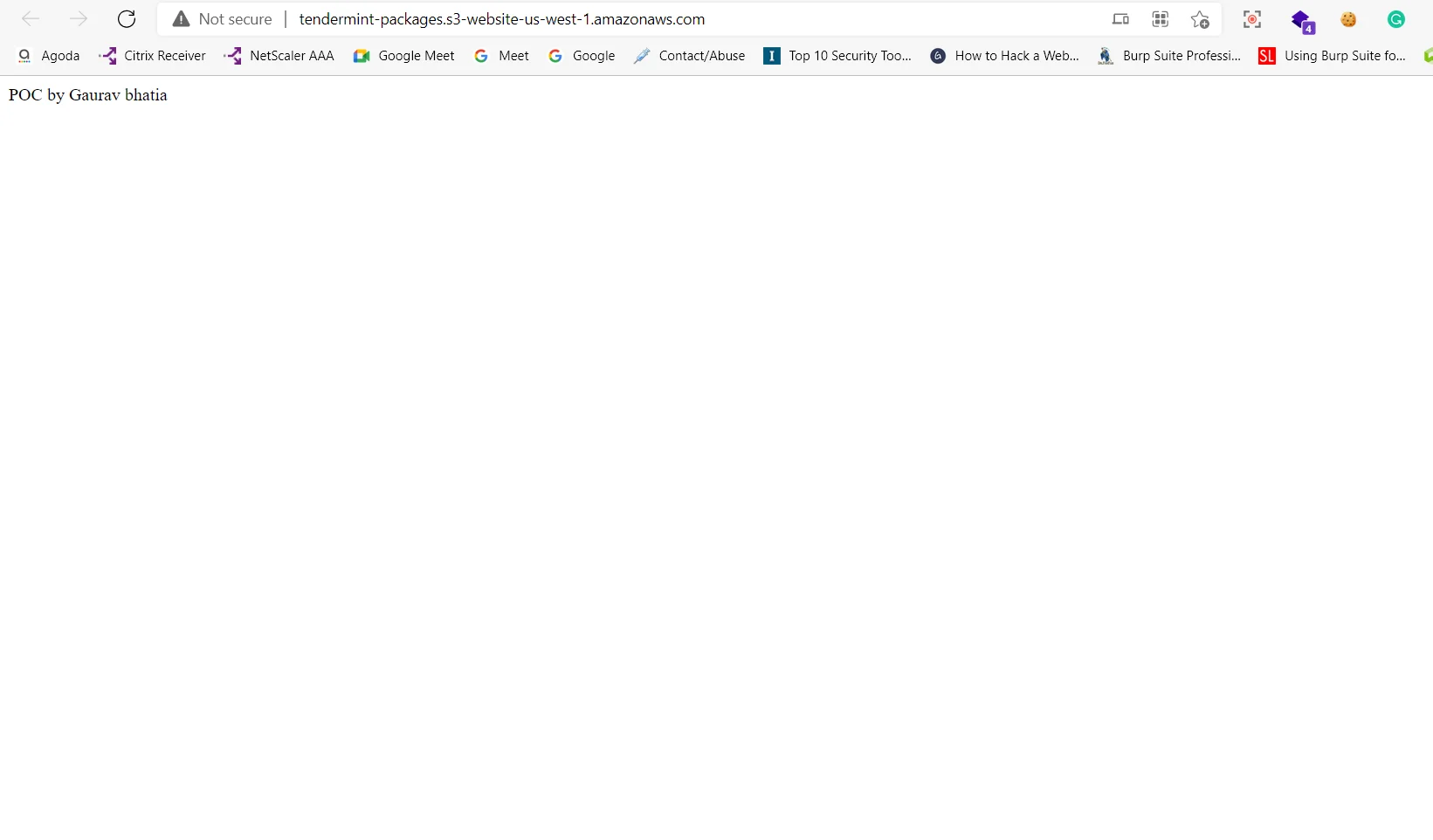
- Link of s3 bucket which shows i have claimed the bucket: http://tendermint-packages.s3-website-us-west-1.amazonaws.com/
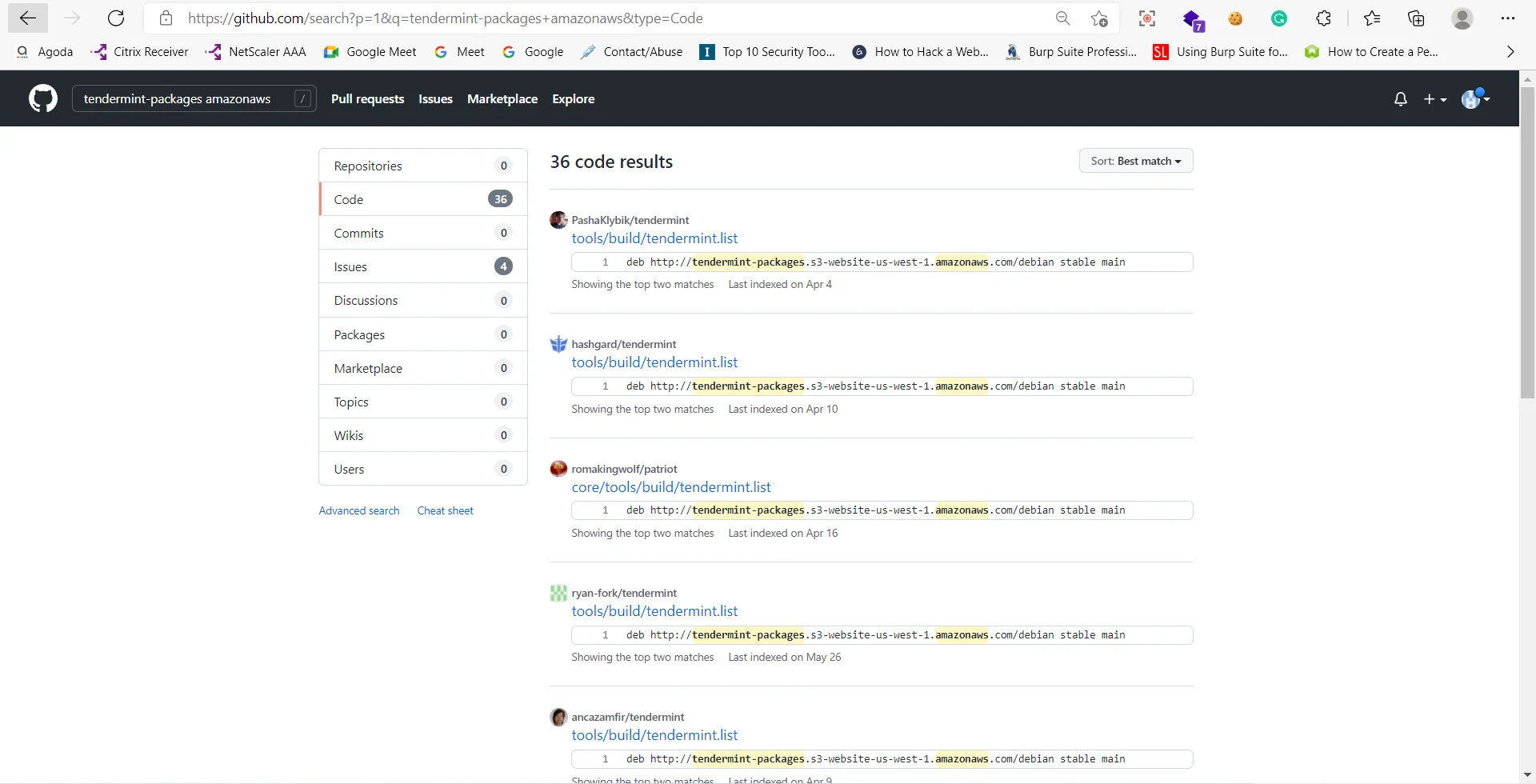
- Pic of github which shows the companies that is using the unclaimed s3 bucket of tendermint:
##Remedition
Check your internal code if there is any usage of unclaimed s3 bucket and claim the unclaimed s3 bucket(let me know when i should unclaim it from my side)
Impact
An attacker can host its contents and malicious files on the official bucket of tendermint which can cause harm to the companies or developers using your bucket for package installation and etc. This bug has a severe impact if it is used internally by tendermint and other companies.
Regards, Gaurav Bhatia
Context
The target here is not an application endpoint but an S3 bucket name. Tendermint publishes packages through a bucket called tendermint-packages, served as a static website from the us-west-1 region at:
http://tendermint-packages.s3-website-us-west-1.amazonaws.com/
The report describes this as an official bucket of Tendermint that is also referenced by many other blockchain companies and developers. The asset recorded for the report is the CometBFT repository, https://github.com/cometbft/cometbft, and the weakness class is business logic error. The point of the finding is that the bucket name was never registered by the organisation that the name belongs to, so anyone could register it first.
Setup
No accounts, roles, tool versions or special tooling are described. The only precondition is an AWS account able to create an S3 bucket in the us-west-1 region with a chosen name. The researcher needed nothing from the target itself: the bucket was unclaimed, so the name was available to anyone.
Finding it
The bucket name tendermint-packages was not claimed. Because S3 bucket names are global and first come, first served, an unclaimed name that an organisation publishes under is a takeover candidate. The researcher then checked public code for references to that bucket and found that other blockchain companies and developers use it as well, which widens the set of affected parties beyond Tendermint itself.
Exploitation
Step 1: Create a bucket with the same name in the same region
Create an S3 bucket named tendermint-packages in the us-west-1 region. The name and the region both matter: the website endpoint in the report is region-specific, so the bucket has to exist in that region for the endpoint to resolve to the attacker's content.
Step 2: Configure it as a static website
Change the bucket settings so that it serves as a static website. This makes the bucket answer on the S3 website endpoint rather than only through the S3 API.
Step 3: Confirm the takeover
The researcher states that the bucket is now taken over and provides the endpoint as proof:
http://tendermint-packages.s3-website-us-west-1.amazonaws.com/
The report presents this screenshot as proof that the bucket was claimed.
Step 4: Show who else depends on the name
A second screenshot shows the companies that use the unclaimed bucket:
This is the evidence that turns a single organisation's naming mistake into a supply chain concern: the same hostname appears in other projects' code.
Root cause
S3 bucket names are global and unique, and a name is only protected once somebody registers it. The bucket name tendermint-packages was unclaimed, so the name was free for anyone to claim. Nothing in S3 prevents a third party from registering an unused name, and the website endpoint gives no indication of who owns the bucket behind it. The report does not describe any additional defence that should have caught this; the gap is organisational rather than a flaw in a specific application.
Impact
An attacker who holds the bucket can host their own content and malicious files on what appears to be the official Tendermint bucket. Anyone who installs packages or otherwise fetches from that bucket, including the other companies and developers whose code references it, would receive the attacker's content instead. The researcher notes that the impact would be severe if the bucket is used internally by Tendermint and other companies. The report is rated low severity.
Fix
The remediation the researcher asks for is to check internal code for any use of unclaimed S3 buckets and to claim the unclaimed bucket. The researcher also offered to release the bucket from their side on request, so the organisation can register the name itself.
- Search public code and documentation for S3 website endpoints and bucket names belonging to the target, then check whether each name is still unclaimed. A positive result is a bucket you can create yourself in the matching region and serve content from.
- Check names referenced in install scripts, package managers and CI configuration, not just application code. A positive result is an install path that would fetch from a name you control.
- Check names that appear in older documentation or changelogs. A positive result is a name that is no longer used by the organisation but is still referenced by third parties.
Hunting notes
This kind of bug hides in the gap between a name being published and a name being registered. The signal during recon is a hostname of the form <name>.s3-website-<region>.amazonaws.com or <name>.s3.amazonaws.com in code, docs or install instructions, followed by a check of whether the bucket exists. Code search across third-party repositories is what showed the breadth of use here, and that breadth is what the researcher used to argue impact: the bucket is not only Tendermint's, it is referenced by many other blockchain companies and developers. The report does not record a bounty or a CVSS score.
What happened, in plain words
Tendermint is a software project used in the blockchain world. Like many projects, it publishes files that other people download and install. Those files were meant to be served from a storage space in Amazon's cloud, called an S3 bucket, with the name tendermint-packages.
Here is the problem. In Amazon S3, a bucket name is like a username on a big public website: it is unique across the whole world, and whoever registers it first gets it. Tendermint never actually registered the bucket. So the name was sitting there, free for anyone to take.
The researcher registered the name himself and showed that he had claimed the bucket. He also searched public code and found that many other blockchain companies and developers refer to the same bucket name, so the problem reaches beyond Tendermint.
The target: a bucket name, not a website
Most security reports are about a website or an application. This one is about a name in a storage service.
An S3 bucket is a container for files inside Amazon S3, Amazon's cloud storage product. You give the bucket a name, put files in it, and other computers can download those files over the internet. Think of it as a public locker with a label on the door.
A bucket can also be configured to act like a simple website. Amazon then gives it a web address of the form <bucket-name>.s3-website-<region>.amazonaws.com, where the region is the physical part of the world where Amazon keeps the data. The bucket in this report lives in the us-west-1 region and is reachable at:
http://tendermint-packages.s3-website-us-west-1.amazonaws.com/
Reading that address from left to right: tendermint-packages is the bucket name, s3-website-us-west-1 says it is served as a website from the us-west-1 region, and amazonaws.com is Amazon's domain. The http:// at the start means the connection is not encrypted.
The report calls this an official bucket of Tendermint that is also referenced by many other blockchain companies and developers. The asset recorded for the report is the CometBFT repository at https://github.com/cometbft/cometbft, and the weakness is classified as a business logic error. A business logic error is a flaw in how a system's rules or processes are set up, rather than a bug in the code itself. Nothing in Amazon's software is broken here; the mistake is organisational.
The core of the finding: the organisation that the name belongs to never registered it, so anyone could register it first.
What the researcher needed before starting
No accounts on the target, no special roles, no tool versions and no special software are described. The only precondition is an Amazon Web Services (AWS) account that is allowed to create an S3 bucket in the us-west-1 region with a name of your choosing. AWS is Amazon's collection of cloud services; an AWS account is simply a login for using them.
The researcher needed nothing from Tendermint itself. Because the bucket was unclaimed, the name was available to anybody with an AWS account.
How the name was found
S3 bucket names are global and first come, first served. That means two things:
- Only one bucket in the entire world can have a given name at a given time.
- If nobody holds the name, the next person to ask for it gets it.
So when an organisation publishes a bucket name in its code but never registers the bucket, the name is a takeover candidate. Anyone can claim it and start answering at the address that the organisation's users trust.
This kind of takeover is often called subdomain takeover when it involves a hostname under a domain. Here the same idea applies to a bucket name: the address looks official, but the content behind it is controlled by whoever registered the name.
The researcher then searched public code for references to the bucket and found that other blockchain companies and developers use it too. That widens the set of affected parties well beyond Tendermint itself.
Taking over the bucket, step by step
The report gives three steps. Each one is short, but each matters.
Step 1: Create a bucket with the same name in the same region
In the AWS console, create an S3 bucket named tendermint-packages in the us-west-1 region.
Why both the name and the region matter: the website address in the report contains the region (us-west-1). If you create a bucket with the right name in a different region, the address in the report will not point at your bucket. The name and the region together decide which address answers.
Step 2: Configure it as a static website
Change the bucket settings so that it serves as a static website. Static means the files are handed out exactly as stored, with no server-side program generating pages on the fly.
Why this step is needed: by default a bucket is reachable through Amazon's programming interface, the S3 API. An API (application programming interface) is the set of rules one program uses to talk to another. Turning on website hosting makes the bucket answer on the human-friendly website address instead, which is the address that appears in the report and in other projects' code.
Step 3: Confirm the takeover
The researcher states that the bucket is now taken over and gives the address as proof:
http://tendermint-packages.s3-website-us-west-1.amazonaws.com/
This is the same address as before. The difference is who answers it: before, nobody; now, the researcher's own bucket.
The report presents this screenshot as proof that the bucket was claimed. That is the proof that the name is under the researcher's control: the address that users and other projects expect to be Tendermint's now serves whatever the researcher put there.
Step 4: Show who else depends on the name
A second screenshot shows the companies that use the unclaimed bucket:
GitHub is a website where developers store and share source code. Its search lets anyone look through public repositories, which is how the researcher found other projects referring to the same bucket name. A repository is a project's folder of code and history on GitHub.
This is the evidence that turns one organisation's naming mistake into a supply chain concern. A supply chain here means the chain of files and services that a project depends on to build and install itself. If many projects fetch from the same address, then controlling that address means reaching all of them.
Why this happened
S3 bucket names are global and unique, and a name is only protected once somebody registers it. The name tendermint-packages was unclaimed, so it was free for anyone to claim.
Nothing in S3 stops a third party from registering an unused name, and the website address itself gives no indication of who owns the bucket behind it. A visitor sees a working address and has no easy way to tell whether the content is genuine. The report does not describe any additional safeguard that should have caught this; the gap is organisational rather than a flaw in a particular application.
What an attacker could do with it
Someone holding the bucket can host their own content and malicious files on what appears to be the official Tendermint bucket. Anyone who installs packages or otherwise downloads from that bucket, including the other companies and developers whose code references it, would receive the attacker's content instead of the real thing.
That is the dangerous part: the download address looks right, so the person installing has no obvious reason to be suspicious. The researcher notes that the impact would be severe if the bucket is used internally by Tendermint and other companies. The report is rated low severity.
The fix the researcher asked for
The remediation in the report is to check internal code for any use of unclaimed S3 buckets and to claim the unclaimed bucket. The researcher also offered to release the bucket from his side on request, so the organisation can register the name itself.
A name that is no longer used is still dangerous if other people's code still points at it.
The report lists three variations worth checking:
- Search public code and documentation for S3 website addresses and bucket names belonging to the target, then check whether each name is still unclaimed. A positive result is a bucket you can create yourself in the matching region and serve content from.
- Check names referenced in install scripts, package managers and CI configuration, not just application code. A package manager is a tool that downloads and installs software libraries for you; CI (continuous integration) is the automated system that builds and tests code. A positive result is an install path that would fetch from a name you control.
- Check names that appear in older documentation or changelogs. A changelog is the list of changes made to a project over time. A positive result is a name the organisation no longer uses but that third parties still reference.
Notes for anyone hunting this kind of bug
This kind of bug hides in the gap between a name being published and a name being registered. During reconnaissance, the signal is an address of the form <name>.s3-website-<region>.amazonaws.com or <name>.s3.amazonaws.com in code, documentation or install instructions, followed by a check of whether the bucket exists. Reconnaissance is the early phase of a security test where you gather information about a target before trying anything.
Searching code across third-party repositories is what showed the breadth of use here, and that breadth is what the researcher used to argue impact: the bucket is not only Tendermint's, it is referenced by many other blockchain companies and developers. The report does not record a bounty or a CVSS score. CVSS is a standard scoring system for rating the severity of a security flaw.
Glossary
- API: the set of rules one program uses to talk to another; here, the interface Amazon provides for working with S3 buckets.
- AWS: Amazon Web Services, Amazon's collection of cloud computing services, including S3.
- Bucket: a named container for files inside Amazon S3.
- Business logic error: a flaw in how a system's rules or processes are set up, rather than a bug in the code itself.
- Changelog: a list of the changes made to a project over time.
- CI (continuous integration): an automated system that builds and tests code when changes are made.
- CVSS: a standard scoring system for rating the severity of a security flaw.
- GitHub: a website where developers store and share source code, with a search function over public projects.
- Package manager: a tool that downloads and installs software libraries for a project.
- Reconnaissance: the early phase of a security test where you gather information about a target.
- Region: the physical part of the world where a cloud provider keeps data; the bucket here is in
us-west-1. - Repository: a project's folder of code and history, for example on GitHub.
- S3: Amazon's cloud storage product, where files are kept in buckets.
- S3 website endpoint: the web address Amazon gives a bucket when it is configured to serve as a static website.
- Static website: a site that hands out files exactly as stored, with no server-side program generating pages.
- Subdomain takeover: claiming a hostname that an organisation points to but no longer controls, so that its users reach your content.
- Supply chain: the chain of files and services a project depends on to build and install itself.





