Testing for arbitrary HTTP methods
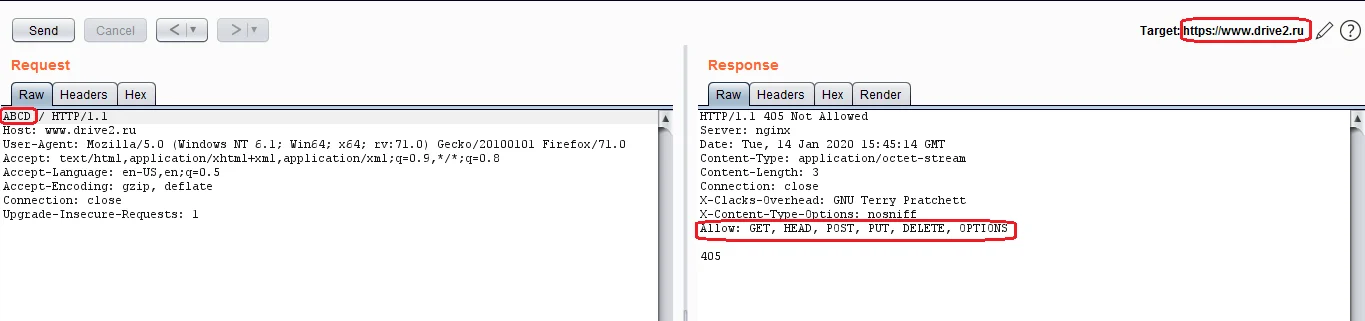
The server responded to an invalid HTTP method with an Allow header listing enabled methods, including PUT and DELETE. An attacker could potentially use these methods to upload files or gain server access, though the report only speculates about this.
 Originally disclosed on HackerOne
- Fixed in 29 hours
- Disclosed after 6 months
Summary by the researcher
My first report on hackerone platform. Thanks to Hackerone team. Way to go more.. Keep Hacking guys in ethical way and support such platforms.
The report
Test for allowed HTTP methods on the server. Below are the steps to reproduce it. Step 1. Navigate the url Step 2. Intercept the GET http request using burp suite Step 3. change GET to ABCD as shown in screenshot and forward this request to server Step 4. Observe the http response from the server, it shows Allow header and http methods enabled on the server
Impact
There seems to be no major impact If the tester gets a "405 Method not allowed" or "501 Method Unimplemented", but the target application showing what methods are allowed on the server. here in this case there are PUT and DELETE methods are shown. Using this methods attacker can use exploits to get server access or file upload using PUT method.
Attachments
Not written yet. The AI write-up for this report has not been written yet. The Original tab links to the source.
How it worked
Root cause
Likely the server is configured to respond to unsupported HTTP methods with an Allow header that lists all enabled methods, rather than returning a generic error without that information.
Impact
The report claims there is no major impact by itself, but notes that an attacker could potentially use the disclosed PUT and DELETE methods to upload files or gain server access, though this is not demonstrated.
What the attacker needed
None
How it was found
- Navigate to the target URL.
- Intercept the GET request using Burp Suite.
- Change the method from GET to an invalid method and forward the request.
- Observe the response, which includes an Allow header listing enabled methods.
Explained by bugbounty.wiki with AI from the original and checked against quotes from it; it can still be wrong. Read the original before relying on a detail.
Not written yet. The AI write-up for this report has not been written yet. The Original tab links to the source.
Web servers support different HTTP methods like GET (fetch a page) and POST (submit data). Some servers also allow PUT (upload a file) or DELETE (remove a file). This report found that the server told anyone which methods it allows, which could help an attacker try to abuse PUT or DELETE.
What is Info disclosure?
Data the application should keep private (personal data, internal details, other users' records) reaches someone it should not.



