Reflected XSS vector
A path traversal sequence in the URL was accepted by the GoCD web service instead of being rejected or redirected, allowing a user-uploaded script to be loaded from the server. An attacker could use this to run script in a victim's browser.

- Fixed in 52 days
- Disclosed after 2 months
Hello GoCD team,
I noticed a reflected / stored XSS vulnerability vector that could potentially be used to impact security of GoCD users.
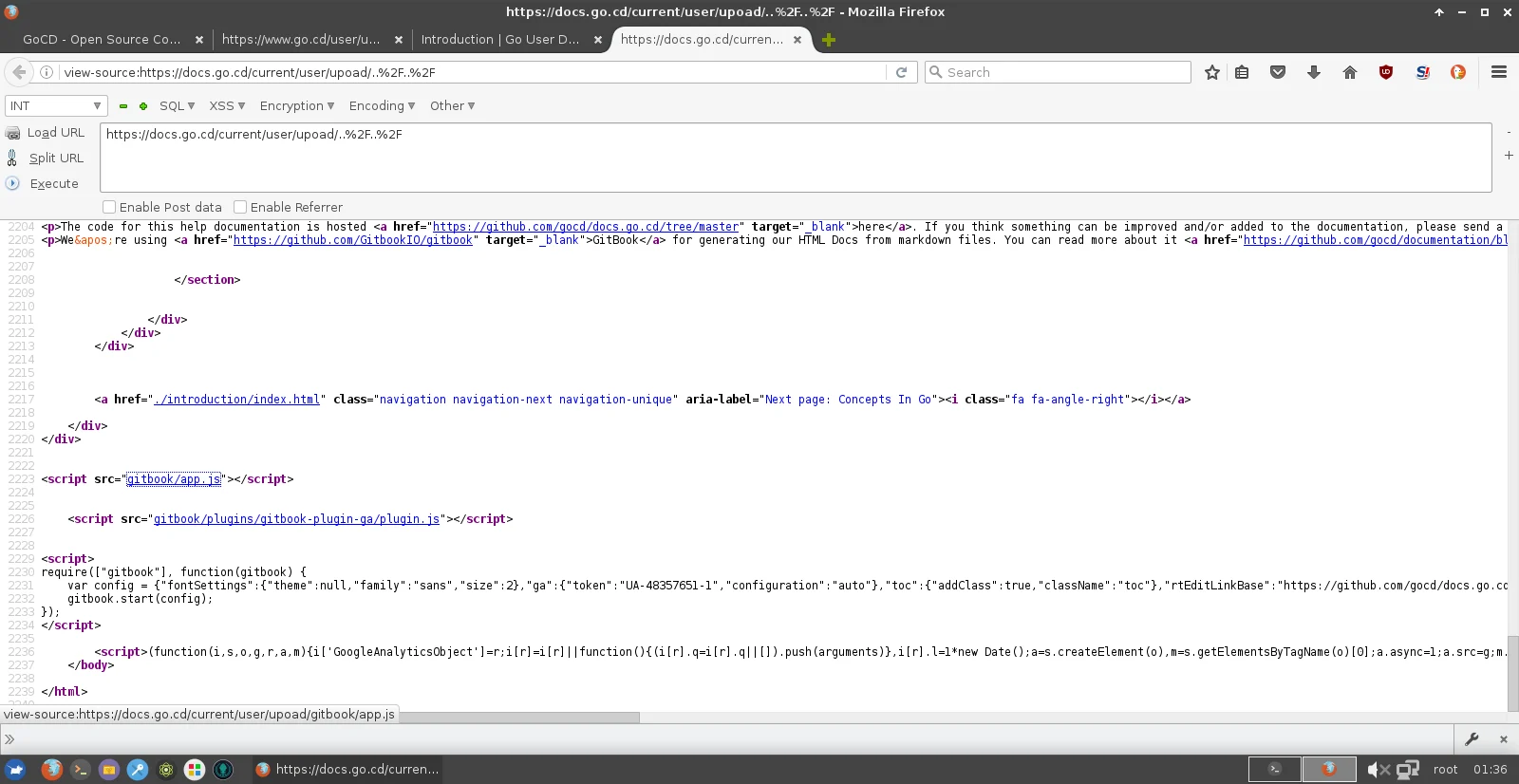
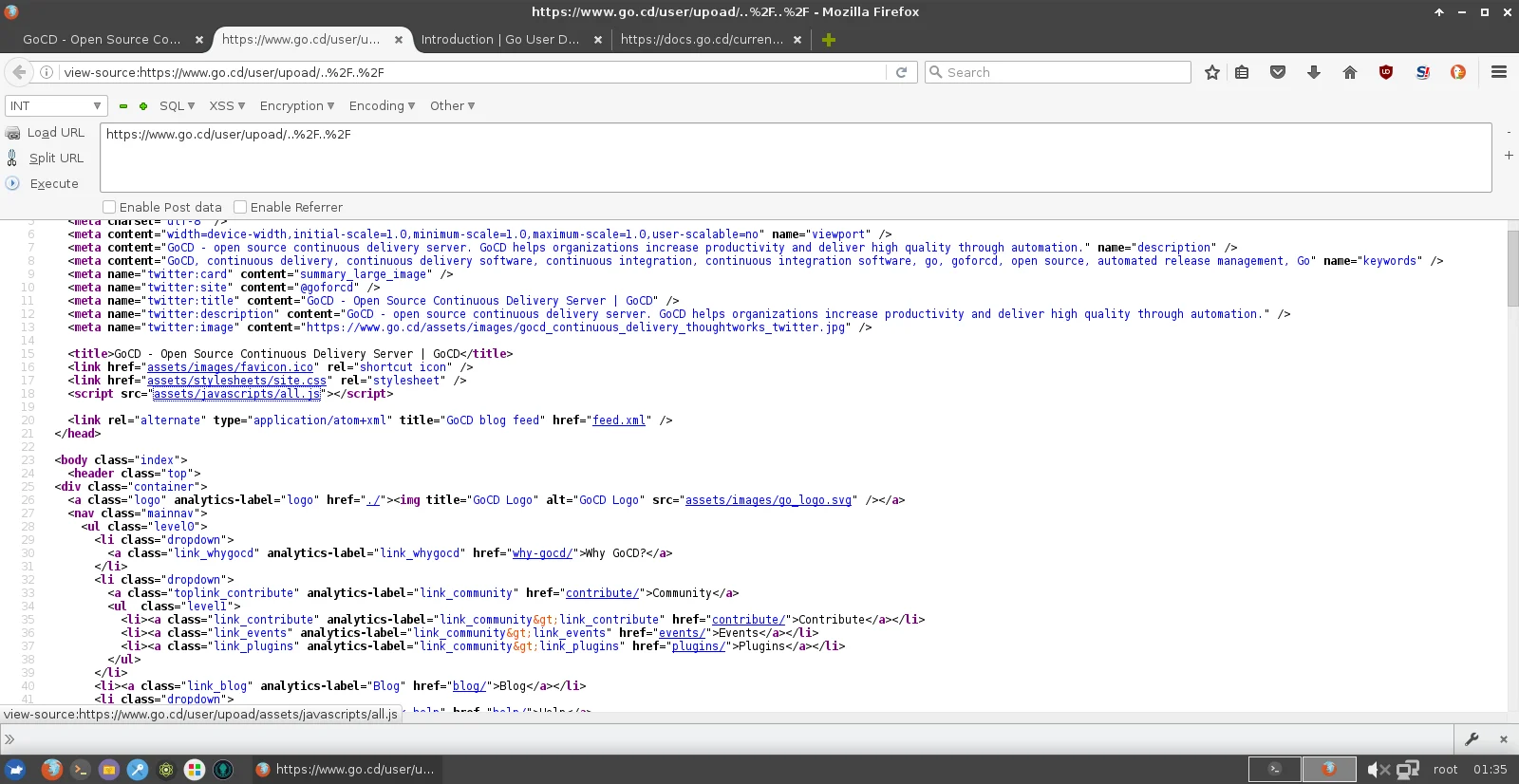
As you should see, this link is considered as valid by the HTTP service and thus does not cause redirect to root of *.go.cd nor return of an HTTP error code (e.g., 404 not found) as it should be...
Such a link can be used to load an unexpected script located on the HTTP server of *.go.cd, eventually uploaded by user (see screenshot)
Please let me know if you need more information!
Looking forward!
Attachments
Not written yet. The AI write-up for this report has not been written yet. The Original tab links to the source.
How it worked
Root cause
Likely the server did not normalise or reject path traversal sequences in the URL path, so uploaded files could be reached and executed as script.
Impact
An attacker could run their own script in a victim's browser session on the GoCD domain, though the report does not demonstrate full exploitation.
What the attacker needed
Ability to upload a file; victim clicks a crafted link
How it was found
- Upload a script file to the GoCD server.
- Craft a URL containing a path traversal sequence that points to the uploaded file.
- Send the link to a victim so the script runs in their browser.
Explained by bugbounty.wiki with AI from the original and checked against quotes from it; it can still be wrong. Read the original before relying on a detail.
Not written yet. The AI write-up for this report has not been written yet. The Original tab links to the source.
A web server normally rejects URLs that contain '..' to go up folders. Here the server accepted such a URL and served a file that a user had uploaded. That let an attacker make a link that runs their own code in someone else's browser.
What is XSS?
Script an attacker supplies runs in another user's browser, on the target's origin, with that user's session.




