Markdown parsing issue enables insertion of malicious tags
The profile statement field parsed Markdown and turned a URL into a clickable link, so an attacker could insert a link to a malicious executable. A victim could be redirected to a malicious URL or malware could be hosted on the site.

- Disclosed after 18 months
Markdown tags and event handlers can be used to load malicious URLs in user's profile statement.
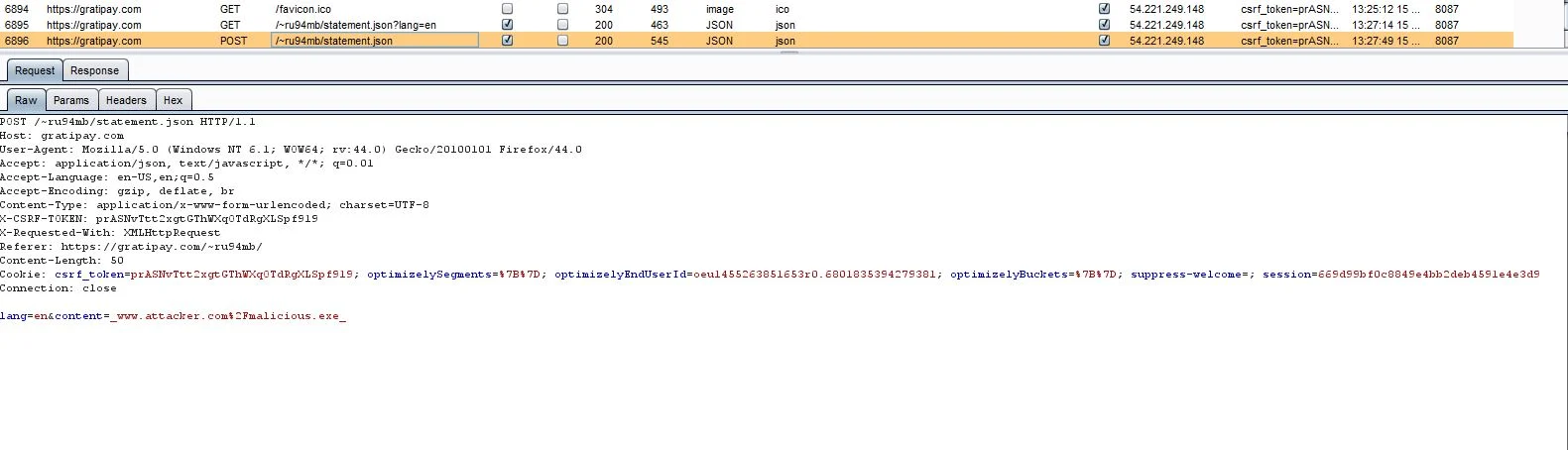
Here is the payload that when entered in user's profile statement leads to the following HTML:
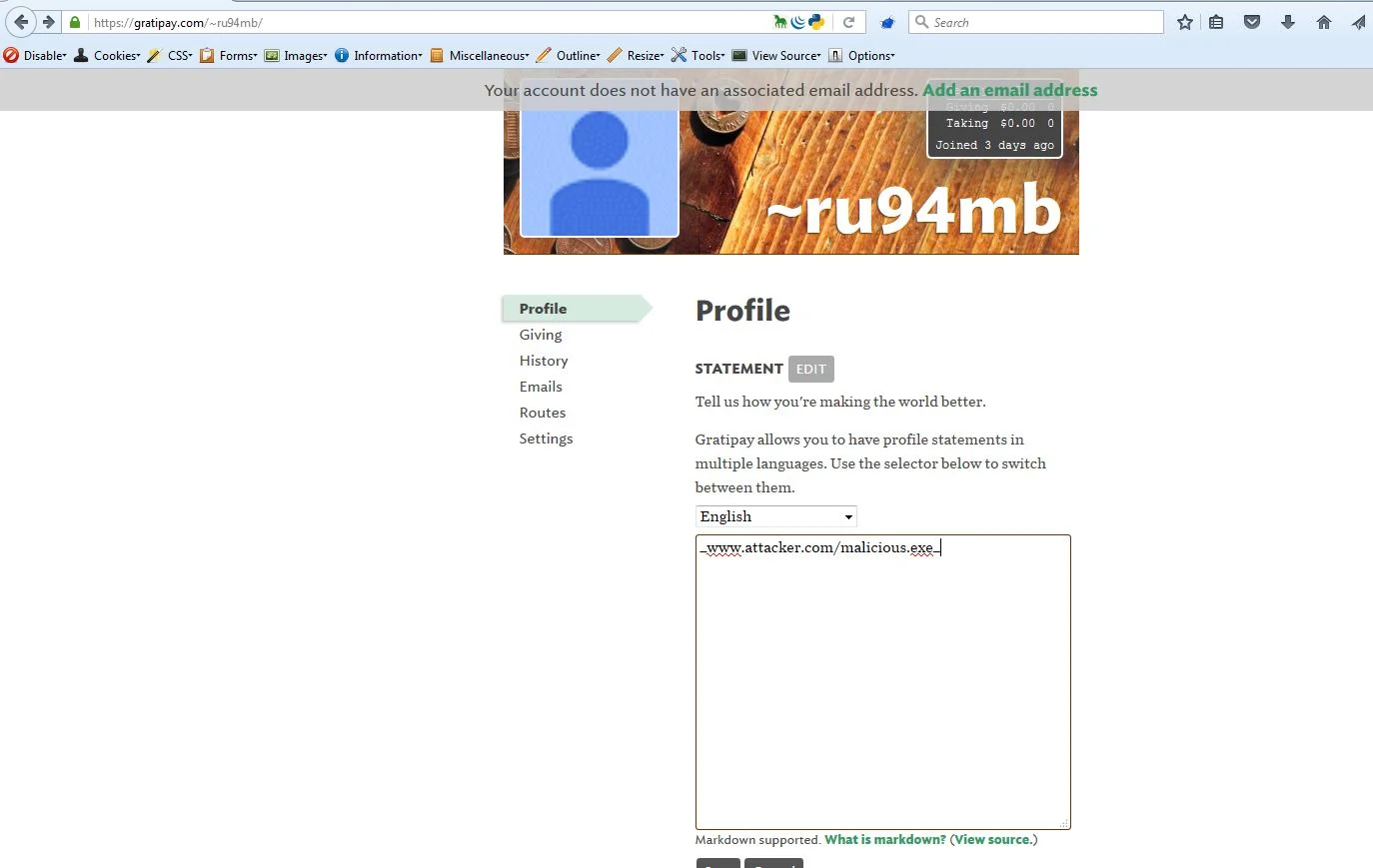
Payload: www.attacker.com/malicious.exe
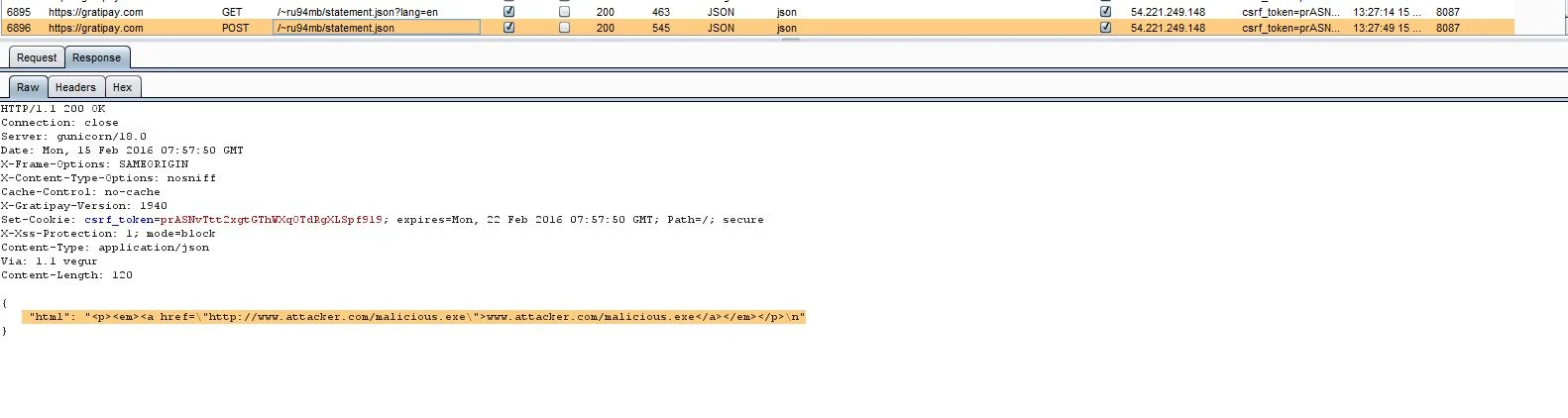
Resulting HTML: "html": "<p><em><a href="http://www.attacker.com/malicious.exe">www.attacker.com/malicious.exe</a></em></p>\n"
See the following screenshots for more details:
"Profile.jpg" "request.jpg" "response.jpg"
User can be redirected to malicious URLs and malware can be hosted on gratipay.com using this vulnerability.
Fix:
Disable the functionality for these markdown tags.
Attachments
Not written yet. The AI write-up for this report has not been written yet. The Original tab links to the source.
How it worked
Impact
A user could be redirected to malicious URLs, and malware could be hosted on the site.
What the attacker needed
A user profile with a statement field
The fix
The functionality for these Markdown tags should be disabled.
How it was found
- Enter a Markdown-formatted web address in the user's profile statement.
- The application renders it as an HTML link pointing to the supplied address.
Explained by bugbounty.wiki with AI from the original and checked against quotes from it; it can still be wrong. Read the original before relying on a detail.
Not written yet. The AI write-up for this report has not been written yet. The Original tab links to the source.
Markdown is a simple way to format text, for example by putting underscores around a word to make it italic. This site turned a web address written in that field into a clickable link. That let someone put a link to a harmful file on their profile, and anyone who clicked it could be sent to a bad site or download malware.
What is XSS?
Script an attacker supplies runs in another user's browser, on the target's origin, with that user's session.