many commands can be manipulated to delete identities or affiliations
The signature protecting Fabric-ca requests covers only the HTTP body and Authorization header, not the URL path or HTTP method. An attacker who captures a normal signed request could change its method to DELETE and put a target identity or affiliation in the path, deleting it from the server.

- Triaged in 16 days
- Fixed in 2 months
- Paid in 29 days
- Disclosed after 4.3 years
Introduction:
The Faric-ca data in http body and authorization header for many commands that send from client to server are protected by signature.
But I find the identity and affiliation commands still have the risk to be manipulated. Hacker can manipulate most other commands to delete identities or affiliations in a server (server start with –cfg.identities.allowremove and –cfg.affiliations.allowremove).
Example 1: Manipulating list an identity command to delete any identity or affiliation.
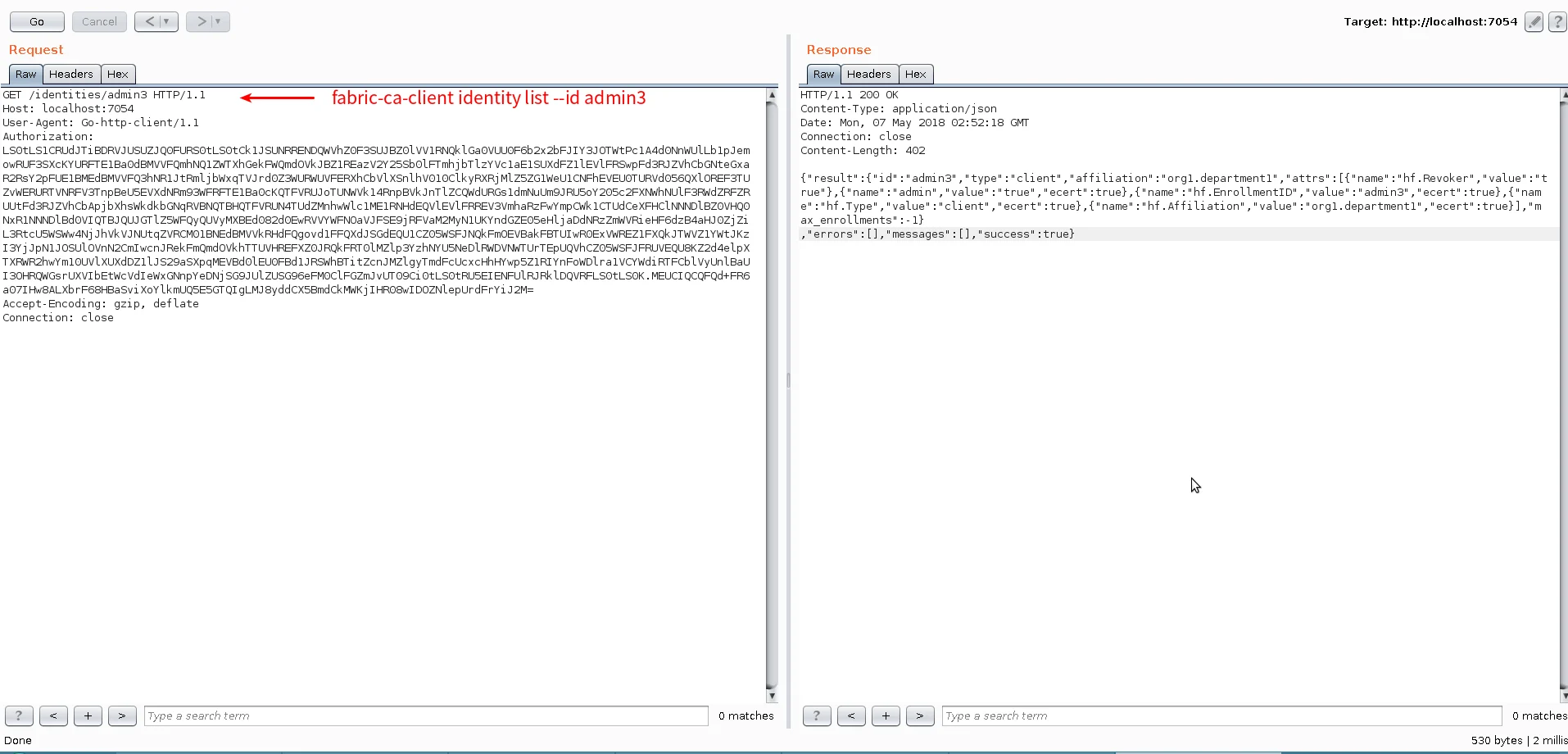
normal list identity command
you can manipulate it:
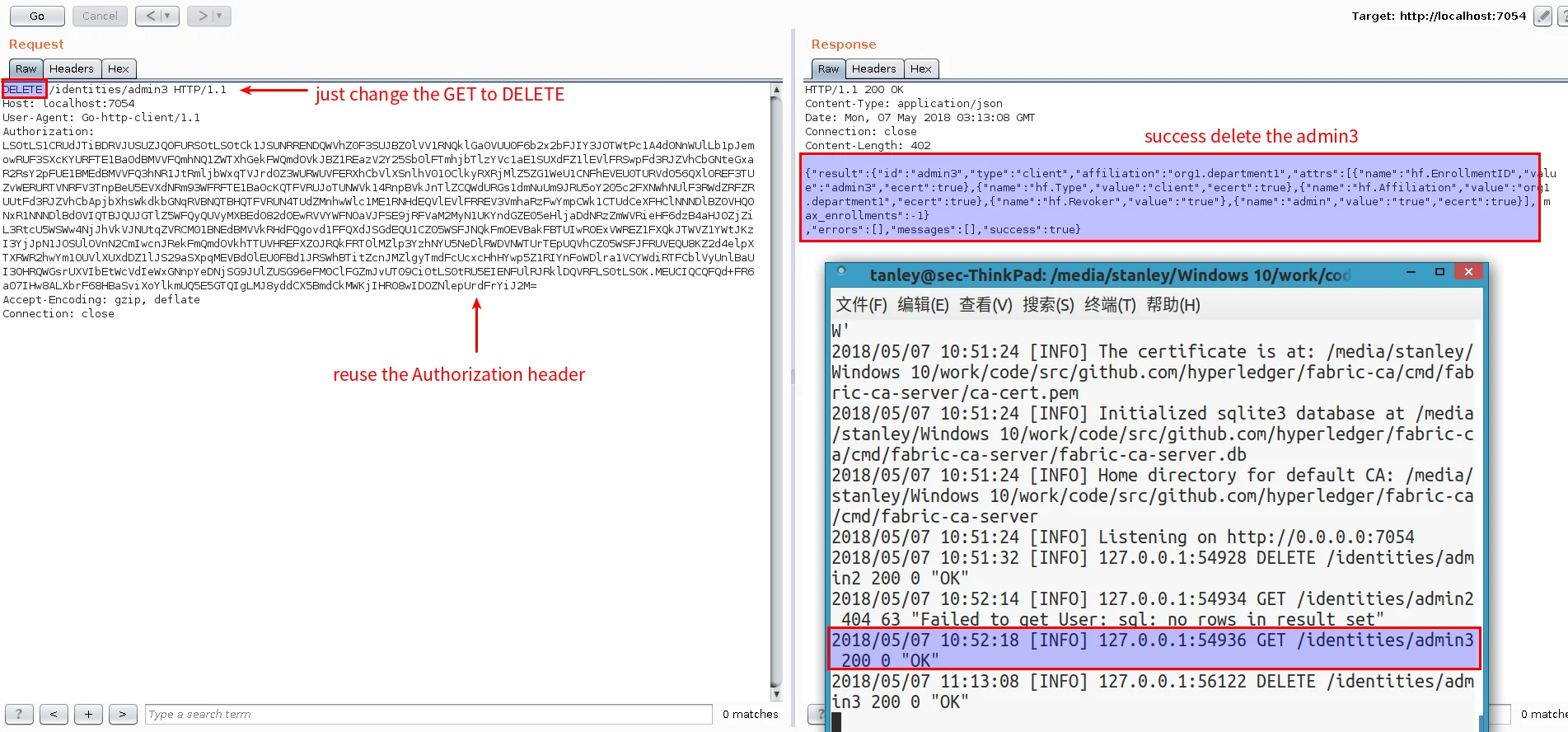
Manipulate the list command to delete command
If a hacker gets the request http data (maybe by sniffer), he can manipulate the GET method to DELETE method, and change the admin3 identity to any other valid identity in the server, he can delete it.
Example 2: Manipulating add an identity command to delete an identity or affiliation.
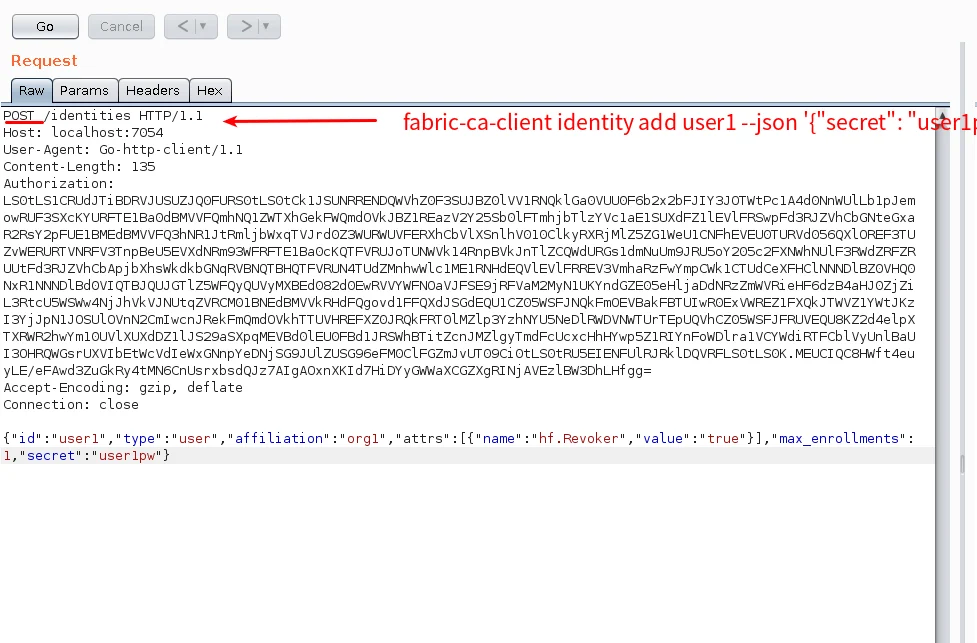
normal add an identity command
you can manipulated:
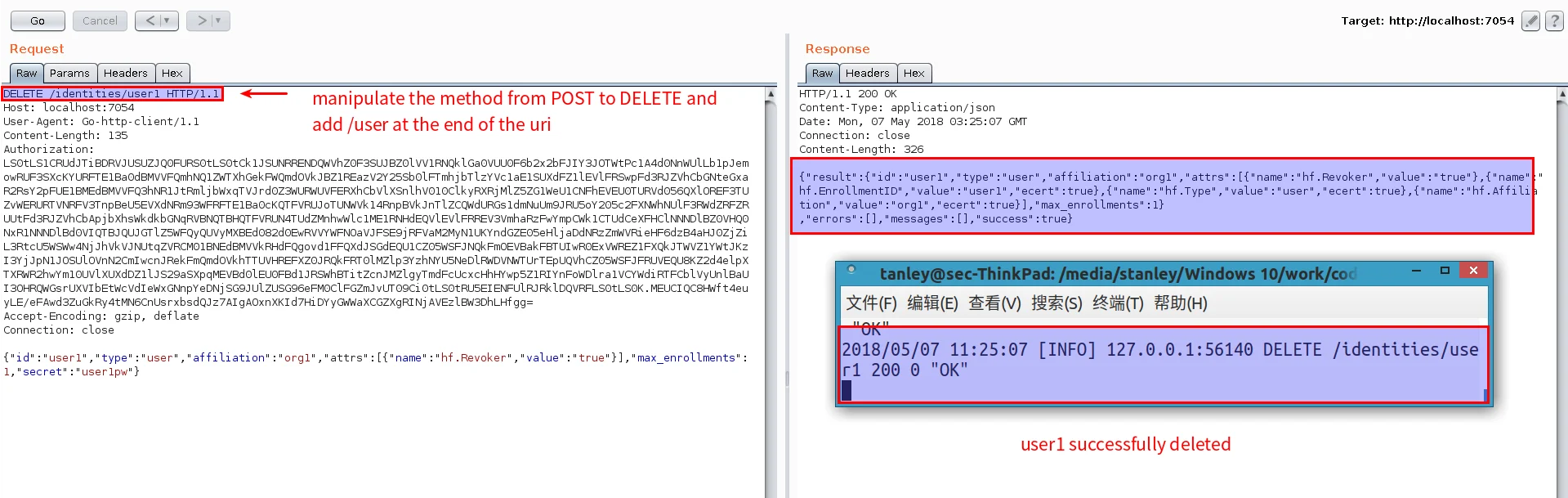
Manipulate the add identity command to delete an identity
or you can manipulated as:
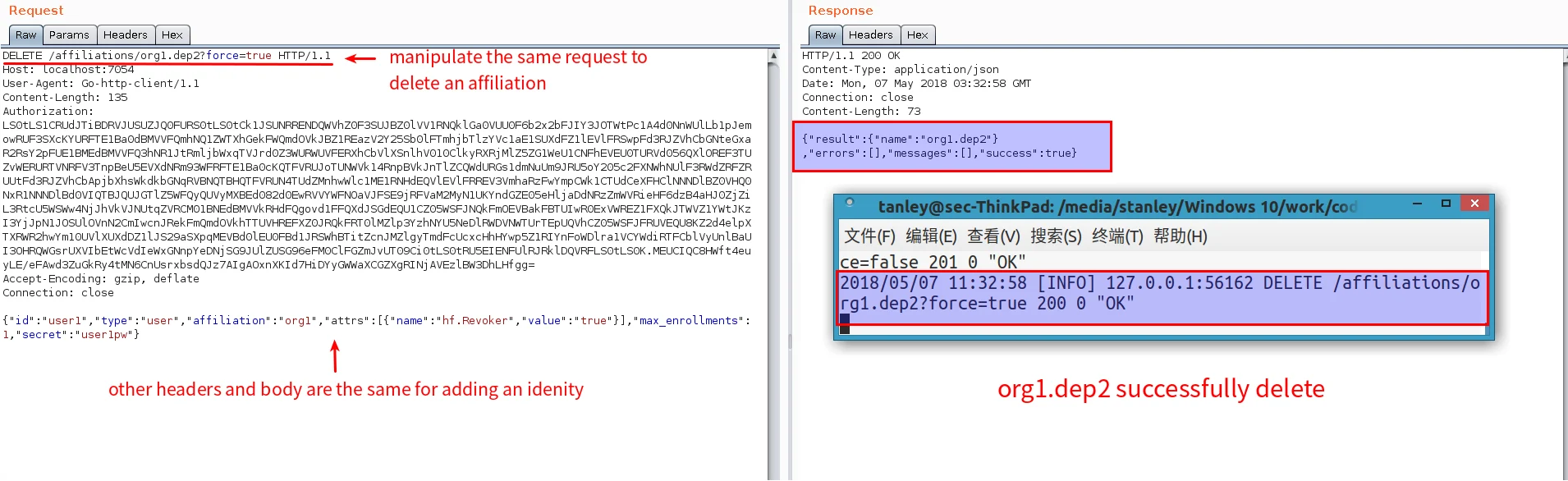
Manipulate the add identity command as delete an affiliation command
Actually, you can also manipulate other commands by this way. Such as: enroll, revoke,register… and so on.
Analysis:
The authentication and authorization checking just covers the Authorization header and body, but the code for deleting identity and affiliation gets the identity value and affiliation value from url path. They are not protected by signature. And you can manipulate the method from other to DELETE.
DELETE /affiliations/org1.dep2?force=true HTTP/1.1 DELETE /identities/admin2 HTTP/1.1
Impact
If a hacker get any of the normal request data by some way (maybe by network sniffer), he can delete all identities or affiliations.
Not written yet. The AI write-up for this report has not been written yet. The Original tab links to the source.
How it worked
Root cause
The signature covers only the request body and Authorization header, while the delete handlers take the identity and affiliation from the unsigned URL path and accept a changed HTTP method.
Impact
An attacker who obtains any normal signed request, for example by sniffing the network, could delete all identities or affiliations on a server that has removal enabled.
What the attacker needed
Server allows identity/affiliation removal; attacker captures a valid signed request
How it was found
- Capture a normal signed request such as a list or add identity command.
- Change the HTTP method to DELETE.
- Put the target identity or affiliation into the URL path.
- Send the modified request so the server deletes the target.
Explained by bugbounty.wiki with AI from the original and checked against quotes from it; it can still be wrong. Read the original before relying on a detail.
Not written yet. The AI write-up for this report has not been written yet. The Original tab links to the source.
A server checks that a request was really sent by a trusted client by looking at a signature, a kind of tamper-proof stamp. Here the stamp only covered part of the request, so someone who saw a valid request could edit the rest of it, such as the action and the name in the address, and the server would still accept it. That let them delete user accounts or group memberships.
What is Access control?
A user can do something their role should not allow: reach an admin function, act on a feature they have not paid for, or skip a permission check. IDOR is the special case where the object belongs to someone else.


