Visibility Robots.txt file
The site's robots.txt file lists a WordPress admin path and an allowed AJAX endpoint, and the reporter claims that appending the admin path to the robots.txt URL still returns content. The reporter asserts this could reveal private areas to an attacker, but no actual access to protected data is demonstrated.

- Disclosed after 3 months
Issue detail:-
The web server contains a robots.txt file.
Issue background:-
The file robots.txt is used to give instructions to web robots, such as search engine crawlers, about locations within the web site that robots are allowed, or not allowed, to crawl and index.
The presence of the robots.txt does not in itself present any kind of security vulnerability. However, it is often used to identify restricted or private areas of a site's contents. The information in the file may therefore help an attacker to map out the site's contents, especially if some of the locations identified are not linked from elsewhere in the site. If the application relies on robots.txt to protect access to these areas, and does not enforce proper access control over them, then this presents a serious vulnerability.
Issue remediation:-
The robots.txt file is not itself a security threat, and its correct use can represent good practice for non-security reasons. You should not assume that all web robots will honor the file's instructions. Rather, assume that attackers will pay close attention to any locations identified in the file. Do not rely on robots.txt to provide any kind of protection over unauthorized access.
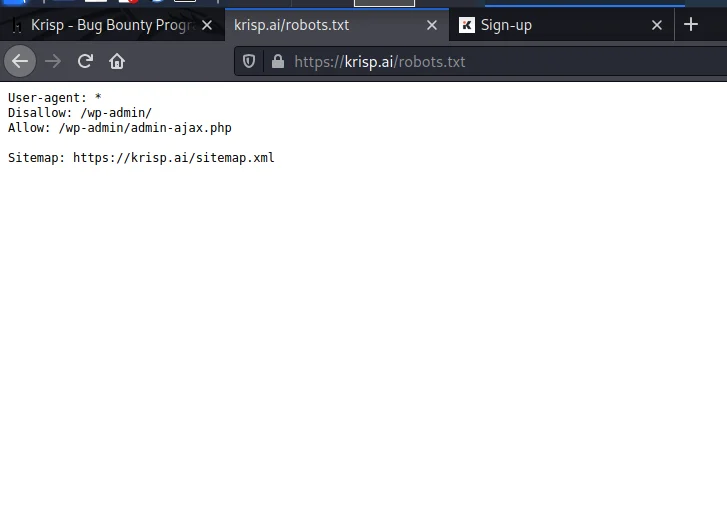
URL - https://krisp.ai/robots.txt
User-agent: * Disallow: /wp-admin/ Allow: /wp-admin/admin-ajax.php
Sitemap: https://krisp.ai/sitemap.xml
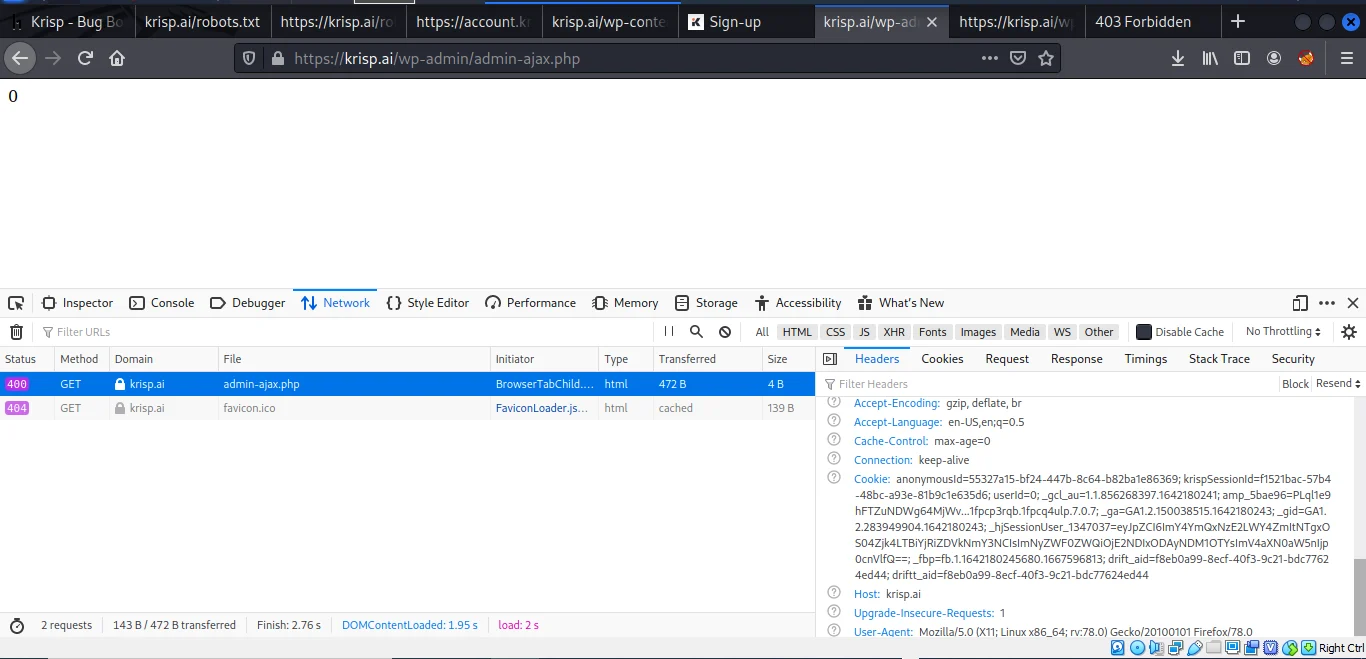
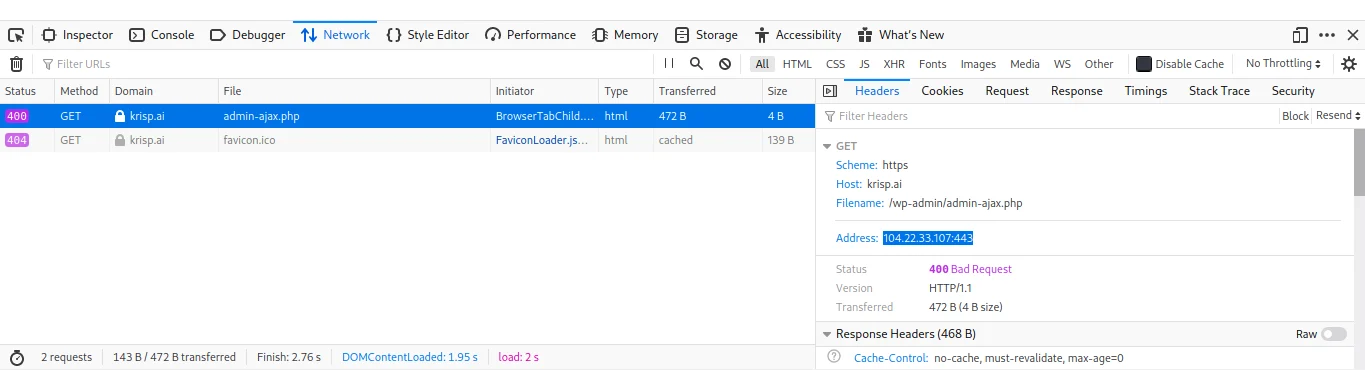
Here, /wp-admin/admin-ajax.php is Allow which gives some private information.
URL - https://krisp.ai/robots.txt/wp-admin/
view-source:https://krisp.ai/robots.txt/wp-admin/
These URL is also Accessible which provide some private information.
Sitemap: https://krisp.ai/sitemap.xml
Impact
If u have robots.txt file so attacker can see all Your secret pages!
Attachments
Not written yet. The AI write-up for this report has not been written yet. The Original tab links to the source.
How it worked
Root cause
Likely a misunderstanding: robots.txt is public by design and does not enforce access control, and the reporter did not show that the listed paths lacked proper authorisation checks.
Impact
An attacker could learn the location of an admin area from the file, but the report does not show that this area was accessible without authorisation.
What the attacker needed
None
The fix
The file should not be treated as protection; access to the listed admin paths should be enforced by proper authentication and authorisation instead.
How it was found
- Open the site's robots.txt file.
- Note the disallowed admin path and the allowed AJAX endpoint listed in it.
- Append the admin path to the robots.txt URL and load it in a browser.
Explained by bugbounty.wiki with AI from the original and checked against quotes from it; it can still be wrong. Read the original before relying on a detail.
Not written yet. The AI write-up for this report has not been written yet. The Original tab links to the source.
A robots.txt file is a public text file that tells search engines which pages they may crawl. It is not a lock: anyone can read it, and it often hints at admin or private folders. Here the file mentions a WordPress admin area, but the report does not show that anything private was actually reachable.
What is Info disclosure?
Data the application should keep private (personal data, internal details, other users' records) reaches someone it should not.



