KOPS documentation references domains which were not registered
The KOPS documentation referenced DNS nameservers for domains that were not registered, allowing an attacker to register them and control all DNS records for those domains. This could enable hosting arbitrary content, creating email addresses for domain verification, issuing SSL certificates, and reclaiming PayPal subscriptions.

- Triaged in 31 hours
- Fixed in 58 days
- Paid in 52 days
- Disclosed after 59 days
Summary:
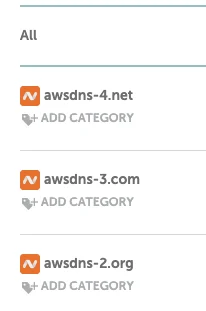
While researching the kubernetes documentation, I found that the KOPS project's Route53 configuration references dangling DNS servers. I was able to register 3 / 4 of these domain names. I was also able to verify that some companies have been using this configuration, making them vulnerable to this specific attack.
In our attack scenario, we are able to serve whatever DNS records we desire, for any domain connected to the NS record. As this is a DNS takeover, any type of DNS record could be added. This makes this far broader reaching than your typical subdomain takeover.
Along with hosting arbitrary content and services, this also allows me to create accounts where specific domain email verification is required such as Google services or Slack. Perhaps most notably, I could create a an email address such as '[email protected]' which could be used to issue SSL certificates as outlined in the following article: https://support.dnsimple.com/articles/ssl-certificates-email-validation/. This can potentially allow the joining of internal services (such as slack, Jira, Confluence or Zendesk) or allow me to setup catch all e-mail addresses to collect any inbound e-mail for addresses that previously existed on this domain. These kinds of takeovers can have far reaching consequences for an organisation, and should be treated with a high threat model.
In addition to these risks, were PayPal subscriptions or other such payment providers previously connected to this subdomain and discovered by a malicious actor, then they would be able to re-claim these subscriptions and bill any customers who still had them active. It is worth noting that in testing I have verified that PayPal does not automatically cancel user subscriptions once a domain has gone stale, and that would be a realistic attack vector here if PayPal payments (via the subscription model) were taken using this subdomain at any point.
Steps To Reproduce:
- View lines 129 - 135 of https://github.com/kubernetes/kops/blob/master/docs/getting_started/aws.md
Supporting Material/References:
Proof of domain ownership:
Impact
In our attack scenario, we are able to serve whatever DNS records we desire, for any domain connected to the NS record. As this is a DNS takeover, any type of DNS record could be added. This makes this far broader reaching than your typical subdomain takeover.
Along with hosting arbitrary content and services, this also allows me to create accounts where specific domain email verification is required such as Google services or Slack. Perhaps most notably, I could create a an email address such as '[email protected]' which could be used to issue SSL certificates as outlined in the following article: https://support.dnsimple.com/articles/ssl-certificates-email-validation/. This can potentially allow the joining of internal services (such as slack, Jira, Confluence or Zendesk) or allow me to setup catch all e-mail addresses to collect any inbound e-mail for addresses that previously existed on this domain. These kinds of takeovers can have far reaching consequences for an organisation, and should be treated with a high threat model.
In addition to these risks, were PayPal subscriptions or other such payment providers previously connected to this subdomain and discovered by a malicious actor, then they would be able to re-claim these subscriptions and bill any customers who still had them active. It is worth noting that in testing I have verified that PayPal does not automatically cancel user subscriptions once a domain has gone stale, and that would be a realistic attack vector here if PayPal payments (via the subscription model) were taken using this subdomain at any point.
Not written yet. The AI write-up for this report has not been written yet. The Original tab links to the source.
How it worked
Root cause
Likely the KOPS documentation included example Route53 configurations that pointed to nameservers for domains that were never registered, leaving them open to registration by anyone.
Impact
An attacker could serve arbitrary DNS records for affected domains, potentially hosting content, creating email addresses for verification, issuing SSL certificates, and reclaiming PayPal subscriptions, though the text notes this is a realistic attack vector only if such services were previously used.
What the attacker needed
Access to the KOPS documentation; ability to register unregistered domains
How it was found
- View lines 129 - 135 of the KOPS AWS getting started documentation.
Explained by bugbounty.wiki with AI from the original and checked against quotes from it; it can still be wrong. Read the original before relying on a detail.
Not written yet. The AI write-up for this report has not been written yet. The Original tab links to the source.
DNS is the system that maps domain names to servers. A nameserver (NS) record tells the internet which server is responsible for answering DNS queries for a domain. If a domain's nameserver is not registered, anyone can register it and then control all DNS answers for that domain, which is called a DNS takeover.
What is Access control?
A user can do something their role should not allow: reach an admin function, act on a feature they have not paid for, or skip a permission check. IDOR is the special case where the object belongs to someone else.


