Reflected XSS in https://www.topcoder.com/blog/category/community-stories/
A reflected cross-site scripting flaw exists in a hidden input field on the Topcoder blog category page, where the 'so' and 'o' parameters are not sanitised. An attacker could inject HTML to display fake messages or redirect users to a phishing site.

- Triaged in 42 hours
- Fixed in 57 days
- Disclosed after 2 months
Summary:
Reflected XSS in https://www.topcoder.com/blog/category/community-stories/ Note: This is a reflected XSS vulnerability in a hidden input. With that vulnerability, an attacker could write his own code on the website. But with this vulnerability, an attacker also could lead a user, to go on his attacker's website.
Steps To Reproduce:
- go to the website https://www.topcoder.com/blog/category/community-stories/
- in the search field search 123
- The request URL should look like this:https://www.topcoder.com/blog/category/community-stories/?s=123&so=&o=
- The &so=&o= after 123 it's the hidden input value, which is vulnerable to reflected XSS
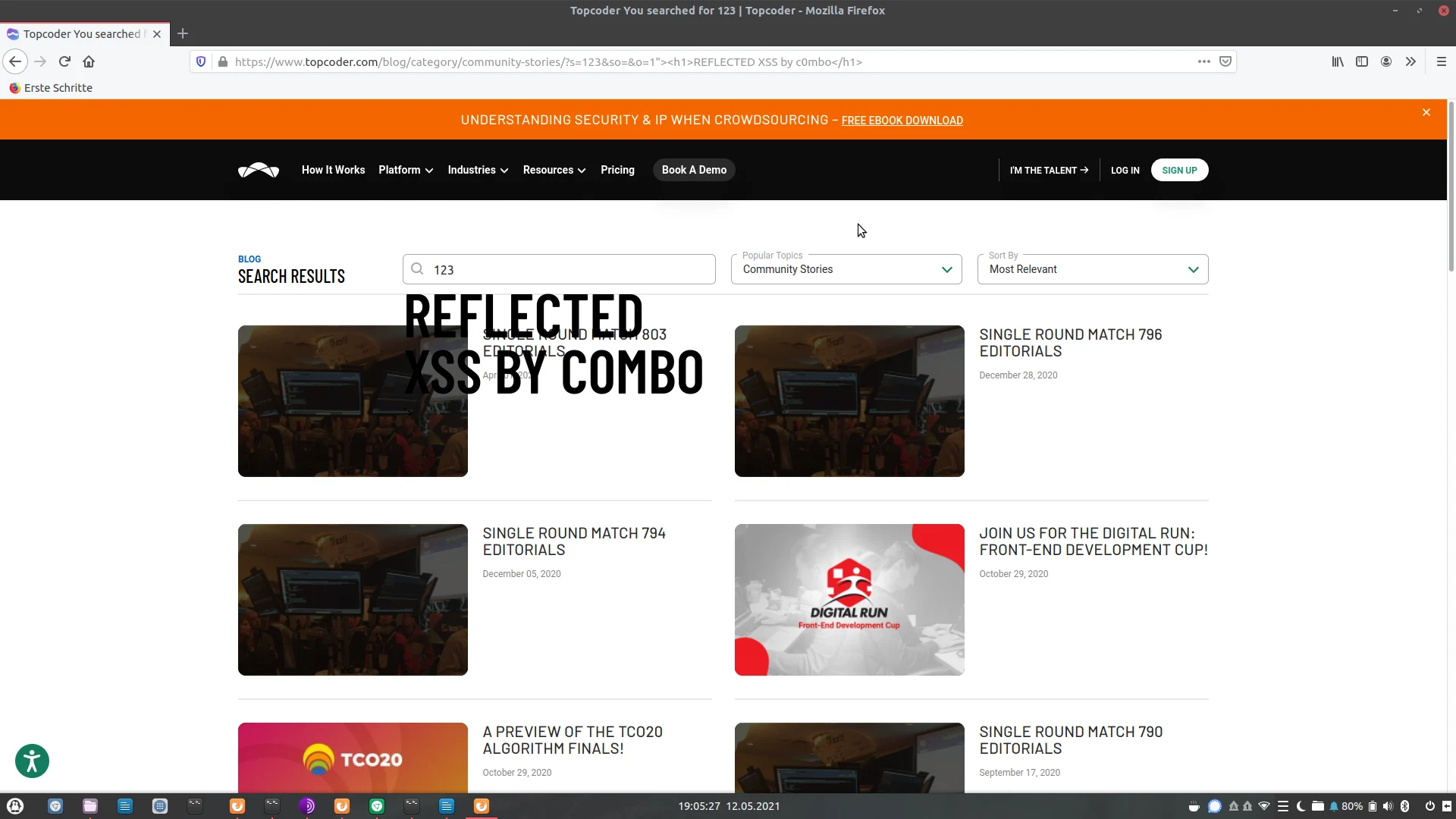
- At the end of the URL (at the end of the &so=&o=) write 1"><h1>DOM XSS by c0mbo</h1>
- Request URL: https://www.topcoder.com/blog/category/community-stories/?s=123&so=&o=1%22%3E%3Ch1%3EREFLECTED%20XSS%20by%20c0mbo%3C/h1%3E
Other payloads:
- https://www.topcoder.com/blog/category/community-stories/?s=123&so=&o=1%22%3E%3Cbutton%3Eclick%20me!%3C/button%3E
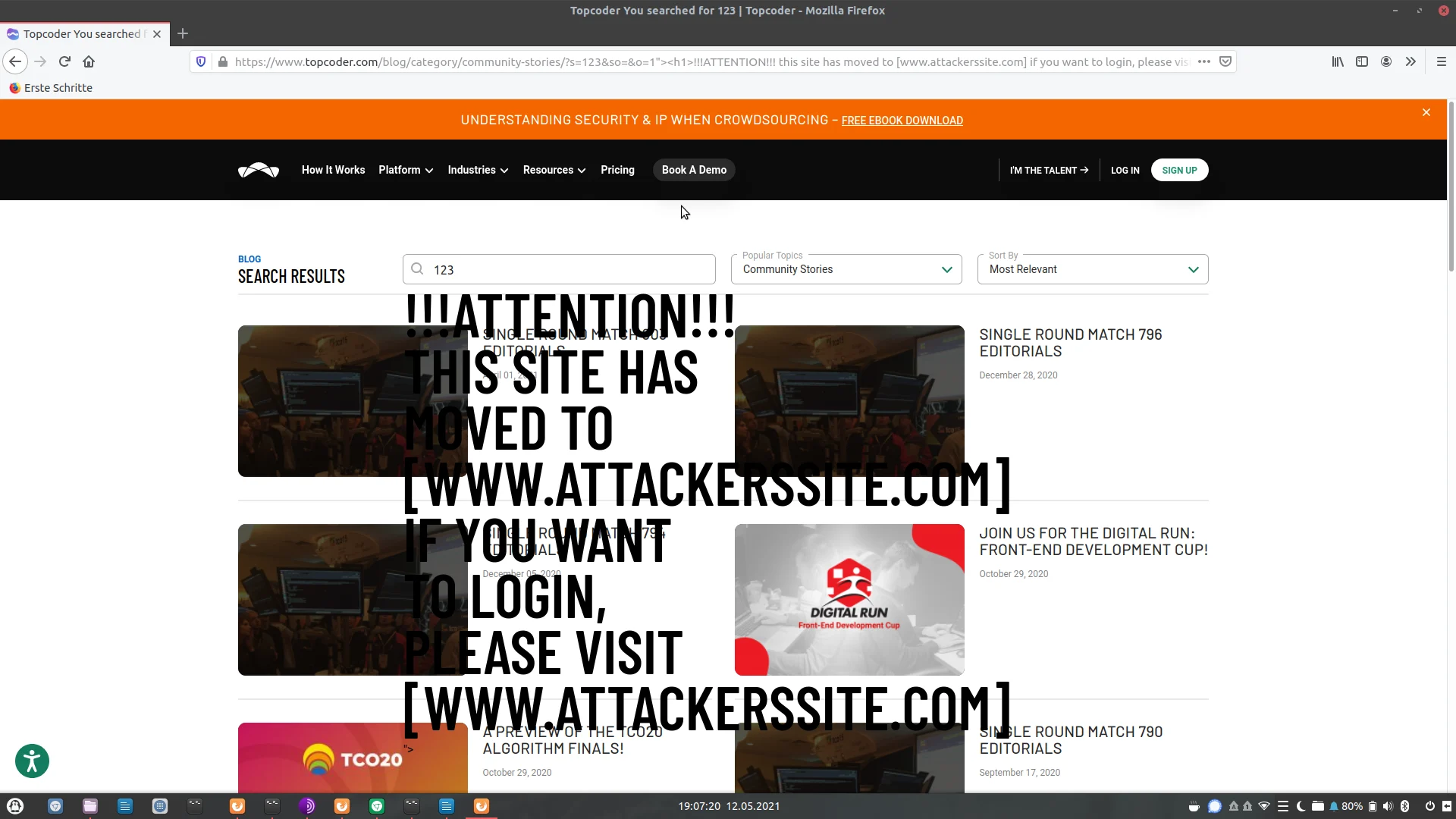
- https://www.topcoder.com/blog/category/community-stories/?s=123&so=&o=1%22%3E%3Ch1%3E!!!ATTENTION!!!%20this%20site%20has%20moved%20to%20[www.attackerssite.com]%20if%20you%20want%20to%20login,%20please%20visit%20[www.attackerssite.com]%3C/h1%3E
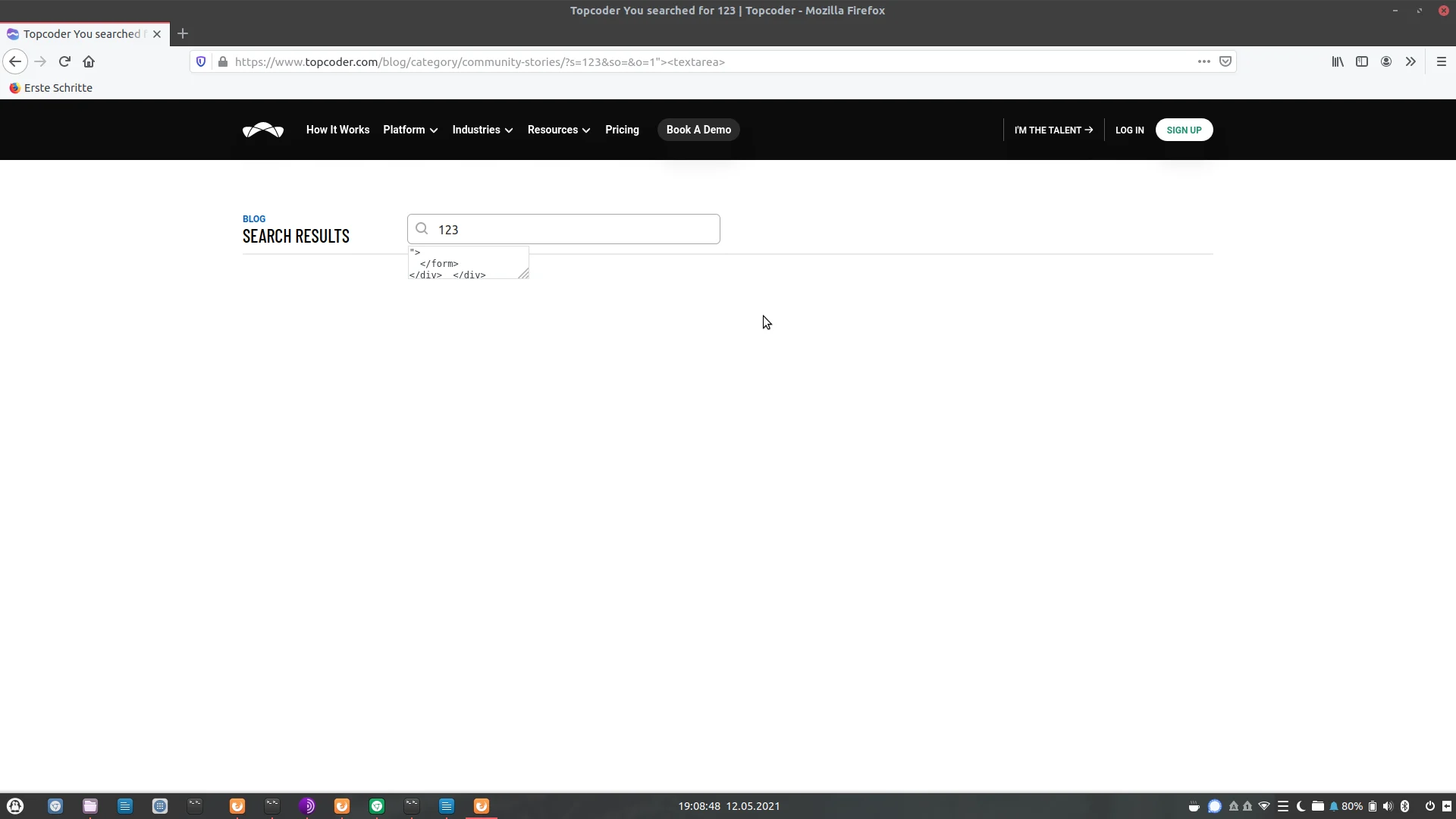
- https://www.topcoder.com/blog/category/community-stories/?s=123&so=&o=1%22%3E%3Ctextarea%3E
Supporting Material/References:
I made some screenshots :)
Contact me, if you need more info!
Best regards, @c0mbo
Impact
With that vulnerability, an attacker can write his own code on the website. So with that, he could write a message on the website, that this site moved and he has to visit the attacker's site and send the victim the link. That could for example be a phishing site. This is similar to content spoofing. NOTE: Some people would count it as content spoofing, but than it is still in scope, because an attacker can implement / modify HTML on the website, but in my opinion, that's definitly reflected XSS.
Attachments
Not written yet. The AI write-up for this report has not been written yet. The Original tab links to the source.
How it worked
Impact
An attacker could inject HTML to display misleading messages or redirect users to a phishing site, though the report notes this is similar to content spoofing.
What the attacker needed
Victim clicks a crafted link
How it was found
- Go to the Topcoder blog category page.
- Search for a term such as 123.
- Observe the resulting URL with the 's', 'so', and 'o' parameters.
- Append a crafted value to the 'so' and 'o' parameters to inject HTML.
- Load the modified URL to see the injected content.
Explained by bugbounty.wiki with AI from the original and checked against quotes from it; it can still be wrong. Read the original before relying on a detail.
Not written yet. The AI write-up for this report has not been written yet. The Original tab links to the source.
Cross-site scripting (XSS) lets an attacker slip their own code into a trusted website. Here, the website takes part of the web address and puts it straight into the page without cleaning it, so a crafted link can make the page show fake content or send visitors to a scam site.
What is XSS?
Script an attacker supplies runs in another user's browser, on the target's origin, with that user's session.




