Lengthy manual entry of 2FA secret
The report claims that the 2FA setup requires users to manually enter a 52-bit secret, which is lengthy and error-prone. The author argues this could discourage users from enabling 2FA, but no security vulnerability is demonstrated.
 Originally disclosed on HackerOne
- Fixed in 40 hours
- Paid in 40 hours
- Disclosed after 41 hours
Hello @team,
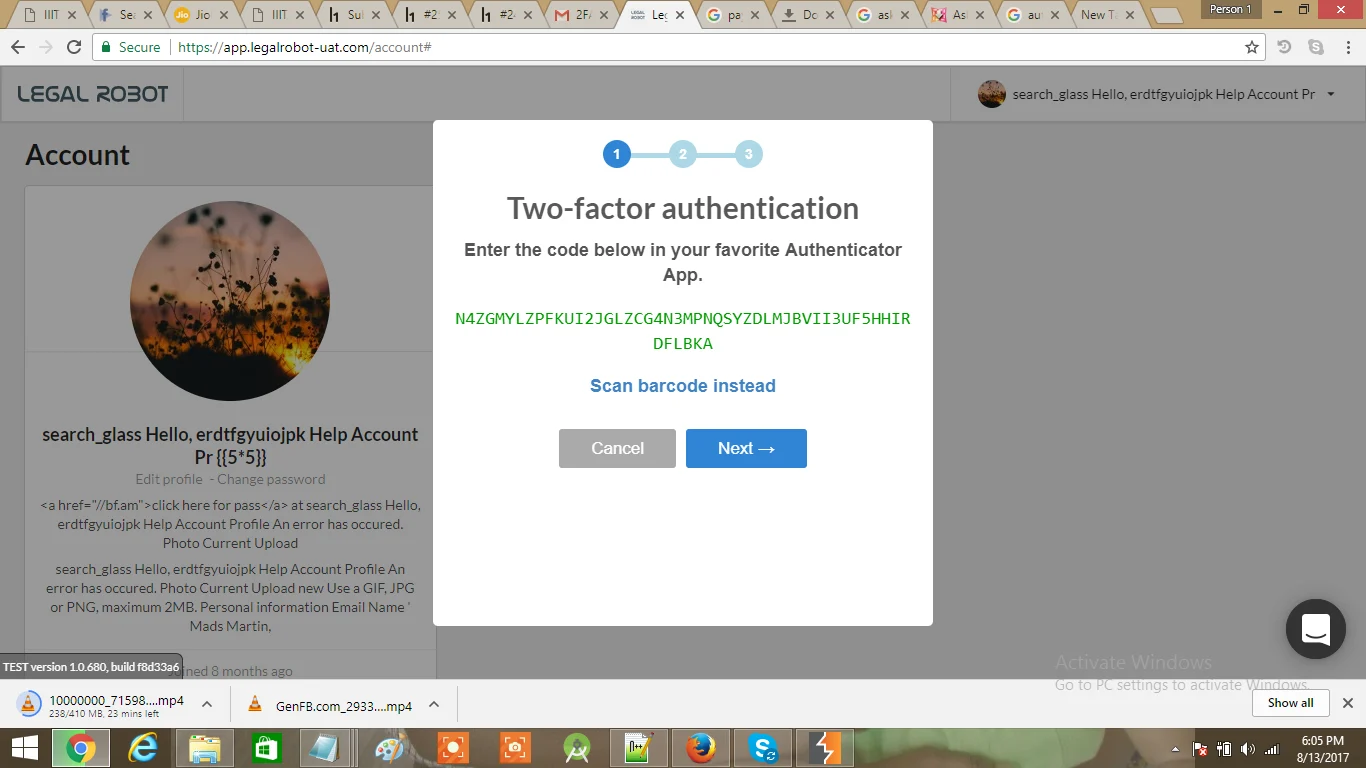
I would like to report on some issue where users are going to face while 2FA authentication.We can see that users need to enter 52 bit code manually for 2FA authentication,which is taking a lot of time and it will be difficult for the user to enter the total 52 bits in the google authenticator app without mistakes.
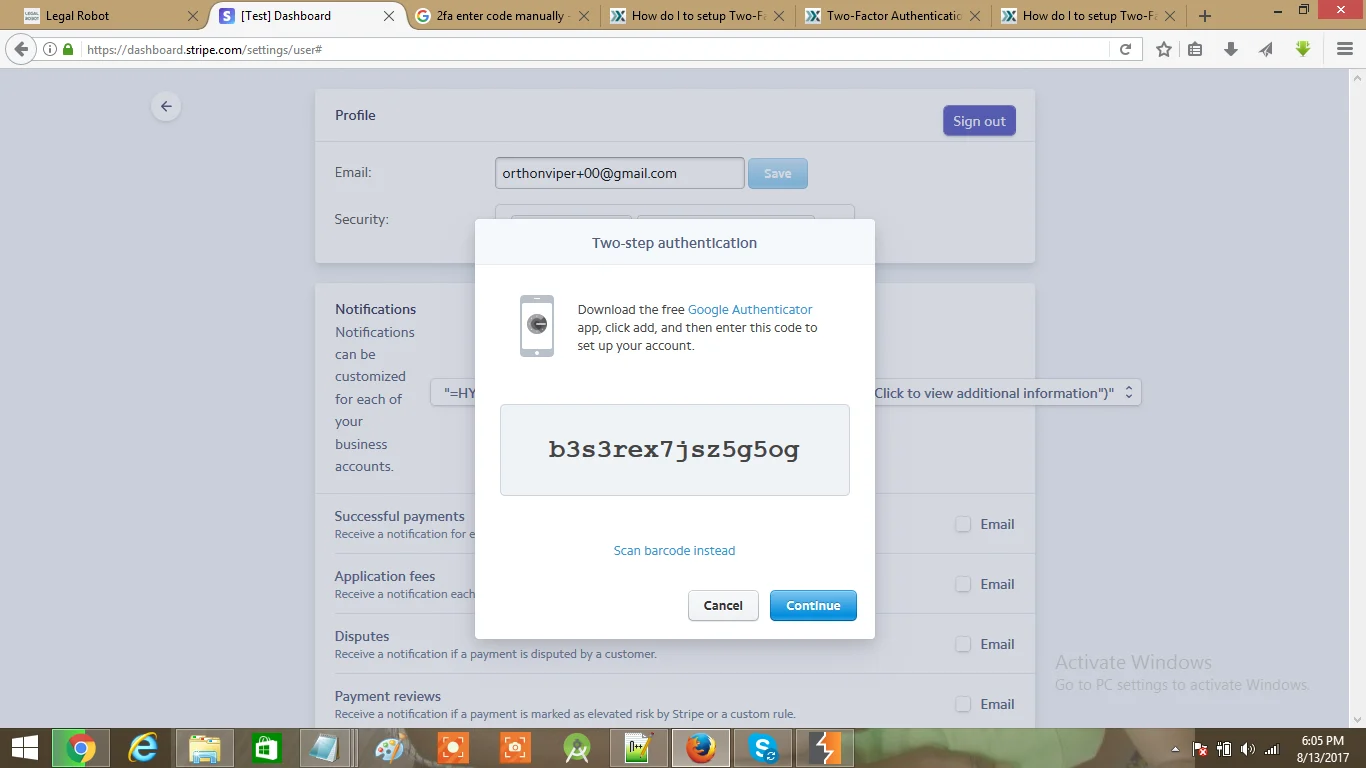
why is this an issue? we all know that our clients wont have that much patience to enter such a lengthy code every time they want 2FA authentication .I've surveyed on other sites(paypa.com,stripe.com) who added the feature 2FA for their clients and Ive observed that users are requested to enter the 16 digit code manually so that it wont effect the time and probability for making mistakes in the google Authenticator. However attackers cannot bypass the code or brute force because Legal robot took necessary steps for this type of protection by implementing the web socket messages.
what is the best possible fix? The best possible fix is to reduce the 52bit "enter code manually code" to 16 bit.
why legal robot need this change? --> 2FA authentication feature was newly added.If users using this feature find this feature as a lot of time wastage they wont use this feature. As a result the impact might bring bad reputation to the entire legalrobot.
From my survey I have another image where other applications are providing 16 bit enter code manually code,which will be much easier for the users to enter in the google authenticator app.
Thanks!
Attachments
Not written yet. The AI write-up for this report has not been written yet. The Original tab links to the source.
How it worked
Root cause
Likely the application displays a long secret for manual entry instead of a shorter code or a QR code, but the text does not identify a security weakness.
Impact
The report claims users may avoid enabling 2FA due to the lengthy manual entry, potentially harming the service's reputation, but no security impact is shown.
What the attacker needed
User enables 2FA; user manually enters the secret
The fix
The report suggests reducing the manual entry code from 52 bits to 16 bits, but this is a usability change, not a security fix.
Explained by bugbounty.wiki with AI from the original and checked against quotes from it; it can still be wrong. Read the original before relying on a detail.
Not written yet. The AI write-up for this report has not been written yet. The Original tab links to the source.
Two-factor authentication (2FA) adds a second step to logging in, often using a code from an app. This report says the setup code is too long to type by hand, which is annoying but not a security flaw. It is more of a usability complaint than a vulnerability.
What is Business logic?
The application works as coded but not as intended: a negative price, a skipped payment step, a limit that can be crossed.





