cross site scripting reflected
A search field on the site reflected user input back into the page without proper handling, so a script payload appeared in the response. An attacker could use this to run script in a victim's browser and potentially steal session cookies.
 Originally disclosed on HackerOne
- Triaged in 3 months
- Fixed in 11 months
- Disclosed after 2.5 years
Summary:
[cross site scripting reflected]
Steps To Reproduce:
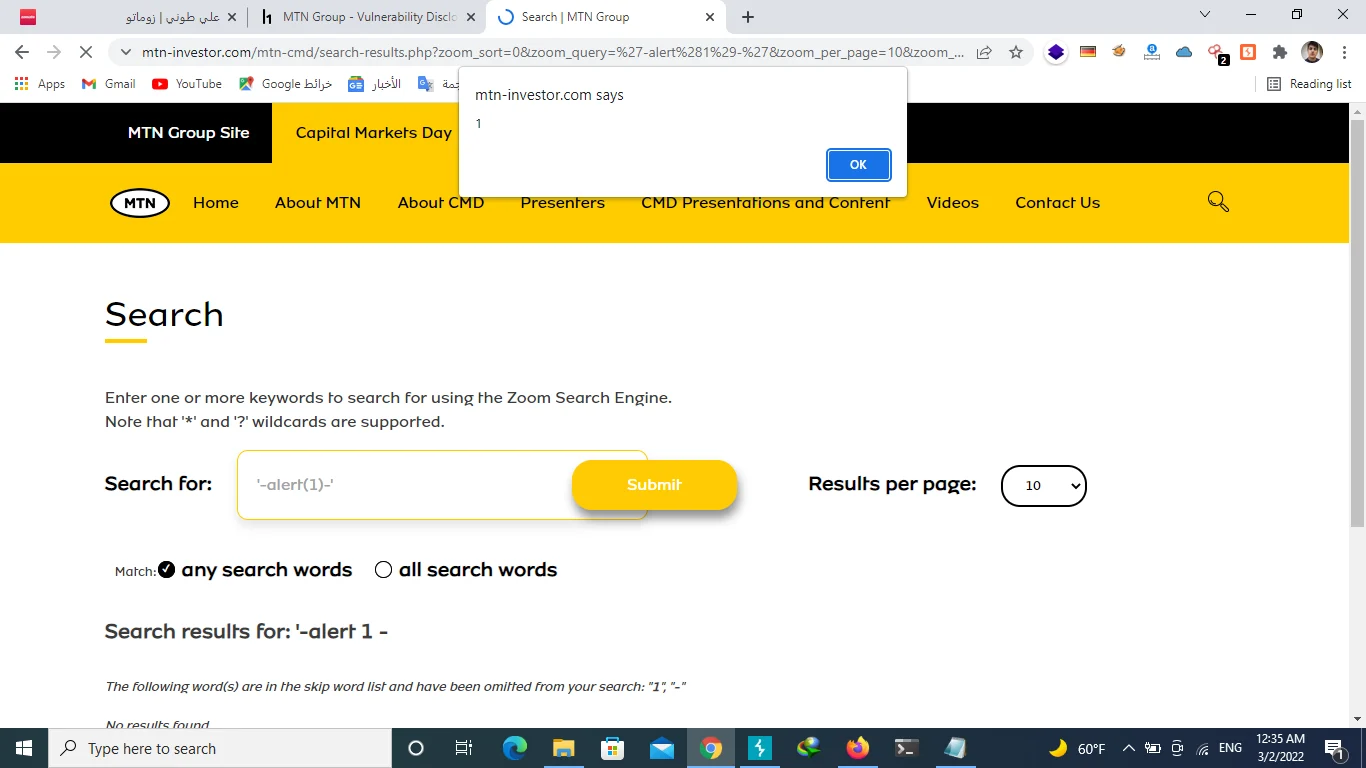
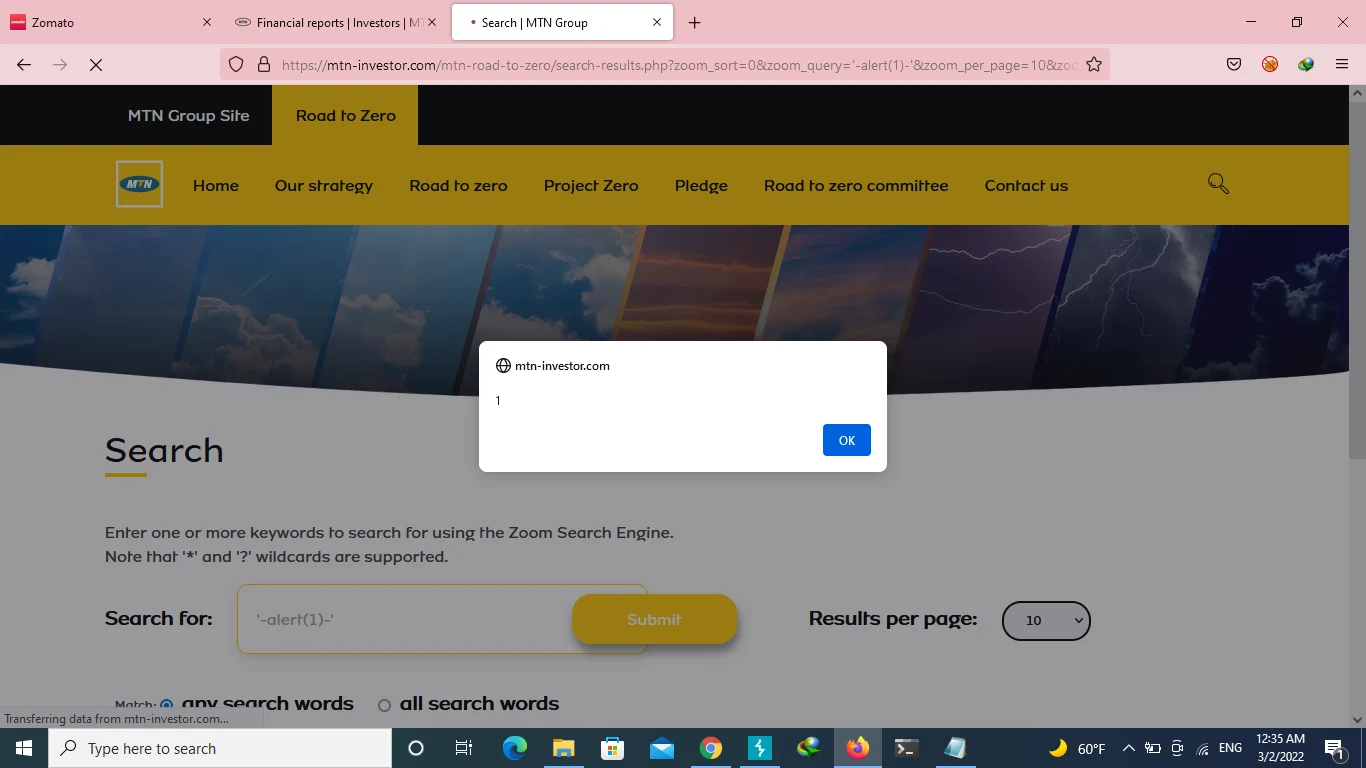
[at first hello [Found that via the script site payload is reflected '-alert(1)-' It was tested on Chrome and Firefox browsers as shown in the pictures below ]
- [Simply open the link https://mtn-investor.com/mtn-cmd/index.php ]
- [In the search button, enter the payload '-alert(1)-' ]
- [You will notice the reflection]
Supporting Material/References:
[list any additional material (e.g. screenshots, logs, etc.)]
- [https://owasp.org/www-community/attacks/xss/]
Impact
As in any vulnerability via scripted sites. The top line is that an attacker might steal cookies to abuse users' session.
- phishing scam
- Some important input data stolen
Attachments
Not written yet. The AI write-up for this report has not been written yet. The Original tab links to the source.
How it worked
Root cause
Likely the search parameter is written into the page without output encoding or input validation.
Impact
An attacker might steal cookies to hijack a user's session and could use the flaw for phishing or to capture input data; the report does not show a working cookie theft.
What the attacker needed
Victim enters the payload in the search field
How it was found
- Open the site's index page.
- Type the payload into the search field.
- Observe the payload reflected in the page.
Explained by bugbounty.wiki with AI from the original and checked against quotes from it; it can still be wrong. Read the original before relying on a detail.
Not written yet. The AI write-up for this report has not been written yet. The Original tab links to the source.
Reflected cross-site scripting happens when a website echoes back whatever you typed without cleaning it first. If the typed text includes code that the browser runs, that code executes as if the site itself had written it. This lets an attacker make a victim's browser do things on the site, such as reading their logged-in session.
What is XSS?
Script an attacker supplies runs in another user's browser, on the target's origin, with that user's session.







