Cross-site Scripting (XSS) - Reflected on http://h1b4e.n2.ips.mtn.co.ug:8080 via Nginx-module
A reflected cross-site scripting flaw exists on a status page served through an Nginx module, where a crafted URL causes script execution. An attacker could run JavaScript in a victim's browser and rewrite the page content.

- Triaged in 6 days
- Fixed in 7 months
- Disclosed after 3.4 years
Summary:
Hello, I found a Reflected Cross site Scripting (XSS) on http://h1b4e.n2.ips.mtn.co.ug:8080 . With this security flaw is possible rewrite the content of page, executing JS codes...
Steps To Reproduce:
How we can reproduce the issue:
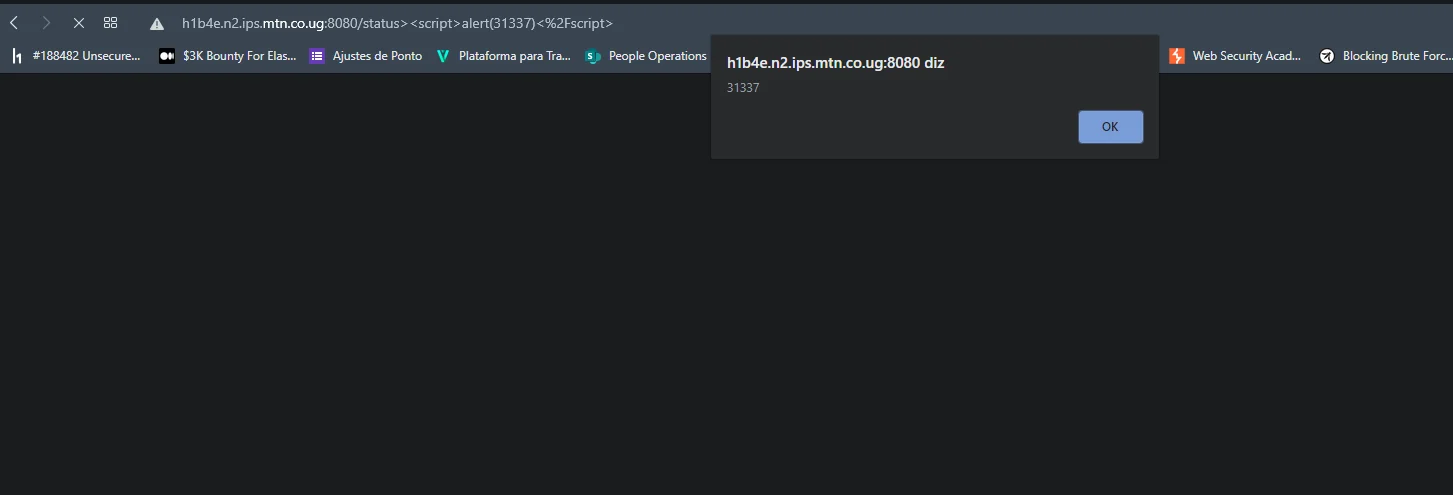
- Go to http://h1b4e.n2.ips.mtn.co.ug:8080/status%3E%3Cscript%3Ealert(31337)%3C%2Fscript%3E
- We can see alert message 31337
Supporting Material/References:
Impact
- The attacker can execute JS code.
- Rewrite the content of Page
Not written yet. The AI write-up for this report has not been written yet. The Original tab links to the source.
How it worked
Root cause
Likely the status page reflects part of the URL path into the HTML response without encoding it, so a script tag in the path is executed by the browser.
Impact
An attacker could execute JavaScript in a victim's browser and rewrite the page content.
What the attacker needed
Victim clicks a crafted link
Explained by bugbounty.wiki with AI from the original and checked against quotes from it; it can still be wrong. Read the original before relying on a detail.
Not written yet. The AI write-up for this report has not been written yet. The Original tab links to the source.
Cross-site scripting (XSS) is when a website takes something from the URL and puts it into the page without cleaning it first. Here, a specially crafted link makes the page run code written by the attacker. If someone clicks that link, the attacker's code runs in their browser as if it came from the site.
What is XSS?
Script an attacker supplies runs in another user's browser, on the target's origin, with that user's session.






