Information disclosure through django debug mode
A Django application had debug mode enabled, so requesting a non-existent path returned a debug error page. An attacker could read internal information exposed on that page.
 Originally disclosed on HackerOne
- Triaged in 34 days
- Fixed in 7 months
- Disclosed after 8 months
Summary:
Your domain https://szezvzorilla.mtn.co.sz was disclosing information throught django debug mode enable.
Steps To Reproduce:
Visit https://szezvzorilla.mtn.co.sz/NON_EXISTING_PATH/ You will the information of debugging
Supporting Material/References:
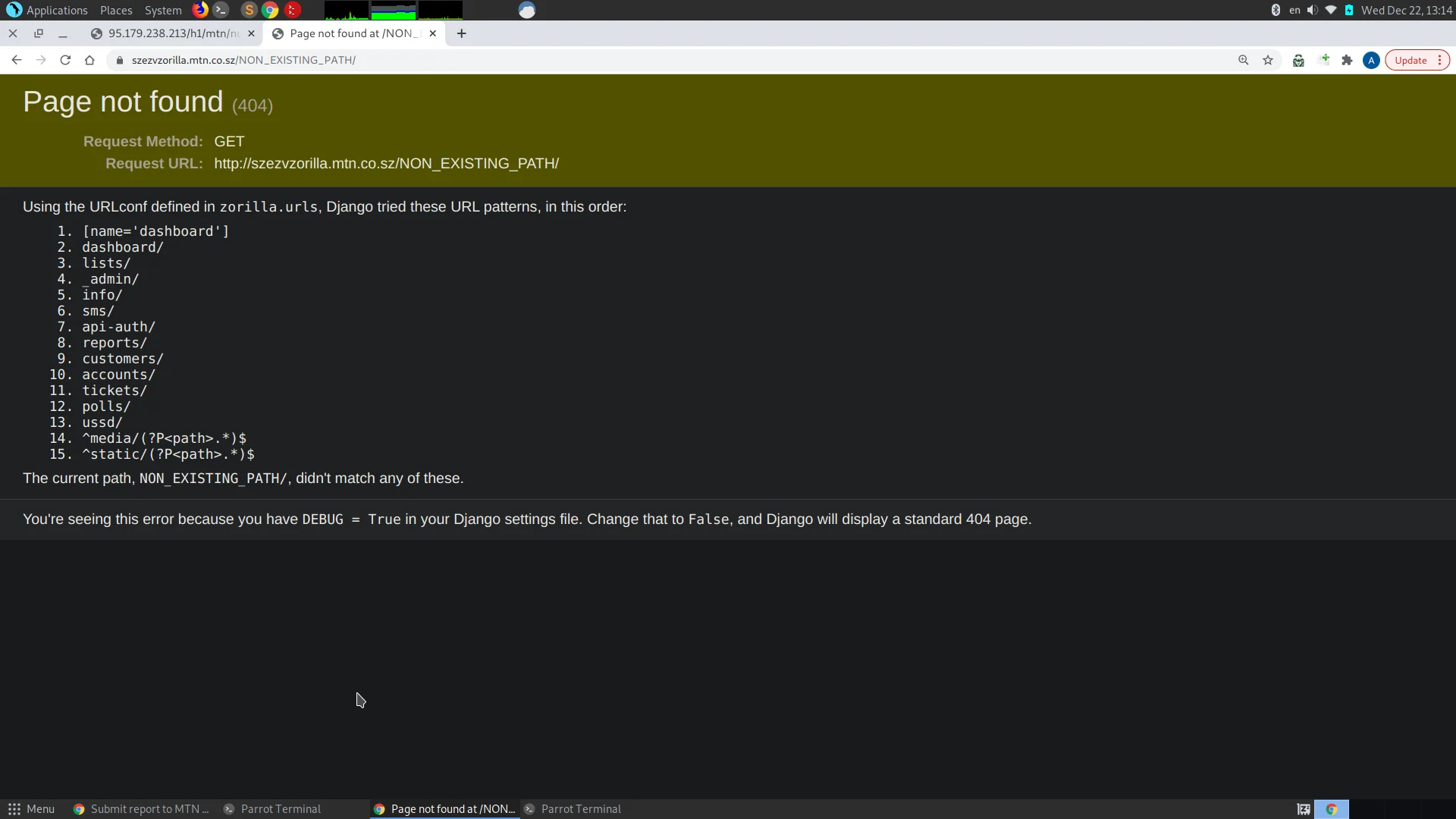
- [attachment / reference]
Impact
Information disclosure
Not written yet. The AI write-up for this report has not been written yet. The Original tab links to the source.
How it worked
Root cause
Likely the Django DEBUG setting was left enabled in the deployed environment.
Impact
An attacker could read internal information exposed by the debug page, though the report does not specify which details were revealed.
What the attacker needed
None
How it was found
- Visit a non-existent path on the site.
- Observe the debug information shown in the response.
Explained by bugbounty.wiki with AI from the original and checked against quotes from it; it can still be wrong. Read the original before relying on a detail.
Not written yet. The AI write-up for this report has not been written yet. The Original tab links to the source.
Django is a web framework. When debug mode is left on, it shows a detailed error page instead of a plain one. That page can reveal internal details about the site to anyone who triggers an error.
What is Info disclosure?
Data the application should keep private (personal data, internal details, other users' records) reaches someone it should not.




