Html injection mycrypto.com
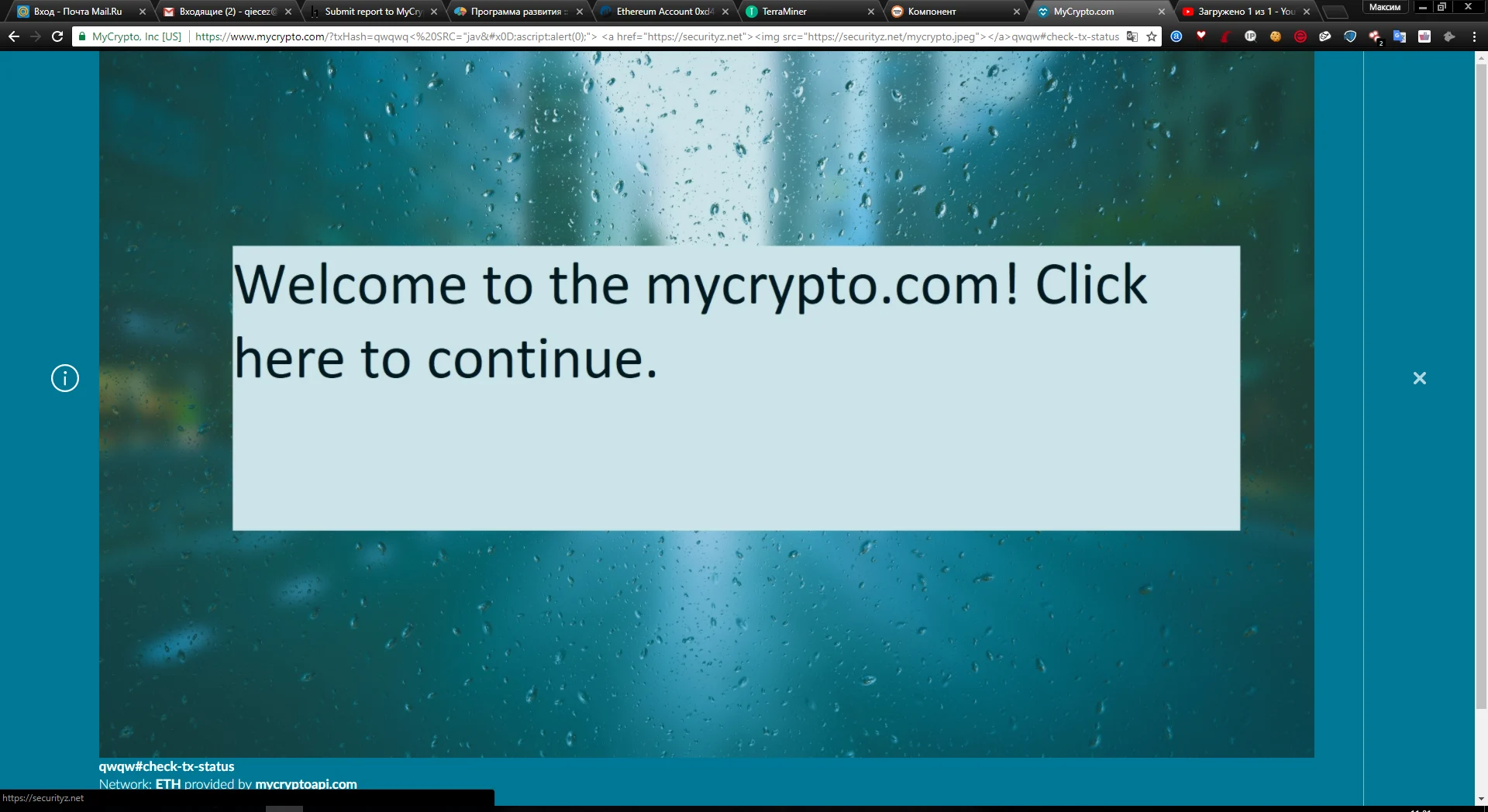
An HTML injection flaw existed in a pop-up message on mycrypto.com, allowing an attacker to insert a link and image into the page. The attacker could use this to direct victims to a phishing site, potentially stealing their private key.

- Triaged in 7 hours
- Fixed in 40 hours
- Disclosed after 4 days
Hello. I remembered that a couple of months ago I found an HTML injection vulnerability on myetherwallet.com, I sent it, but my message was ignored. Since you have the same interface, I decided to check this vulnerability on your site and it was reproduced. The vulnerability works both on www.mycrypto.com and on mycrypto.com. Html injection is in a pop-up message
<div class = "alert-message ng-binding" ng-bind-html = "alert.message"> You are successfully connected <br> URL: <strong> https://www.mycrypto.com/?txHash=qwqwq%3C%20SRC=%22jav ascript: alert (0); "& gt; <a href="https://securityz.net"> </a> qwqw # check- tx-status </ strong> <br> Network: <strong> ETH </ strong> provided by <strong> mycryptoapi.com </ strong> </ div>
Unfortunately, you have filtering there, I could not execute js and could hardly display a picture with href on the page.
PoC
https://mycrypto.com/?txHash=qwqwq%3C%20SRC=%22jav
ascript:alert(0);"> <a href="https://securityz.net"></a>qwqw#check-tx-status
##PoC video https://www.youtube.com/watch?v=JmP9AU8sX5k . ##Impact Since your site and myetherwallet are often subjected to phishing attacks, this vulnerability is dangerous. You can put in the href url of the phishing site, then you can steal the private key of the victim. Perhaps you can upload js to the site, but I could not do it.
Impact
Since your site and myetherwallet are often subjected to phishing attacks, this vulnerability is dangerous. You can put in the href url of the phishing site, then you can steal the private key of the victim. Perhaps you can upload js to the site, but I could not do it.
Attachments
Not written yet. The AI write-up for this report has not been written yet. The Original tab links to the source.
How it worked
Impact
An attacker could insert a link to a phishing site in the pop-up, potentially stealing a victim's private key; JavaScript execution was blocked by filtering.
What the attacker needed
Victim clicks a crafted link
Explained by bugbounty.wiki with AI from the original and checked against quotes from it; it can still be wrong. Read the original before relying on a detail.
Not written yet. The AI write-up for this report has not been written yet. The Original tab links to the source.
HTML injection lets an attacker insert their own HTML code (like links or images) into a web page. Here, the pop-up message that shows a transaction status did not properly clean user input, so a crafted URL could make the page display a link to a phishing site. The attacker hoped to trick users into giving away their private key, but they could not run JavaScript.
What is XSS?
Script an attacker supplies runs in another user's browser, on the target's origin, with that user's session.








