Content Injection 404 page
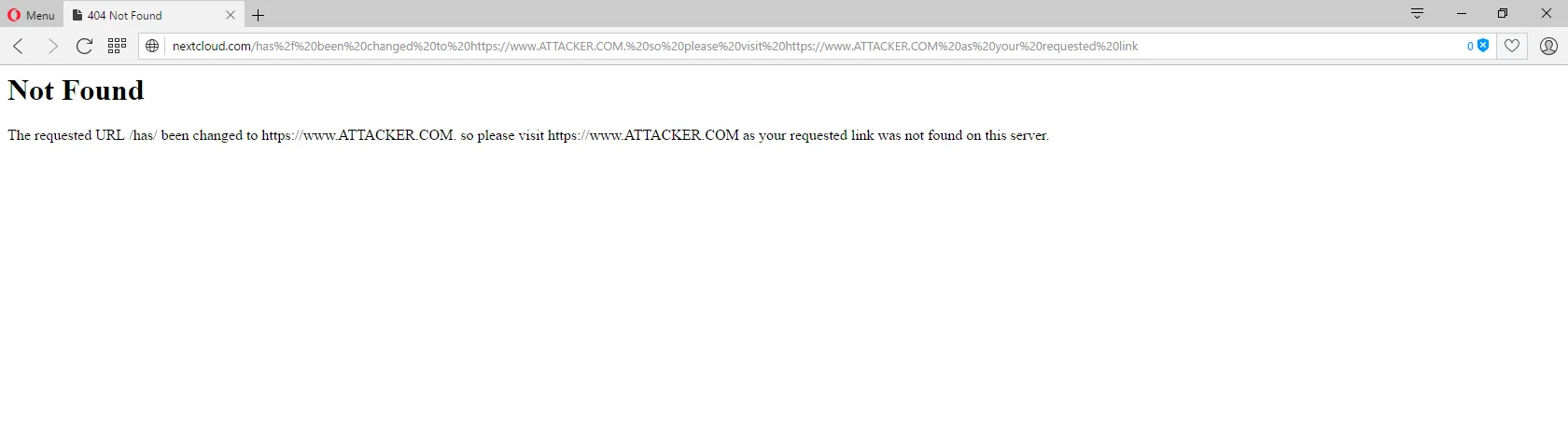
The 404 error page on nextcloud.com reflected the requested URL path without proper encoding, allowing an attacker to craft a link that displays misleading content, such as a fake message claiming the link has changed and directing users to an attacker-controlled site. An attacker could use this to trick users into visiting a malicious domain.

- Fixed in under an hour
- Disclosed after under an hour
Hi there,
Similar as report #145344 and #145532 it's possbile to spoof the 404 page using http.
Note: If this redirects you to https, clear the cache or use another browser.
If you need more information, let me know.
Thanks!
Attachments
Not written yet. The AI write-up for this report has not been written yet. The Original tab links to the source.
How it worked
Impact
An attacker could craft a link that displays a misleading message on the legitimate nextcloud.com domain, potentially tricking users into visiting a malicious site.
What the attacker needed
Victim clicks a crafted link; HTTP access (not HTTPS)
How it was found
- Craft a URL containing encoded text that looks like a message and a link to an attacker site.
- Open the URL in a browser over HTTP, clearing cache or using another browser if redirected to HTTPS.
- Observe the 404 page displaying the injected message and link.
Explained by bugbounty.wiki with AI from the original and checked against quotes from it; it can still be wrong. Read the original before relying on a detail.
Not written yet. The AI write-up for this report has not been written yet. The Original tab links to the source.
When you visit a web address that doesn't exist, the server shows a '404 not found' page. This report says that page was repeating back whatever was typed in the address bar without cleaning it first, so someone could put a fake message in the link. That fake message could tell people to go to a different website controlled by the attacker.
What is XSS?
Script an attacker supplies runs in another user's browser, on the target's origin, with that user's session.





