IDOR - Disable sharing
A file-sharing endpoint accepted a share identifier from the request without checking that the caller owned that share, so a user who merely received a shared file could delete the share. This let a recipient disable sharing that the owner had set up.

- Triaged in 2 days
- Fixed in 3 months
- Paid in 3 months
- Disclosed after 4 months
Decription:
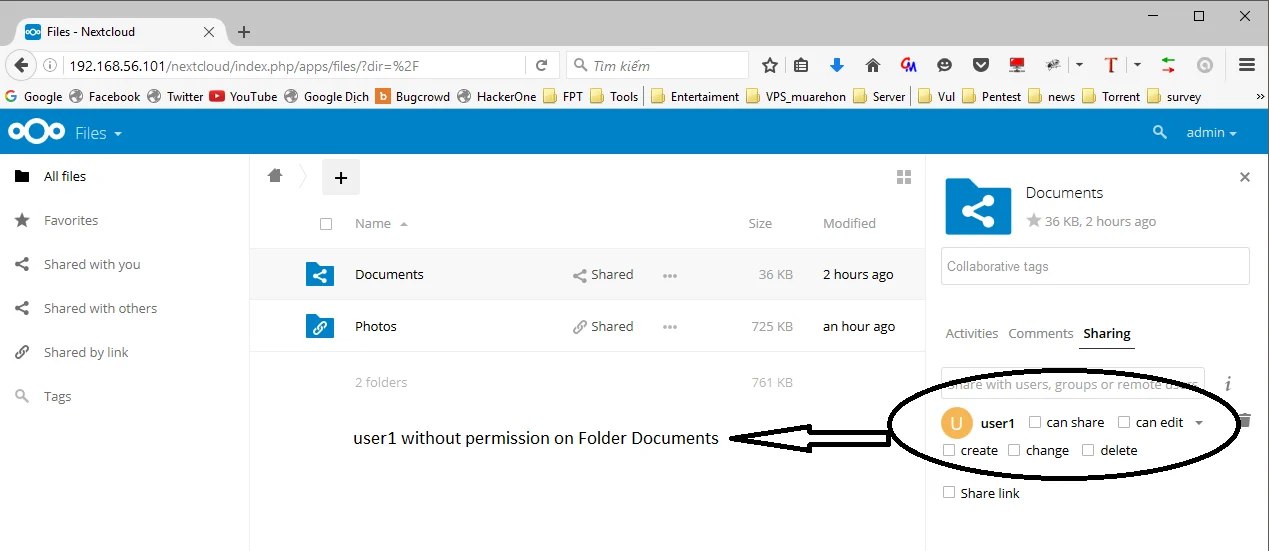
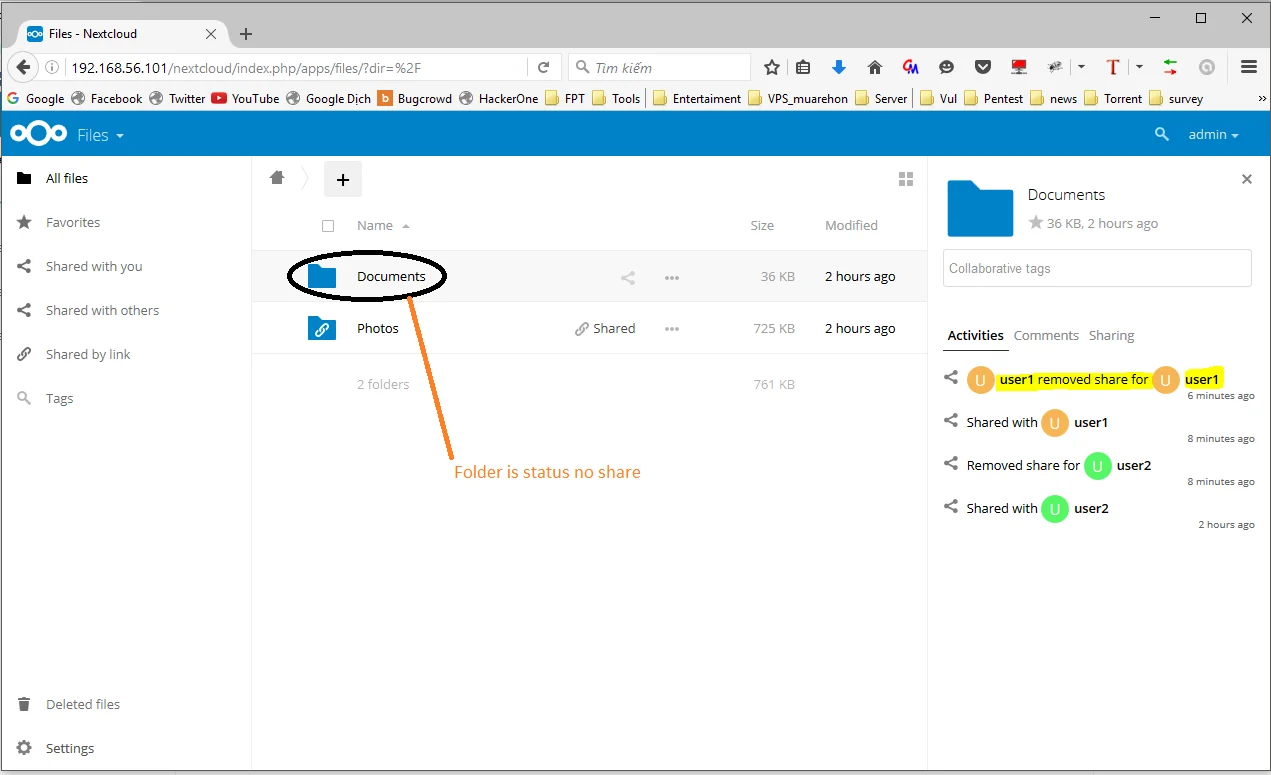
Users are shared files or folder. can disable this sharing.
Detail:
- use request:
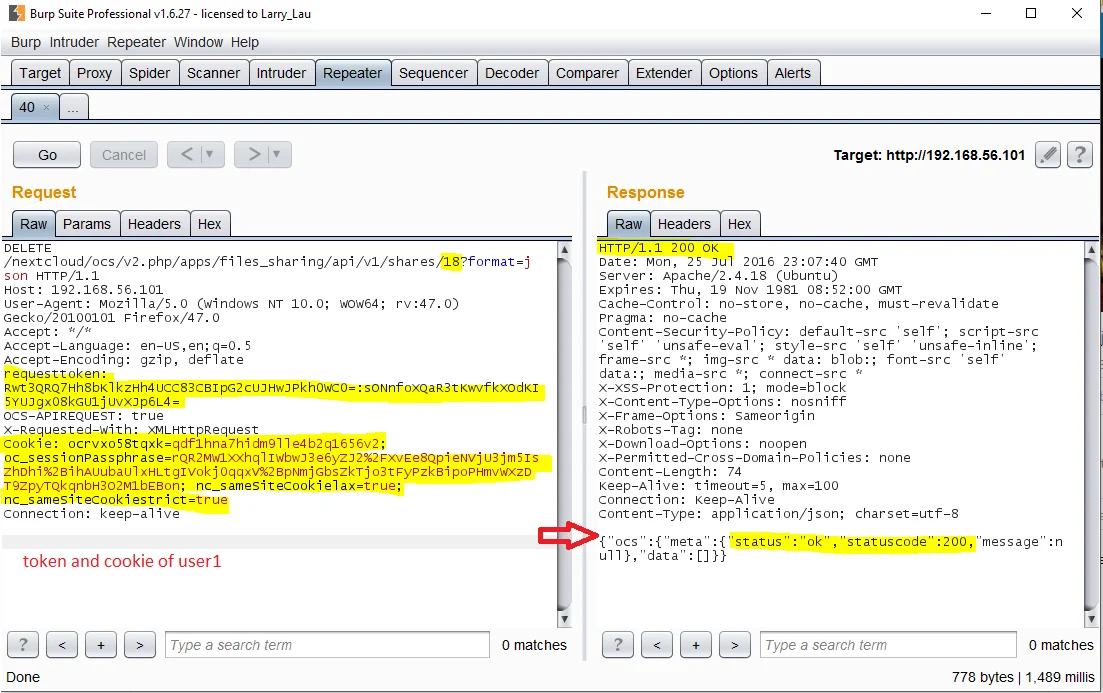
DELETE /nextcloud/ocs/v2.php/apps/files_sharing/api/v1/shares/[share-id]?format=json HTTP/1.1 Host: [your-host] User-Agent: Mozilla/5.0 (Windows NT 10.0; WOW64; rv:47.0) Gecko/20100101 Firefox/47.0 Accept: / Accept-Language: en-US,en;q=0.5 Accept-Encoding: gzip, deflate requesttoken: [token of user is shared] OCS-APIREQUEST: true X-Requested-With: XMLHttpRequest Cookie: [cookie of user is shared] Connection: keep-alive
Note:
only user is shared or user in group is shared can do it
Attachments
Not written yet. The AI write-up for this report has not been written yet. The Original tab links to the source.
How it worked
Root cause
Likely the share-deletion endpoint authorised the request only by checking that the caller was a recipient of the share, not that the caller was its owner.
What the attacker needed
A shared file or folder received from another user; an authenticated session as the recipient
How it was found
- As a user who has received a shared file or folder, send a delete request to the shares API endpoint for that share's identifier.
- Include the recipient's own session cookie and request token so the request is authenticated as the recipient.
- Observe that the share is removed even though the caller is not the owner.
Explained by bugbounty.wiki with AI from the original and checked against quotes from it; it can still be wrong. Read the original before relying on a detail.
Not written yet. The AI write-up for this report has not been written yet. The Original tab links to the source.
When you share a file with someone, the server keeps a record of that share with its own number. This report shows that the server let the person who received the share use that number to delete the share, instead of checking that only the owner could do so. That kind of flaw is called an IDOR: the app trusts an identifier sent by the user without confirming the user is allowed to act on it.
What is IDOR?
One user can read or change another user's data, usually by changing an identifier the server trusts without checking who is asking. One of the most paid bug classes on web programs.



