Reference caching can leak data to unauthorized users
The reference manager cached deck card reference data under a cache key that did not include the user, so once one user had loaded a card, any other user who knew the board and card identifiers could see that card's information. The reporter notes the leak needs several conditions to line up and rates the impact as minimal.
 Originally disclosed on HackerOne
- Triaged in 7 hours
- Fixed in 55 days
- Disclosed after 2 months
Summary by the program
Security advisory at https://github.com/nextcloud/security-advisories/security/advisories/GHSA-8fjp-w9gp-j5hq
The report
Summary:
The ReferenceManager uses a cache to store information about previously accessed references. The used cachePrefix in deck (see here) is independent of the user. If User1 has access to a deck card and the reference data is stored in the cache, any user with knowledge of the boardId/cardId can access the information of that deck card.
Steps To Reproduce:
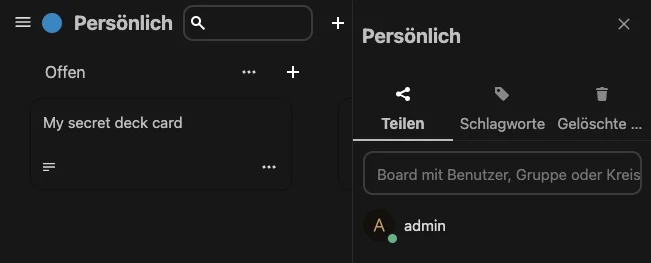
- User1 has a deck card and shares the link in a talk conversation
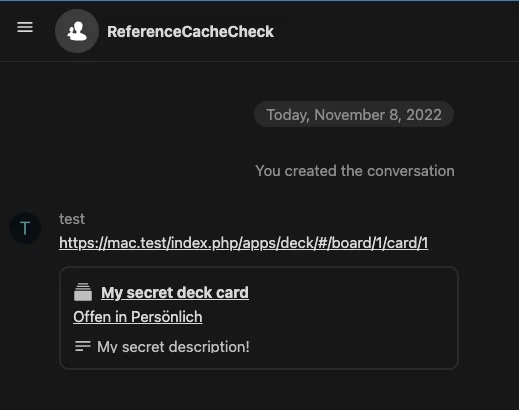
- Any user of that conversation (or with knowledge of the link) is able to see the deck card, if the call to the reference provider was done for user1 before
Supporting Material/References:
User "Admin":
User "Test":
Impact
I think the impact should be minimal, because multiple things need to happen to leak information (the reference needs to be cached, another user needs to know the url, etc.).
The GitHub-Integration uses the userId as a cachePrefix, this so this shouldn't be a issue in that case, see here.
I haven't looked at other reference providers.
Not written yet. The AI write-up for this report has not been written yet. The Original tab links to the source.
How it worked
Root cause
Likely the deck reference provider built its cache key from the board and card identifiers only, without including the requesting user, so cached reference data was shared across users.
Impact
A user without permission to a deck card could see its information, but only if the reference was already cached and the attacker knew the board and card identifiers, so the reporter considers the impact minimal.
What the attacker needed
Victim loads the card reference first; attacker knows board and card IDs
How it was found
- A user with access to a deck card shares the card link in a talk conversation.
- The reference provider fetches and caches the card data for that user.
- Another user of the conversation, or anyone who knows the link, then sees the cached card data.
Explained by bugbounty.wiki with AI from the original and checked against quotes from it; it can still be wrong. Read the original before relying on a detail.
Not written yet. The AI write-up for this report has not been written yet. The Original tab links to the source.
When you paste a link into a chat app, the app fetches a preview of that link and may keep it in a shared store called a cache so it does not have to fetch it again. Here that store was keyed only by the card's identifier, not by who asked, so a preview fetched for one person could be handed to someone else who never had permission to see the card.
What is Info disclosure?
Data the application should keep private (personal data, internal details, other users' records) reaches someone it should not.



