Username and Access Token Disclousure
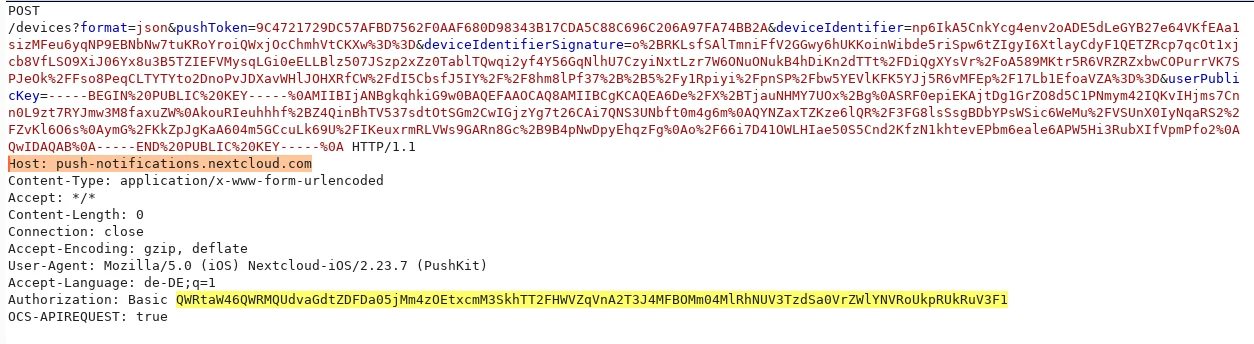
The iOS Nextcloud client sent the instance's Basic-Authentication header, containing the username and access token, to the third-party push notification server during automatic registration. The operator of that server could therefore collect valid usernames and access tokens for every instance with iOS users.

- Triaged in 43 hours
- Fixed in 3 months
- Paid in 6 months
- Disclosed after 7 months
Versions
Nextcloud Server Version: 16.0.3.0 it.tsweb.Nextcloud (iOS App) Version: 2.23.7
Description
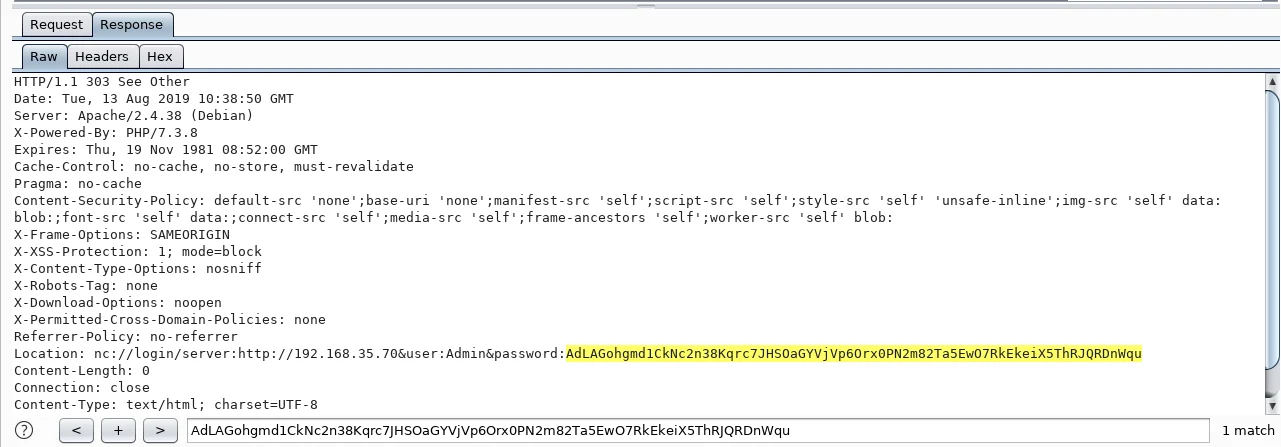
While logging in to an owncloud instance the iOS client sends the Username and password to the ressource
/login?redirect_url=/login/flow/grant
and recieves an token by the ressource /login/flow in the process. This happens in the form of an HTTP 303 redierect Location [Picture 1].
/login/flow/grant?clientIdentifier=&stateToken=ji76VUQooqEHFwIPyUUHkAqGaazB8XJ5DHQiJK6vk5aBLfhS1XMf2flTMPVxgFm3
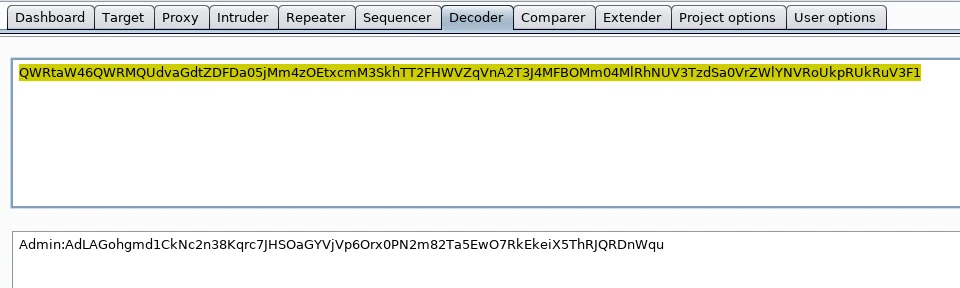
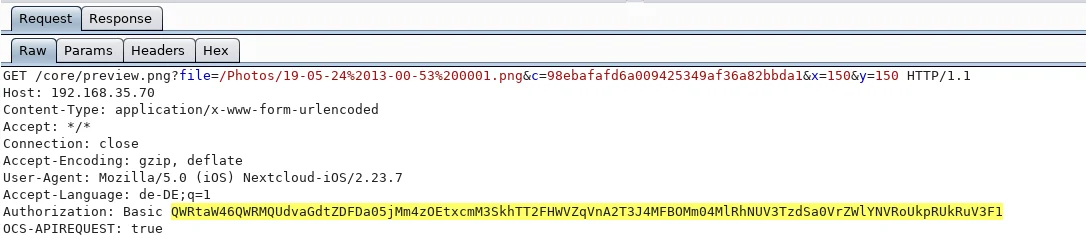
This Token is from now on used to authenticate every request made by the App to the owncloud instance [Picture 4]. This happens in the form of an Basic-Authentication header, where username and password are encodet in an Base-64 String [Picture 3].
Additionally the iOS client automaticaly registers some user specific parameters at push-notifications.nextcloud.com without notifying the user. While this process the client also sends the Basic-Authentication header of the owncloud instance to the third Party server [Picture 2].
Impact
This leads to an massive user information disclousure which affects all iOS users of the nextcloud App (i have not tested Android) to the third party push-notifications.nextcloud.com.
The owner of the domain and the operator of the server recieve a high ammount of valid Usernames an access tokens of every owncloud instance with iOS users.
Attachments
Not written yet. The AI write-up for this report has not been written yet. The Original tab links to the source.
How it worked
Impact
The operator of the push notification domain could receive valid usernames and access tokens for every owncloud instance with iOS users.
What the attacker needed
IOS Nextcloud app; user logs in to an owncloud instance; app contacts push notification server
How it was found
- Log in to an owncloud instance from the iOS client, which posts credentials to the login flow endpoint.
- The client receives a token via a redirect from the login flow endpoint.
- The client uses that token as a Basic-Authentication header on every request to the instance.
- The client automatically registers user-specific parameters with the push notification server, including the same authentication header.
Explained by bugbounty.wiki with AI from the original and checked against quotes from it; it can still be wrong. Read the original before relying on a detail.
Not written yet. The AI write-up for this report has not been written yet. The Original tab links to the source.
The app also sent that token and your username to a separate push notification service without telling you, which the report says discloses user information.
What is Info disclosure?
Data the application should keep private (personal data, internal details, other users' records) reaches someone it should not.



