A vulnerability on Patreon, and their elusive bounty program.
 Published on daturamater.medium.com
Is there a “hack” that seems so easy, that it becomes open source information? If anyone could have discovered this vulnerability, can anyone be a hacker, or is that not considered a hack?
The full write-up lives on its author's site
It belongs to its author, so we link to it rather than copy it. The other two tabs are our own rewrites, checked against it.
Context
Patreon is a subscription-based crowdfunding platform used by content creators, including a large number of YouTubers and other video creators, to earn a living from their work. Creators can post a direct embed of a YouTube video as a reward for a monthly pledge, and can restrict who sees that video according to a tier system based on how much a patron pledges. The intended arrangement is that the creator publishes the video as unlisted on YouTube, so it does not appear in a basic search, and only paying patrons reach it through the Patreon post.
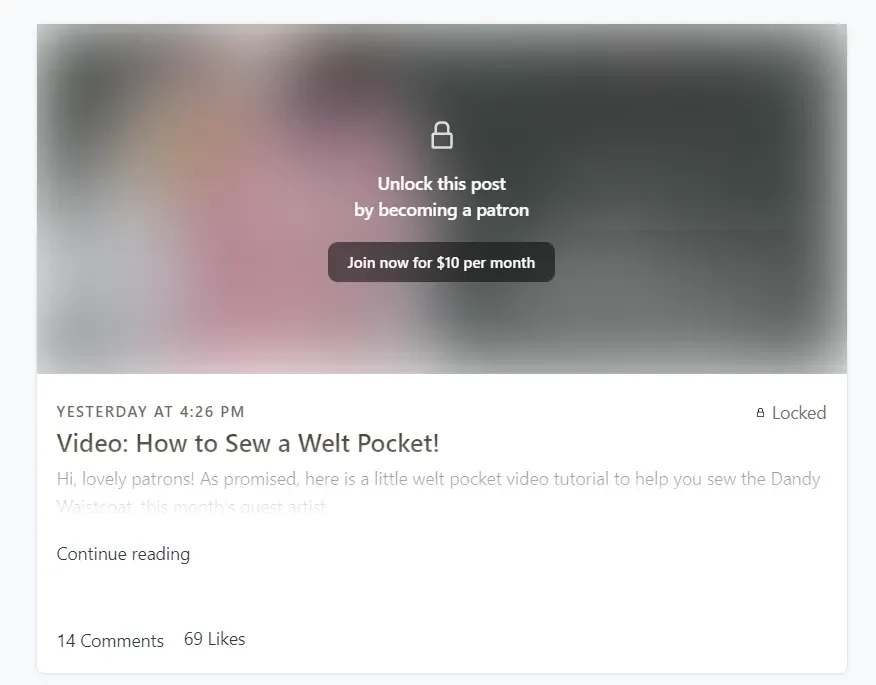
When you are not pledging to a creator, you cannot access their paid content feed. Instead you see a preview: Patreon applies a blur filter to the paywalled content, in much the same way Tinder blurs the pictures of people who have liked you. The blurred preview is shown whether you are logged in, have an account, or not. It only becomes accessible and unblurred once you have paid the required pledge, at least in principle.
The issue described here affects only YouTube posts. Other kinds of Patreon posts are not covered by it.
Setup
The blurred content is served to anyone, connected or not, so the process was carried out from the browser. The blurred content is served to anyone, connected or not, so the whole process was carried out from the browser: inspecting the page, reading the image element, and using a public base64 decoding site. This assumes the creator has posted a YouTube video as a paid reward, published as unlisted on YouTube.
Finding it
By tinkering around, the researcher found that Patreon hides some content in the paid feed with a CSS filter. Anyone introduced to web development knows that this is trivial to remove on the user end: you inspect the image element and remove one CSS property, or you simply open the image file that sits behind it.
When the researcher inspected the blurred content, the raw image could be extracted very easily. The same blurred file, with its filter removed, looks like this:

What made it interesting was the file path of that image. Its structure is recognisable, and what stood out was the start of it: aHR0cHM. That string translates to https in base64, which is what you see every time you encode a URL in base64. Base64 is an encoding format normally used to embed binary content into text, for example in HTML or in email attachments, and to transmit binary data such as images through a text stream. It is not encryption and it obfuscates nothing.
Exploitation
Step 1: remove the blur and read the image path
The blur is a CSS filter applied on the client side, so removing the property in the inspector, or opening the underlying image file directly, exposes the image. The image's file path is the interesting part, because it begins with aHR0cHM, the base64 encoding of https.
Step 2: decode the filename
The researcher took the base64 string and pasted it into a public decoder at base64decode.org to get its real value.
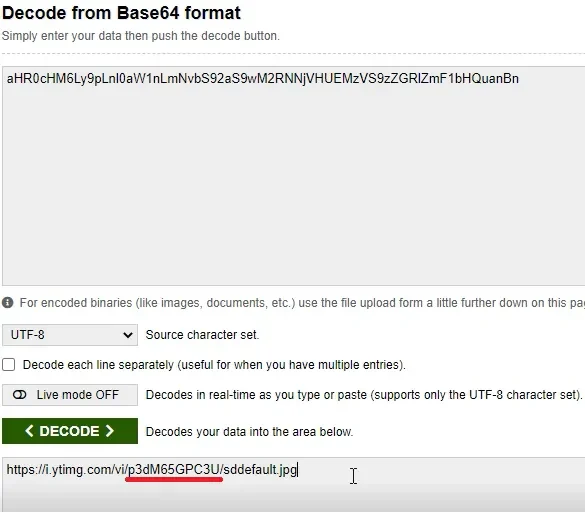
The decoded link contains the thumbnail URL of the video and, more importantly, the YouTube video ID.
Step 3: open the unlisted video
With the video ID in hand, the researcher pasted it into the common video-viewing URL that YouTube uses.
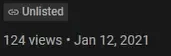
The video was effectively unlisted, and it was accessible this way: paid content could be reached for free, no matter the price of the pledge, as long as the post was a YouTube post.
Root cause
The image filename was base64-encoded, and decoding it returned a link containing the thumbnail URL and the YouTube video ID. Base64 is reversible by anyone and is not a security control, so the filename handed the secret to every visitor who looked at the blurred preview. The blur is only a CSS filter applied on the client, and the blurred content is shown whether you are connected, have an account, or not. The report does not describe any server-side check; the filename simply carried the encoded URL.
Impact
An attacker could access paid content for free, regardless of the pledge price, whenever the post was a YouTube post. The researcher notes that this was a serious economic and privacy threat to creators, whose paid content could be stolen and redistributed. The alternative route is sharing the unlisted link, which cannot be prevented or traced. The researcher also stresses that the exploit was incredibly simple to reproduce and could have been discovered by anyone at any point; it was, in their words, a miracle that it was not already known and actively exploited in the wild.
Fix
The vulnerability was patched a few months later. Patreon no longer encodes the filename in base64; it now appears to be encrypted with another method, and it is also secured with a unique token and some sort of timestamp. The report does not describe the new scheme beyond that.
Disclosure and the bounty programme
The researcher emailed Patreon's security team, since the platform advertises a bug bounty programme.
The email was polite and explained that an important security problem had been found, that it was very accessible and very likely to be discovered, and that the motivation was mainly the creators who could have their paid content stolen and redistributed. Patreon replied three days later with two sentences, thanking the researcher for keeping Patreon secure, stating that they did not have a public disclosure page, and asking for the report to be sent their way. The researcher replied, pointing out that the security page mentioned a bug bounty programme and asking for more information about it, given the economic and privacy threat to creators. The reply also noted that only a small paragraph about the programme existed on the website and explained basically nothing, and emphasised how simple the exploit was to reproduce. Patreon never replied to the second email.
Variants to test
- Inspect paywalled previews for client-side hiding. Look for CSS filters, opacity, overlays or
displaytricks on images and iframes. A positive result is that removing the property, or opening the image URL directly, reveals content that should require a pledge. - Decode every filename, path segment and query value that looks like base64. Strings beginning with
aHR0cHMdecode tohttps, and a positive result is a decoded URL that points at the protected asset, such as a video ID or a storage path. - Check whether identifiers of protected resources (video IDs, file keys, document IDs) appear anywhere in the HTML or asset paths served to unauthenticated visitors. A positive result is an identifier that can be used directly against the hosting platform, for example by pasting a video ID into the standard viewing URL.
- Test other embed types, not just YouTube, for the same pattern: Vimeo, SoundCloud, podcast hosts and file attachments. A positive result is the same leak of an identifier or direct URL in a client-delivered asset.
- Compare the response for a logged-out request with the response for a paying patron. A positive result is that the protected identifier is present in both, meaning access control exists only in the rendering layer.
What happened, in plain words
Patreon is a website where people who make things (videos, art, podcasts, writing) can ask their fans to pay a small amount every month. In exchange, the fans get access to posts the creator marks as paid. Many of those creators are YouTubers. YouTube is strict about which videos can earn advertising money, so a lot of them put their videos on Patreon instead, where their fans pay them directly.
When a creator posts a YouTube video as a paid reward, they usually publish that video on YouTube as unlisted. Unlisted means the video does not show up in YouTube search or on the creator's channel; only someone who has the exact link can watch it. The idea is that only people who have paid reach the unlisted video through the Patreon post.
If you have not paid, Patreon still shows you something: a blurred preview of the post. It looks like a photo with frosted glass over it. The blur is meant to tease the content without giving it away. The blur was only a visual effect applied in your own browser, and the file behind the blurred image had a base64 name that, once decoded, returned a link containing the YouTube video ID. With that ID, anyone could open the unlisted video for free.
This article walks through the whole thing from zero: what the platform does, how the researcher noticed the problem, the three small steps that turned a blurred picture into a free video, why it worked, what Patreon did about it, and how the researcher's report to Patreon's security team was handled.
The context
Patreon is a subscription-based crowdfunding platform. Subscription-based means fans pay a recurring amount, usually monthly, rather than a one-off donation. Crowdfunding means many people each contribute a small amount to support a creator. The platform is used by individuals and organisations, mostly content creators, and a fair number of sex workers.
A big portion of the creators on Patreon are YouTubers or otherwise make video content for YouTube. YouTube is well known for being restrictive about which types of content creators are allowed to earn advertising money from. That is why many creators turn to platforms such as Tipeee, or Patreon in this case, to earn a living from their work.
When you are not pledging to a creator yet, you cannot access their paid content feed. Instead you see a preview of the sort shown below. Patreon uses a blur filter to hide the paywalled content while still letting you glimpse the image behind it. This is the same trick Tinder uses to blur the photos of people who have liked you.
A few words on the pieces involved, because they matter later:
- Paywall: a barrier that only lets paying users through to certain content. On Patreon the barrier is the monthly pledge.
- Blur filter: a visual effect that makes an image look out of focus. In a web page it is usually a line of styling (CSS, the language that describes how a page looks) applied to the image element.
- Client side: anything that happens in your own browser, on your own computer. The opposite is server side, meaning it happens on Patreon's computers before the page is sent to you. A rule enforced only on the client side can usually be undone by the person using the browser.
It is important to note that you see blurred content whether you are logged in, have an account, or not. It only becomes accessible and unblurred once you have paid the required pledge, at least that is how it should be. There are scripts out there that allow you to unblur Tinder users' pictures, which shows this kind of blur is not a real lock.
The process
Again, much like Tinder, the researcher discovered by tinkering around that Patreon blurs some content in the paid feed with a CSS filter. If you have been introduced to web development, you know that this is a very easy filter to get rid of on the user end: you pretty much just have to inspect the image element and remove one CSS property, or straight up just open the image file that is behind it.
To unpack that for a complete beginner:
- Inspect means using the browser's built-in developer tools. Right-clicking something on a page and choosing Inspect opens a panel showing the underlying HTML, the code that describes the page.
- An element is one piece of that page, for example one image.
- A CSS property is one styling instruction on that element, for example blur this image by 20 pixels. Delete the instruction in the panel and the browser redraws the image without the blur, on your screen only.
- Opening the image file directly means copying the address of the image and pasting it into a new browser tab. The browser then shows the raw file with no page styling around it, so no blur.
Neither of those actions changes anything on Patreon's servers. They only change what your own browser displays. That is the core lesson: if the only thing hiding content is a styling instruction sent to your browser, the content was never really hidden.
Now, Patreon posts can be put in two fields: YouTube videos, and other posts. This issue only happens with YouTube posts.
Patreon allows creators to post a direct embed of a YouTube video as a reward for a monthly pledge, and even to filter who gets to see that video based on how much they are pledging, in a tier system. A tier system means different pledge levels unlock different rewards, for example 5 dollars a month for one tier and 20 dollars a month for another. This assumes the creator publishes their video as unlisted, because an unlisted video will not be returned on a basic search.
There are two ways to circumvent that protection:
- The good old way: sharing. As high as the pledge to access the content is, if someone who paid for it decides to spread the link to your unlisted video, there is virtually nothing you can do about it, and there is no way to track who did it either.
- The way the researcher discovered. This is the one described below. It has been patched since, and the article is written for the sake of education and research, and also because the researcher thinks Patreon did things wrong here.
Back to the blurred paid YouTube post. When the researcher inspected the blurred content, the raw image could be extracted very easily. Here is the previous blurred file, without its filter:
That is where it got interesting: the file path of that image looked like a long string of random-looking characters. A file path is the address of a file on a server, the part of a web address that points at one specific file. What really struck the researcher was the start of it: aHR0cHM. That looked familiar, but it took a minute to place.
aHR0cHM translates to https in base64. In fact, that is what you see every single time you encode a URL in base64 format.
Base64 is an encoding format, usually employed to embed binary content into text, most likely in HTML, or even to attach files to emails. It is usually only used to transmit binary data, such as images, through a text stream. Encoding is not the same as encrypting: encoding is a fixed recipe that anyone can reverse, while encryption needs a secret key. Base64 is just one of those common formats you find in riddles, like the Caesar Cipher, where each letter is shifted a few places down the alphabet.
The researcher does not know enough about backend to know why Patreon chose to use base64 for filenames, but what can be said is that it is in no way secure, and it does not obfuscate anything. You can go to any website like base64decode.org to quickly send a string of base64 text and get it decoded.
So that is what the researcher did: went to base64decode.org and pasted the base64 text into the field to get its real value.
There it was. If you are even mildly tech savvy, you will notice that the returned link contains the thumbnail URL of the video, but more importantly, it contains the YouTube video ID. A thumbnail is the small preview picture YouTube shows for a video. A video ID is the short code YouTube uses to identify one specific video, the part of a YouTube address that comes after watch?v=.
Now all the researcher had to do to access that unlisted video was to paste that video ID into the common video-viewing URL that YouTube uses.
The video was effectively unlisted, and just like that, paid content could be accessed for free, no matter the price, as long as it was a YouTube post.
What is wrong with them?
So the researcher decided to contact Patreon about it and sent an email to their security team, since they have a bug bounty programme in place. A bug bounty programme is an offer from a company: if you find a security problem in our product and report it responsibly, we may pay you a reward. The word bounty is the same one used for a reward offered for finding something.
The email was very polite. It told Patreon that an important security problem had been found on their website, that it was very accessible and very likely to be discovered. The motivation was mainly the creators, who could absolutely get their paid content stolen from them and redistributed, more than the company itself, the entity that makes enormous amounts of money from the cut it takes from its creators' revenue.
Patreon replied three days later, in two sentences. They thanked the researcher for keeping Patreon secure, but also specified that they did not have a public disclosure page, while still asking the researcher to send the report their way. A public disclosure page is a page where a company lists security reports it has received and fixed, so that other people can learn from them.
The researcher replied, highlighting the fact that Patreon's security page mentioned a bug bounty programme and asking for more information about it, since the vulnerability was a pretty serious economic and privacy threat towards their creators. It also did not help that there was, and still is, only a small paragraph about the bug bounty programme on their website, which explains basically nothing. The reply also emphasised that the exploit was incredibly simple to reproduce and that anyone else could discover it at any point. It was pretty much a miracle that it was not already known and actively exploited in the wild.
Patreon never replied to the second email. The researcher assumed they did not, in fact, want to discuss the bounty programme, and that they did not really care about their creators' privacy or success.
The researcher kept testing the vulnerability every now and then, and it was seemingly patched a few months later. Patreon no longer encodes the filename in base64; it now seems encrypted with another method, and it is also secured with a unique token and some sort of timestamp. A token here means a unique value added to the filename, which the report says now secures it alongside a timestamp.
Honestly though, this is probably one of the least worrying things happening on Patreon lately. The researcher notes that Patreon fired their entire security team two weeks ago, and links to a claim that the platform allows parents to distribute and sell access to CSAM (Child Sexual Abuse Material).
Glossary
- Base64: an encoding format that turns data into a string of letters, digits and a few symbols. It is reversible by anyone and is not encryption.
- Blur filter: a CSS styling effect that makes an image look out of focus. It changes only what your browser draws.
- Bug bounty programme: a company's offer to reward people who report security problems responsibly.
- Caesar Cipher: a simple cipher where each letter is shifted a fixed number of places down the alphabet.
- Client side: happening in your own browser, on your own computer, rather than on the company's servers.
- Crowdfunding: collecting many small contributions from many people to support a creator or project.
- CSS: the language that describes how a web page looks, including filters such as blur.
- CSS property: one styling instruction on a page element, for example blur this image.
- Element: one piece of a web page, such as one image or one paragraph.
- Embed: placing content from another site, such as a YouTube video, inside a page.
- Encoding: converting data into another representation using a fixed, reversible recipe.
- Encryption: converting data so that only someone with the right key can read it back.
- Exploit: a concrete way of taking advantage of a security weakness.
- File path: the address of a file on a server, the part of a web address that points at one specific file.
- HTML: the language that describes the structure of a web page, such as which images and links it contains.
- Inspect: using the browser's developer tools to look at and change the underlying HTML and CSS of a page.
- OSINT: open source intelligence, information gathered from publicly available sources.
- Patch: a fix applied to software to close a security problem.
- Pledge: the recurring amount a fan promises to pay a creator each month.
- Public disclosure page: a page where a company lists security reports it has received and fixed.
- Server side: happening on the company's computers before the page is sent to your browser.
- Subscription-based: a model where users pay a recurring amount, usually monthly.
- Thumbnail: the small preview picture shown for a video.
- Tier system: pledge levels that unlock different rewards.
- Token: a long random value checked by the server, used to authorise access to a resource.
- Unlisted: a YouTube setting where a video does not appear in search or on the channel, and can only be reached with the exact link.
- URL: the address of a resource on the web, such as a page or an image.
- Video ID: the short code YouTube uses to identify one specific video.




