IDOR vulnerability leads to Deleting message after leaving/getting banned from group using message ID
A user who left or was banned from a channel could still delete their own messages by calling the delete-message API directly with the message ID, even though the interface no longer offered that option. This let a removed user erase evidence of their violations.

- Triaged in 3 days
- Fixed in 15 months
- Disclosed after 16 months
Steps:
First send a message to the channel and capture its request:
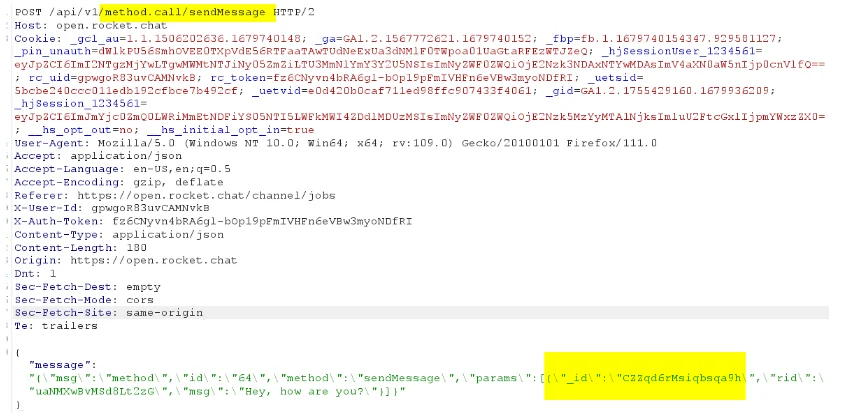
Endpoint: /api/v1/method.call/sendMessage
CZZqd6rMsiqbsqa9h is the message ID that will be used later to delete the message to this ID.
Leave the channel.
Now, don’t join the channel again, just try to see options available that you can do to your message, you will see that you can’t delete this message after leaving or getting kicked from the channel.
But this can be bypassed through the DeleteMessage API call.
Try to delete your message in some other channel and capture its request as shown in the screenshot below:
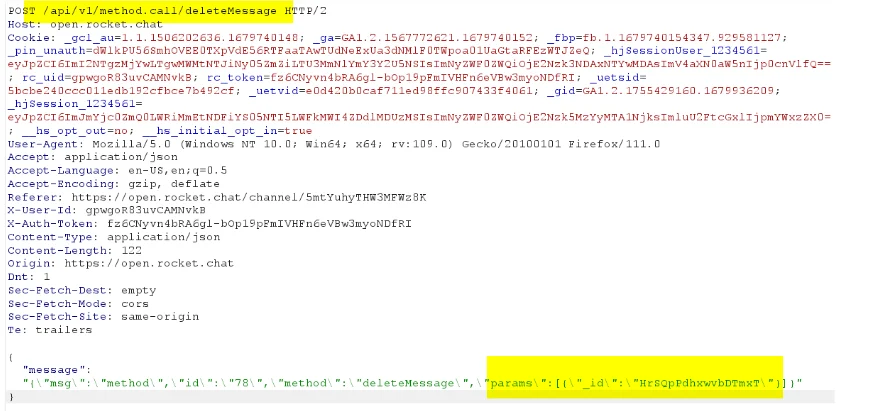
Endpoint: /api/v1/method.call/deleteMessage
Now, change the id to CZZqd6rMsiqbsqa9h and forward the updated request.
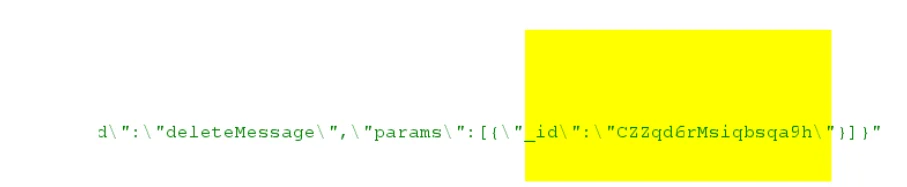
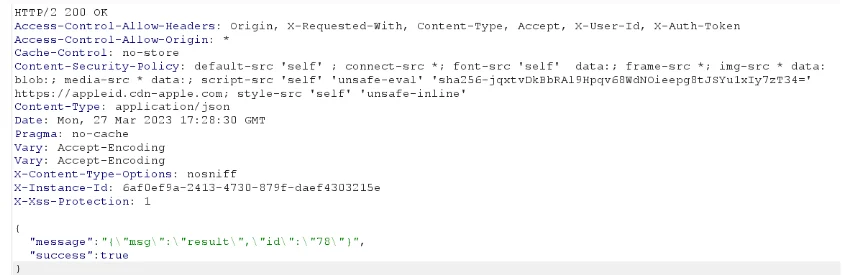
It successfully deleted the message.

Impact
The impact is that a user can still delete the messages after getting banned/muted from the channel and leaving no evidence of his/her violations. This must be strictly restricted.
Attachments
Not written yet. The AI write-up for this report has not been written yet. The Original tab links to the source.
How it worked
Root cause
Likely the delete-message endpoint checked only that the caller owned the message, not that the caller was still a member of the channel.
Impact
A banned or departed user could still delete their messages, removing evidence of their violations.
What the attacker needed
A user account; membership of the channel; ability to capture and replay requests
The fix
Deletion after leaving or being banned should be strictly restricted.
How it was found
- Send a message to the channel and capture the request, noting the message ID.
- Leave the channel.
- Confirm the interface no longer offers a way to delete the message.
- Capture a delete-message request from another channel.
- Replace the message ID with the earlier one and send the request, which deletes the message.
Explained by bugbounty.wiki with AI from the original and checked against quotes from it; it can still be wrong. Read the original before relying on a detail.
Not written yet. The AI write-up for this report has not been written yet. The Original tab links to the source.
When you leave or are removed from a group, the app hides the delete option for your old messages. But you could still send a delete request yourself using the message ID, so a removed user could wipe their messages and hide what they had done.
What is IDOR?
One user can read or change another user's data, usually by changing an identifier the server trusts without checking who is asking. One of the most paid bug classes on web programs.


