`/names.nsf` and all `/names*` files route to public API on rubygems.org
The reporter claims that a file named names.nsf is publicly accessible on rubygems.org without authentication, and that it contains confidential data. They assert an attacker could read sensitive information, but the text does not show what the file actually contains or that it is genuinely sensitive.
 Originally disclosed on HackerOne
- Disclosed after 17 days
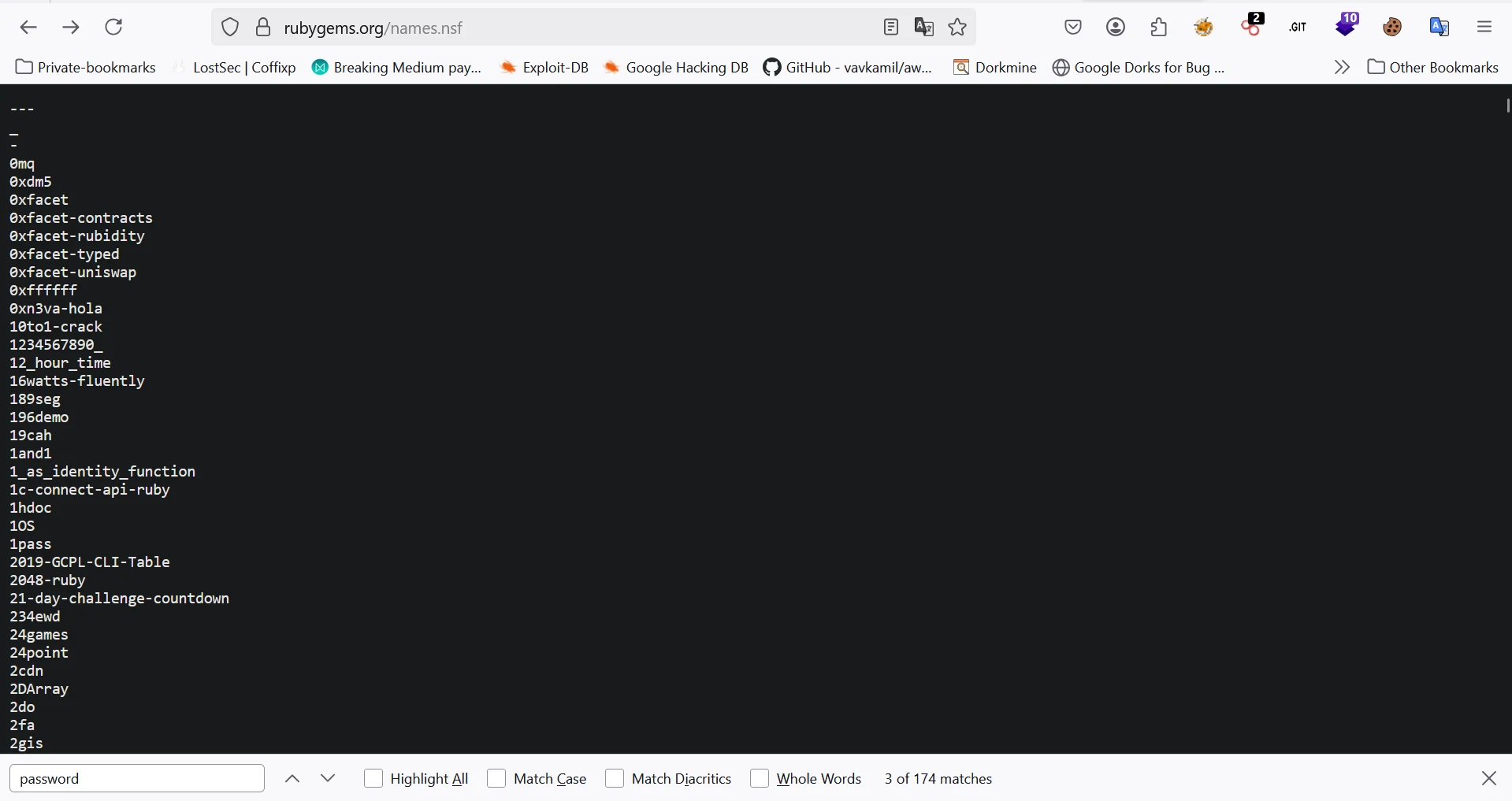
During the security assessment of the application hosted at https://rubygems.org/names.nsf, it was discovered that a sensitive file "names.nsf", is publicly accessible without proper authentication and it is supposed to be protected by authentication mechanisms to ensure that unauthorized users do not gain access to sensitive data stored within it.
Steps to Reproduce:
-
Open the following URL in a browser: https://rubygems.org/names.nsf
-
No authentication or authorization is required to access the file. The file is directly accessible to anyone with the URL.
3.The content of the file contains confidential data look at Attachment file and screenshot.
Evidence: Screenshot and file Attached with attachment
Mitigation/Remediation Steps:
-
Authentication & Authorization: Ensure that access to the .nsf file is properly authenticated. Only authorized users should be able to access this file.
-
Restrict Direct Access:
Configure the web server to prevent unauthorized access to sensitive files such as .nsf. Use proper access control lists (ACLs) or configurations like .htaccess (if using Apache) to block direct access.
Recommendation: It is recommended to immediately implement proper access control on the .nsf file to restrict public access. The organization should also consider using encryption and strong authentication mechanisms to secure all sensitive files within the application
Impact
- Data Breach: Unauthorized users can view sensitive information, including personal and business-related data.
- Privacy Violation: Exposure of personal and confidential user data could violate privacy regulations (e.g., GDPR, HIPAA).
- Potential for Exploitation: If the file contains sensitive business data, attackers may use this information for phishing, social engineering, or further exploitation.
- Loss of Trust: This exposure could harm the reputation of the organization, especially if customers' private information is accessed or compromised.
Attachments
Not written yet. The AI write-up for this report has not been written yet. The Original tab links to the source.
How it worked
Impact
The reporter claims confidential data could be exposed, but no evidence of actual sensitive content is provided in the text.
What the attacker needed
None
How it was found
- Open the URL for names.nsf in a browser.
- Observe that no login is required and the page loads.
Explained by bugbounty.wiki with AI from the original and checked against quotes from it; it can still be wrong. Read the original before relying on a detail.
Not written yet. The AI write-up for this report has not been written yet. The Original tab links to the source.
The report says a file that should be private can be opened by anyone who knows its web address. The author believes it holds secret information but does not prove what is inside.
What is Info disclosure?
Data the application should keep private (personal data, internal details, other users' records) reaches someone it should not.




