Extra program metrics disclosed via /PROGRAM_NAME json response
A program's public JSON endpoint exposed SLA miss and fail counts plus a researcher count that were not shown in the normal policy page interface. An attacker could read these figures to infer how many reports a program is handling and how many researchers are involved, including before accepting a private invite.

- Triaged in 21 hours
- Fixed in 9 days
- Paid in 9 days
- Disclosed after 10 days
Summary:
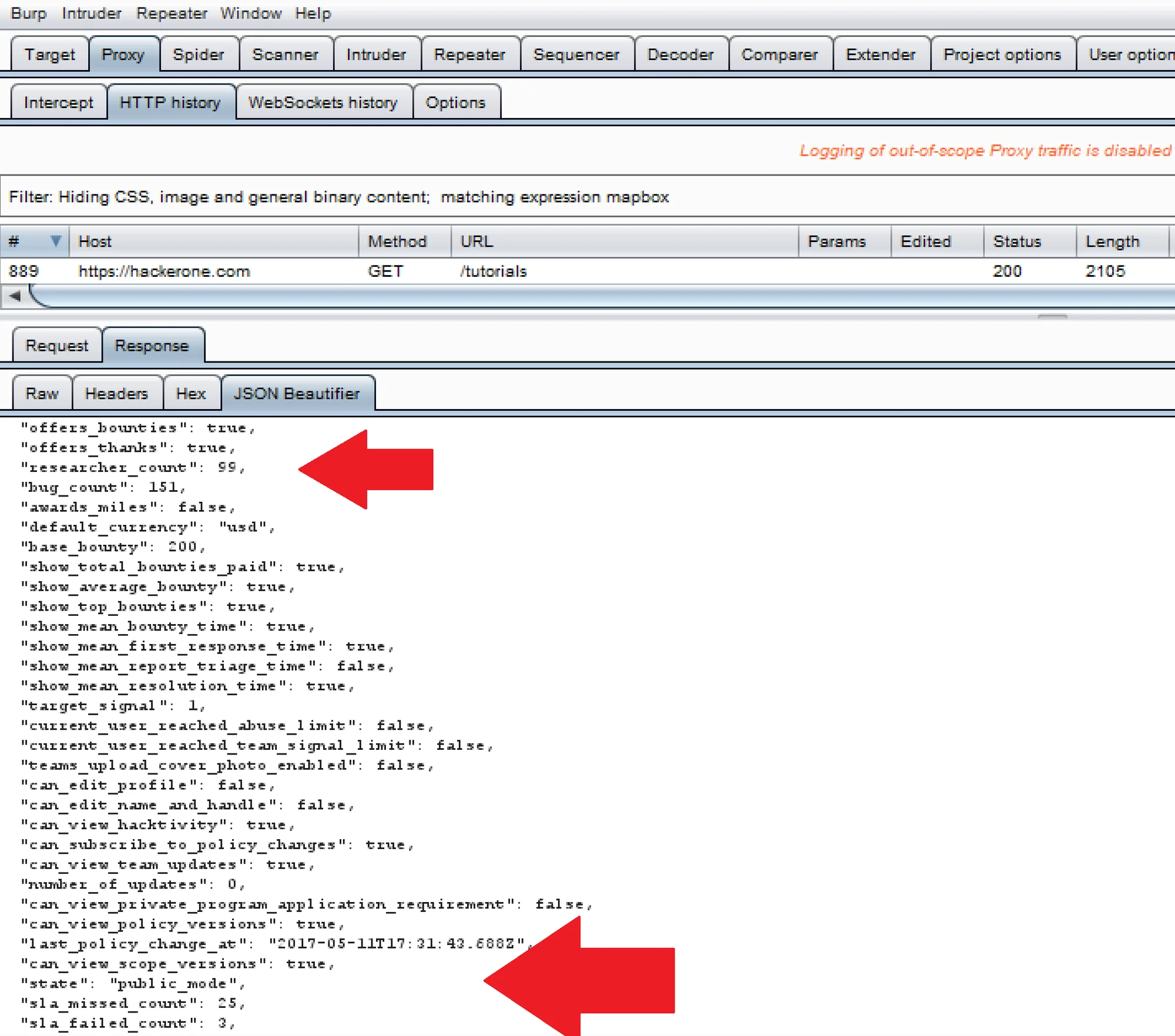
The response to www.hackerone.com/PROGRAM.json includes sla_missed_count sla_failed_count and researcher_count.
Description:
Viewing the response from a program's json endpoint includes the values for sla_missed_count, sla_failed_count and researcher_count.
With regards to the SLA metrics, these are not included in the UI on the policy page and hovering over a program indicator just reveals a summary of the information, such as >=1 report has failed the SLA. There is no mention of these values being disclosed in the program settings pages and according to the SLA FAQ docs, only a summarized version of a program’s response efficiency metric performance [will be displayed] on their hacker facing security page https://support.hackerone.com/hc/en-us/articles/115005927583-Response-SLAs-on-Security-Pages
With regards to the researcher count, I'm including this because the information isn't disclosed in the UI when you have a pending invite to a program and I'm not sure why that might be. Nonetheless, viewing the same JSON response includes the researcher_count
Steps To Reproduce
- Log in
- Visit any program and have Burp capture the response
- Confirm the bottom of the JSON response includes the SLA information
Supporting Material/References (Screenshots)
Impact
The program settings page nor documentation indicates that SLA misses/fails will be disclosed. This information should be considered sensitive in nature and programs should opt into disclosing it if this is intentional since it reveals a minimum number of security vulnerabilities a program may be addressing (I say may because the SLA violation could be response / triage).
The researcher count could be considered sensitive in the context of a private invite, revealing how many vulnerabilities have been found by what number of people before having actually accepted an invitation. I recognize this is a stretch but also assume there is a reason this number isn't disclosed before accepting a private invitation.
Not written yet. The AI write-up for this report has not been written yet. The Original tab links to the source.
How it worked
Root cause
Likely the JSON serialisation of the program object included internal metric fields without filtering them to the public view.
Impact
The figures could reveal a minimum number of vulnerabilities a program is addressing and, for private invites, how many researchers have already found issues, though the reporter notes the researcher-count concern is a stretch.
What the attacker needed
A logged-in account; access to any program page
How it was found
- Log in to the platform.
- Open any program page while capturing traffic with a proxy.
- Inspect the JSON response and check the bottom for the SLA fields.
Explained by bugbounty.wiki with AI from the original and checked against quotes from it; it can still be wrong. Read the original before relying on a detail.
Not written yet. The AI write-up for this report has not been written yet. The Original tab links to the source.
Many websites serve the same page in two forms: a human-friendly page and a machine-readable data file, often ending in .json. Here the data file contained extra numbers that the visible page hid, such as how many reports missed a response deadline. Anyone who opened that file could read those numbers even though the site never meant to show them.
What is Info disclosure?
Data the application should keep private (personal data, internal details, other users' records) reaches someone it should not.





