Improper Authentication - 2FA OTP Reusable
The two-factor authentication one-time password (OTP) remained valid after new codes were generated, so an old code could still be used. An attacker who already had the victim's password could reuse an old OTP to complete login and take over the account.

- Disclosed after 40 days
Summary: I found an “Improper Authentication” issue where the 2FA OTP generated by the Microsoft Authenticator app can be used for two-step verification in HackerOne. This is similar to the common issue where tokens remain usable after logout. This means that the OTP does not have an invalidation period even if the app has generated a new OTP.
Description: OTP is generated every 30 seconds. In the POC, I let the app generate three OTPs, meaning 90 seconds passed to let the old OTP. Supposedly, the old OTP is no longer valid because a new OTP is generated. However, I was still able to use the old OTP.
Steps To Reproduce
- Set up an account that has 2FA enabled
- Login to the account
- View the otp created by the Authenticator app
- Let the app create 3x otp (it's up to you how many you want)
- But, the otp used is the first one
POC
███████
Reference
CVSS Explaination
Privileges required: HIGHI admit, to accomplish this attack means that the attacker already has the victim's user credential/password data (there are many ways to do this, e.g. credential stealer etc.).CIA : HIGHThe success of the attacker taking over the account will have an impact on confidentiality (private programs, account data, etc.), integrity (the attacker is able to control what he wants to do with the account), Availability imagine the attacker changing the email, etc. until finally the victim has no access to the account.
But the final decision on CVSS is still up to you.
Impact
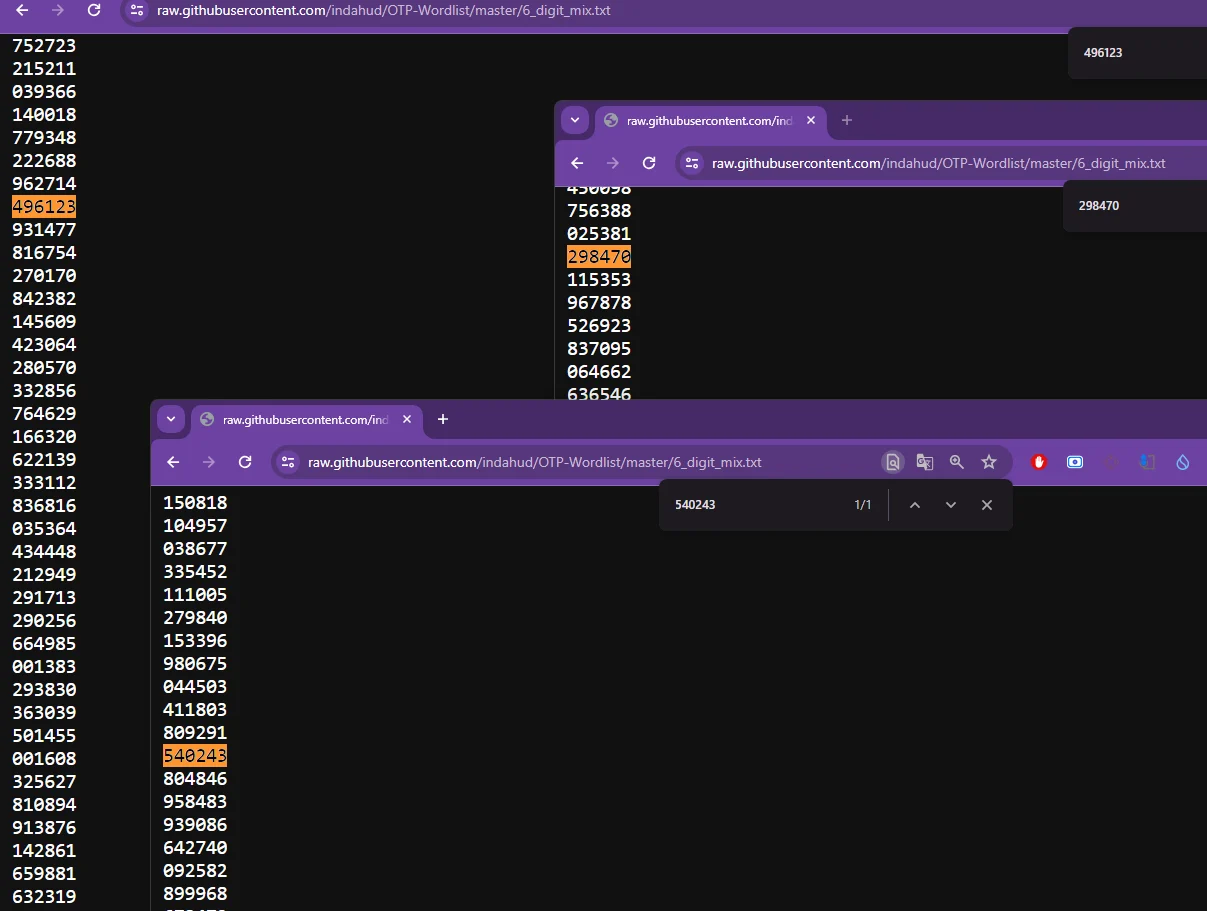
The generated otp codes are all common as in the 6-digit otp list on github, with the reusable otp loophole, this increases the probability of successful brute force otp. In other words, the loophole impacts the takeover account.
Not written yet. The AI write-up for this report has not been written yet. The Original tab links to the source.
How it worked
Root cause
Likely the server did not invalidate previously generated OTPs after a new one was created, allowing reuse of an old code.
Impact
An attacker who already has the victim's password could reuse an old OTP to take over the account, and the reusable codes increase the chance of a successful brute-force attack.
What the attacker needed
Victim's password already known; 2FA enabled on the account
How it was found
- Set up an account with two-factor authentication enabled.
- Log in to the account.
- View the OTP created by the authenticator app.
- Let the app generate three new OTPs.
- Use the first OTP to complete verification.
Explained by bugbounty.wiki with AI from the original and checked against quotes from it; it can still be wrong. Read the original before relying on a detail.
Not written yet. The AI write-up for this report has not been written yet. The Original tab links to the source.
Two-factor authentication adds a second step to logging in, often a six-digit code from an app that changes every 30 seconds. Normally, once a new code appears, the old one should stop working. Here, the old code still worked, so someone who already knew the password could use an old code to get in.
What is Account takeover?
Getting into someone else's account through a flaw in sign-in, password reset, second factor, single sign-on or session handling.


