Race condition in performing retest allows duplicated payments
A race condition in the retest payment process allowed multiple simultaneous retest confirmations to each trigger a separate payment. An attacker could receive duplicate payments for a single retest, stealing money from the platform.

- Fixed in 23 hours
- Paid in 23 hours
- Disclosed after 2 months
Summary
There exists a race condition in performing retests. By executing multiple requests to confirm a retest at the same time, a malicious user is paid multiple times for the retest. This allows for stealing money from HackerOne, which could go unnoticed by both HackerOne and the attacker (me).
Steps to Reproduce
-
Receive a retest request email from HackerOne.
-
Intercept the request to retest the email. Right click the request in Burp Suite and select
Copy as curl command. -
Execute the request on the command line in the form
(request) & (request) & .... In testing, I executed the command 5 times. -
Scroll to the bottom of https://hackerone.com/settings/bounties. The payment will appear under the
Retest paymentssections and may be repeated. -
Wait a few weeks. If successful, a callback from HackerOne will be received (in this case from @michiel):

Screen_Shot_2018-10-25_at_5.58.17_PM.png From the original on HackerOne -
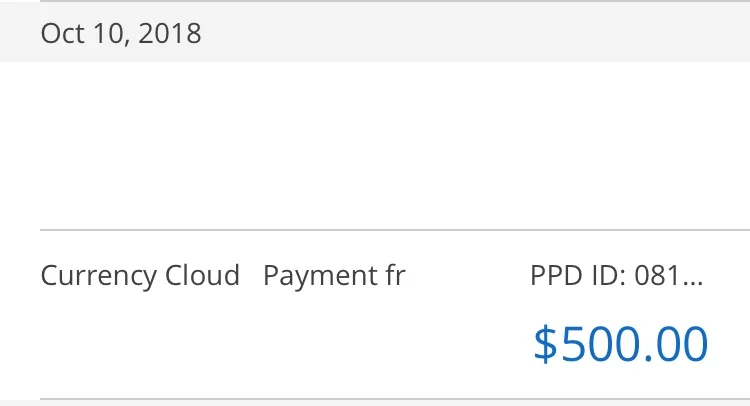
Check your bank account statements. Observe that a $500 payment was sent from HackerOne 2 weeks ago, demonstrating that the race condition was successful:
Impact
This allows an attacker to exploit the retesting feature to steal many times more money. Given that this went unnoticed by both the attacker and HackerOne for over 2 weeks, this has the potential to be exploited multiple times to steal money from HackerOne.
Not written yet. The AI write-up for this report has not been written yet. The Original tab links to the source.
How it worked
Root cause
Likely the retest payment logic lacked proper synchronisation or idempotency checks, allowing concurrent requests to each process a payment.
Impact
An attacker could receive multiple payments for a single retest, stealing money from the platform, and the duplicate payments may go unnoticed for weeks.
What the attacker needed
A HackerOne account; receive a retest request email; ability to intercept and replay requests
How it was found
- Receive a retest request email from HackerOne.
- Intercept the retest request and copy it as a curl command.
- Execute the same request multiple times in parallel from the command line.
- Check the bounties settings page to see repeated retest payments.
- Wait for confirmation and check bank statements for duplicate payments.
Explained by bugbounty.wiki with AI from the original and checked against quotes from it; it can still be wrong. Read the original before relying on a detail.
Not written yet. The AI write-up for this report has not been written yet. The Original tab links to the source.
When a website handles a request that involves money, it should check that the action only happens once. Here, sending several identical requests at the same moment caused the system to pay out multiple times for the same retest. This is called a race condition: the timing of the requests tricks the system into skipping a check.
What is Race condition?
Parallel requests reach a state the code assumed could not happen: a coupon used twice, a limit overrun, a check skipped.







