Reputation gain split by company can be used to track the existence of otherwise undisclosed reports
A researcher's public profile shows reputation gained from bounties split by company, even before the report is resolved or disclosed. An attacker could use this to infer which company a researcher has reported an unfixed vulnerability to, gaining a head start on finding the issue.
 Originally disclosed on HackerOne
- Disclosed after 23 hours
Summary: A researcher who shares an anonymised description of a vulnerability prior to disclosure may inadvertently be also sharing the company to whom the issue affects if a bounty/thanks has been issued.
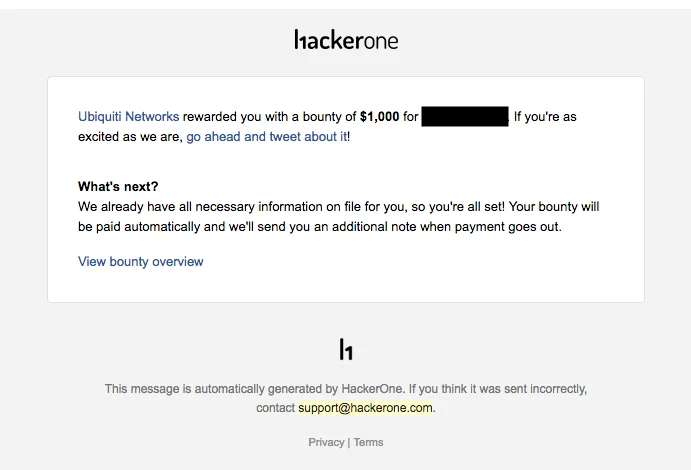
You may ask: "Where would someone get the idea to share partial information about unfixed bugs?" Well... F259492
Description: Prior to public disclosure of a vulnerability, and also prior to a resolution status, it is possible to determine information about who a particular researcher has reported issues to if a bounty/thanks has been issued.
For example, a researcher after receiving the bounty email may tweet something like: "I just got $xxxx for reporting SQLi on HackerOne!". Unbeknownst to them it is currently possible to translate this into: "I just got $xxxx for reporting SQLi in MegaCorp on HackerOne!", a motivated individual simply need look at a certain area in the researcher's public profile.
Steps To Reproduce
For example,
- I have reported an issue Ubiquiti Networks
- They have not yet fixed the issue, however they have awarded a bounty
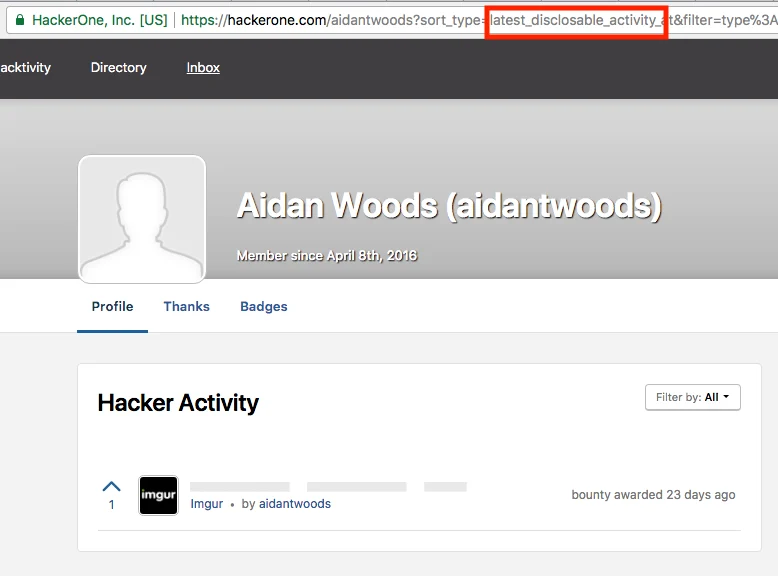
- On my main profile page this is not listed as disclosable activity F259487
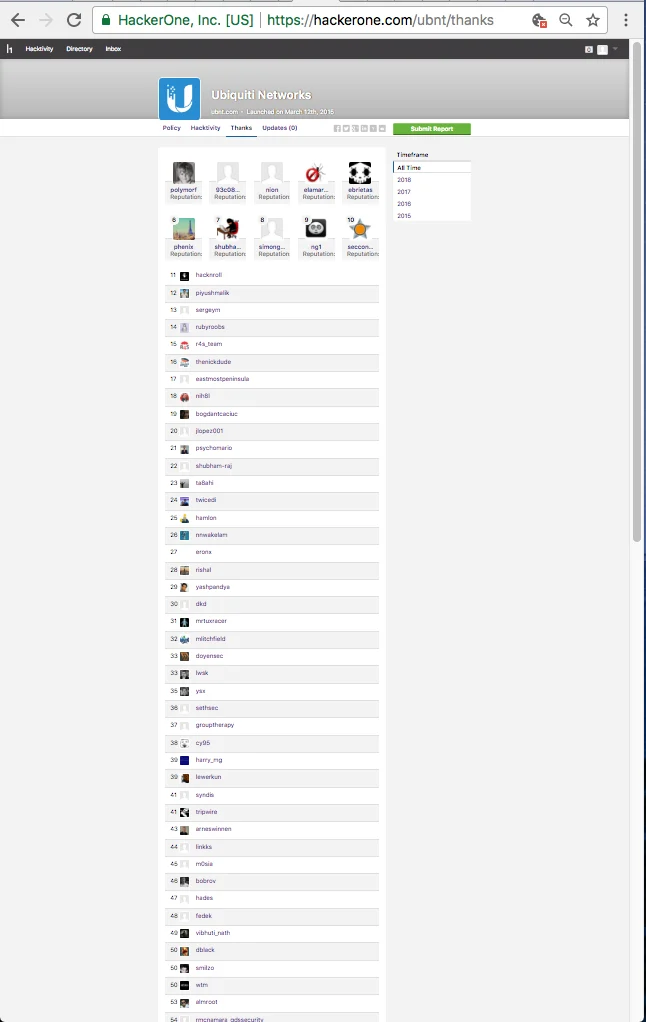
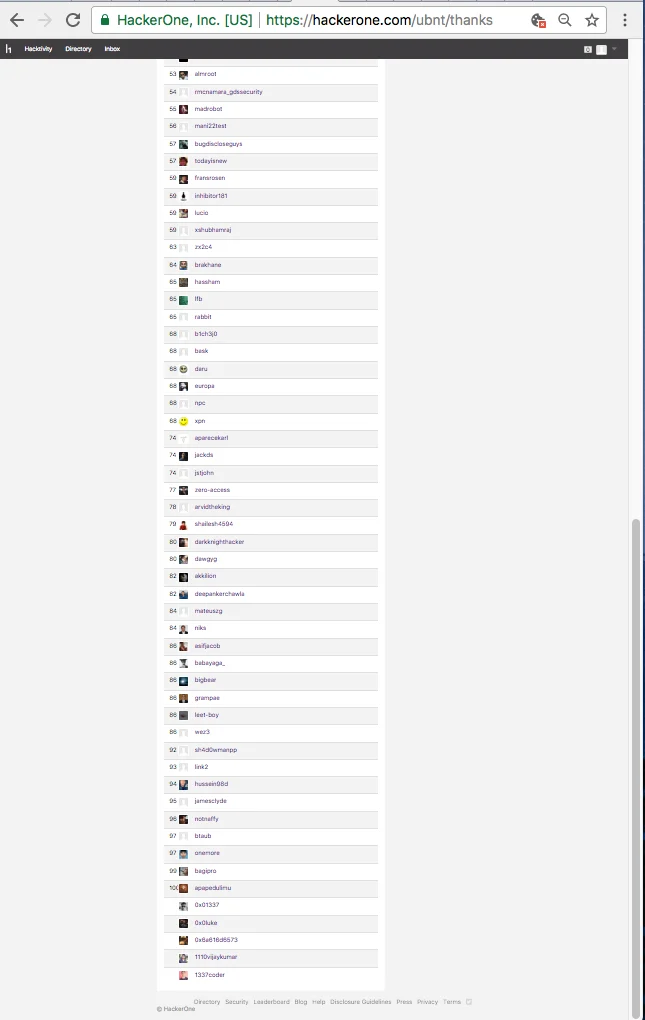
- On the thanks page for Ubiquiti Networks I am not listed F259488, F259489
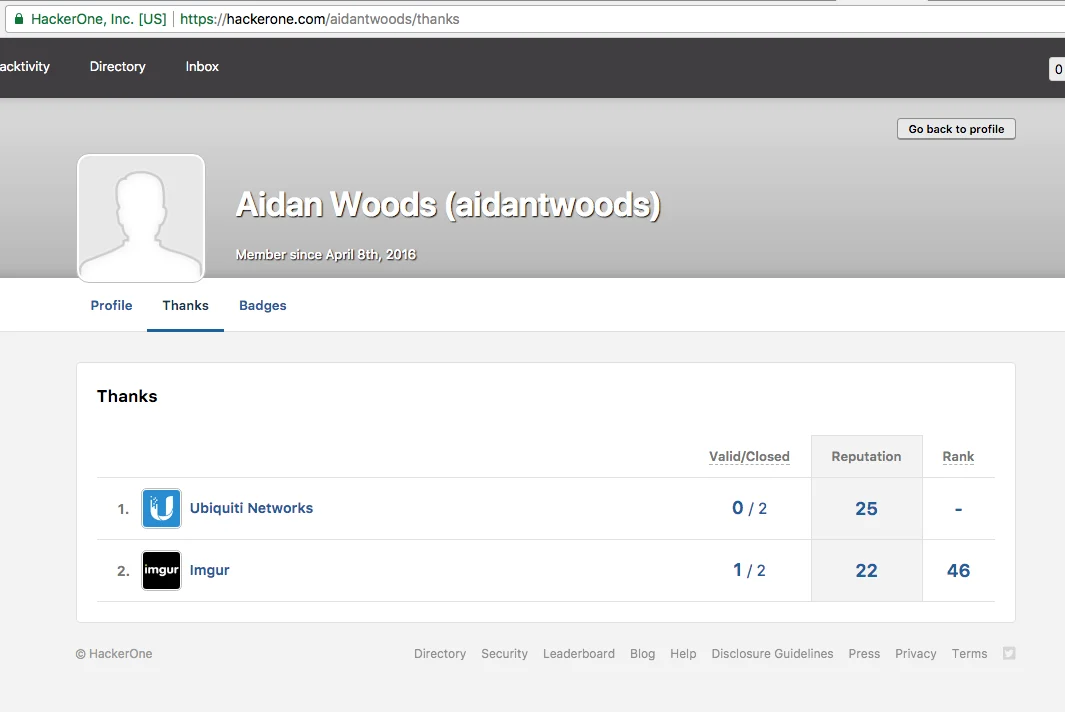
- However, on the thanks page on my profile Ubiquiti Networks is listed F259491
I reported three issues to them (note even though it says the total is two, the existence of a valid third can be implied by the reputation column – since no reputation would be gained for an invalid report). If a motivated individual tracked these statistics they could infer the same kind of information by looking at diffs, say at regular site crawl intervals.
Proposed mitigation: only update the publicly visible reputation gain split by company when a report has been resolved/closed (similar to when things are announced on the "Hacktivity" tab today).
Impact
Prior to public disclosure of a vulnerability, and also prior to a resolution status, it is possible to determine information about who a particular researcher has reported issues to if a bounty/thanks has been issued that generates a reputation gain. This may be used, in addition to anonymised information that the researcher may have been encouraged to share (by yourselves), in order to gain a head start on discovering the vector before a fix has been issued.
Attachments
Not written yet. The AI write-up for this report has not been written yet. The Original tab links to the source.
How it worked
Root cause
Likely the platform updates the public reputation breakdown immediately upon awarding a bounty, without waiting for the report to be resolved or disclosed.
Impact
An attacker could infer which company a researcher has reported an unfixed vulnerability to, potentially gaining a head start on discovering the vector before a fix is issued.
What the attacker needed
Researcher has received a bounty; report is not yet resolved; attacker monitors profile changes
The fix
The platform should only update the publicly visible reputation gain split by company when a report has been resolved or closed.
How it was found
- Report an issue to a company.
- The company awards a bounty but has not fixed the issue.
- The main profile page does not list the report as disclosable activity.
- The company's thanks page does not list the researcher.
- The researcher's own thanks page lists the company.
Explained by bugbounty.wiki with AI from the original and checked against quotes from it; it can still be wrong. Read the original before relying on a detail.
Not written yet. The AI write-up for this report has not been written yet. The Original tab links to the source.
When a security researcher finds a bug, they often get a reward (bounty) from the company. The platform shows on the researcher's profile how much they earned from each company. This report says that this information appears even before the bug is fixed, so someone could guess which company has an unfixed bug and try to find it first.
What is Info disclosure?
Data the application should keep private (personal data, internal details, other users' records) reaches someone it should not.




