SQL Injection in CVE Discovery Search
The CVE Discovery Search feature did not sanitise user-supplied search terms, allowing SQL injection. An attacker could use blind or timing-based techniques to disclose data from the analytics database, including report, team, and asset data.

- Triaged in under an hour
- Fixed in 1 hour
- Disclosed after 2 hours
Summary: Unsanitized user-controlled inputs in the CVE Discovery Search allow for SQL injection.
Description: Search terms are split on whitespace but no additional sanitization is applied, allowing arbitrary SQL statements, such as a blind or timing-based attack.
Steps To Reproduce
- Visit https://hackerone.com/intelligence/cve_discovery
- Enter a search term that normally returns results, plus an injection payload such as //AND//'1%'='1 and confirm that the results are still returned
- Change the payload to //AND//'1%'='0 and confirm that no results are returned
Optional: Your Environment (Browser version, Device, etc)
- Chrome
Optional: Supporting Material/References (Screenshots)
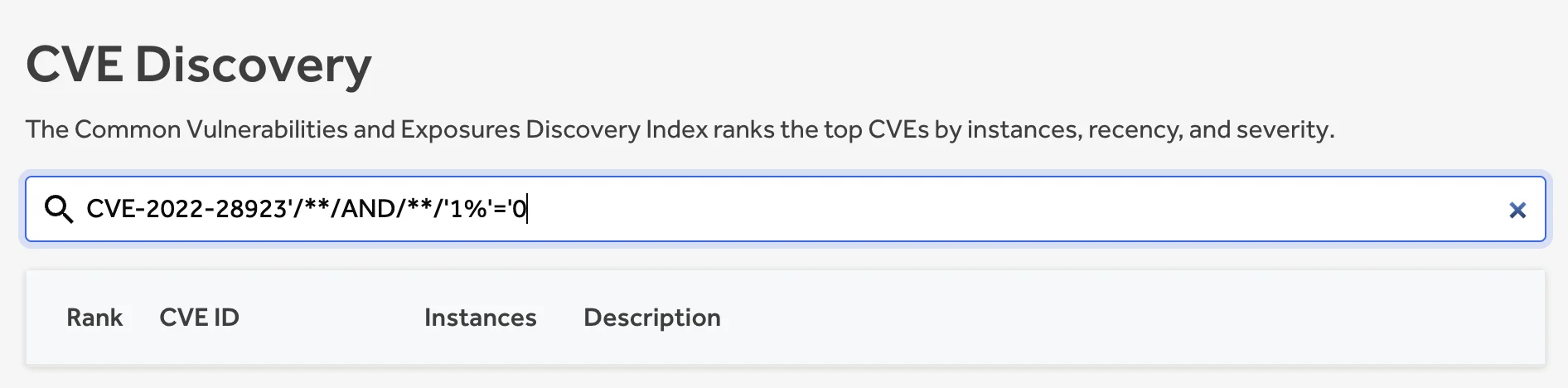
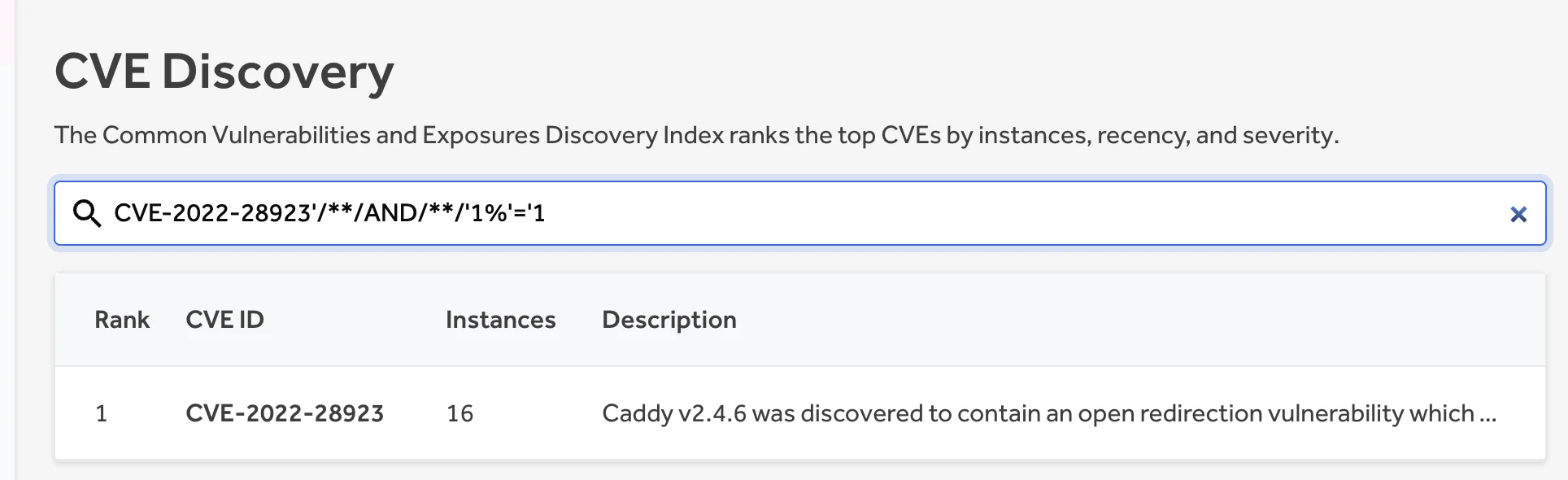
Impact
Disclosure of data in Analytics Database, including report, team, and asset data
Attachments
Not written yet. The AI write-up for this report has not been written yet. The Original tab links to the source.
How it worked
Root cause
Likely the search terms were split on whitespace but then inserted into a SQL query without parameterisation or escaping.
Impact
An attacker could disclose data from the analytics database, including report, team, and asset data.
What the attacker needed
Access to the CVE Discovery search page
How it was found
- Visit the CVE Discovery search page.
- Enter a search term that normally returns results plus an injection payload, and confirm results are still returned.
- Change the payload to a false condition and confirm no results are returned.
Explained by bugbounty.wiki with AI from the original and checked against quotes from it; it can still be wrong. Read the original before relying on a detail.
Not written yet. The AI write-up for this report has not been written yet. The Original tab links to the source.
A search box on a website was passing what you typed directly into a database command without cleaning it first. This is called SQL injection: an attacker can add extra database instructions to the search, tricking the site into revealing information it should keep private. Here it could expose stored data about reports, teams, and assets.
What is SQL injection?
Input reaches a database query as code, letting an attacker read or change data the application never meant to expose.




