Cache poisoning via X-Forwarded-Host in www.shopify.com/partners/blog
The web cache for a Shopify blog page could be poisoned by sending requests with a spoofed X-Forwarded-Host header, causing the cached page to contain links to an attacker-controlled domain. An attacker could then trick users into visiting the poisoned page and clicking links that lead to malicious sites.

- Triaged in 18 hours
- Fixed in 22 hours
- Paid in 43 hours
- Disclosed after 45 hours
Hello, run in loop requests with X-Forwarded-Host: your_hackerz_site.com - after some time You will notice in response your_hackerz_site.com
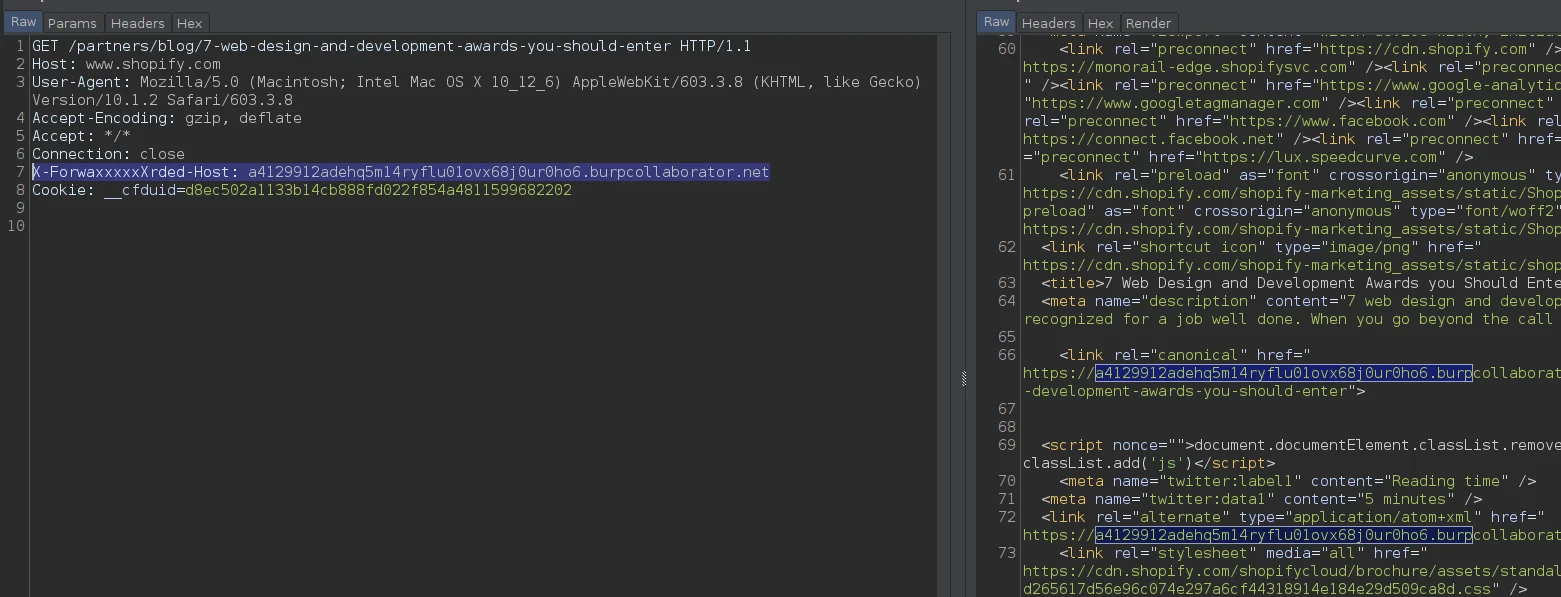
now remove X-Forwarded-Host - there still be our url:
i've logged to my VPS to verify this bug and downloaded poisoned page (https://www.shopify.com/partners/blog/7-web-design-and-development-awards-you-should-enter) , it's contains links to collabolator:
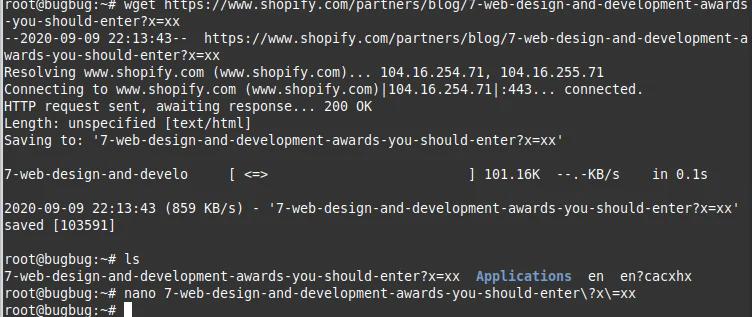
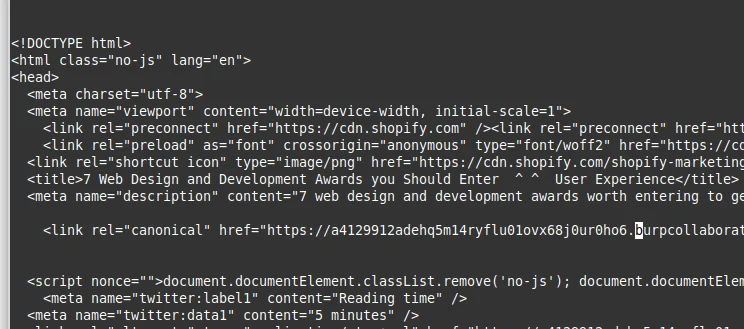
Looks like there is no URL keys so i stopped testing cause i'm breaking site functionally, but it was be worth to check if we can poison X-Forwarded-Host : foobar.pl"><img src=x onerror=blah> or try use other headers, if i get permission i can try other vectors on a older article to prevent distributing users.
Impact
poisoning links, eg. FB share button:
https://www.facebook.com/sharer/sharer.php?u=https%3A%2F%2Fa4129912adehq5m14ryflu01ovx68j0ur0ho6.burpcollaborator.net%2Fpartners%2Fblog%2F7-web-design-and-development-awards-you-should-enter
Not written yet. The AI write-up for this report has not been written yet. The Original tab links to the source.
How it worked
Root cause
Likely the application used the X-Forwarded-Host header to generate absolute URLs without validating it, and the cache stored the response without considering that header as part of the cache key.
Impact
The attacker could poison cached pages to include links to their own domain, potentially affecting share buttons and other links, but the report does not demonstrate script execution or full site takeover.
What the attacker needed
Ability to send HTTP requests with custom headers; target uses caching and X-Forwarded-Host
How it was found
- Send repeated requests to the target page with a custom X-Forwarded-Host header pointing to an attacker-controlled domain.
- Observe that the response contains the attacker domain in links.
- Remove the X-Forwarded-Host header and confirm that the poisoned response is still served from cache.
- Verify by downloading the cached page and checking that it contains links to the attacker's collaborator domain.
Explained by bugbounty.wiki with AI from the original and checked against quotes from it; it can still be wrong. Read the original before relying on a detail.
Not written yet. The AI write-up for this report has not been written yet. The Original tab links to the source.
A web cache stores copies of pages to serve them faster. The site trusted a header called X-Forwarded-Host, which tells the server which domain the request was for. By sending many requests with a fake domain in that header, the attacker made the cache store a version of the page with links pointing to their own site. Then anyone visiting the page would see those malicious links.
What is Cache bugs?
A cache and the origin disagree about a request, so a poisoned response is served to everyone or a private page is stored as public.


