HTML injection in https://interviewing.shopify.com/index.php?candidate=
The candidate parameter on the Shopify interviewing site was inserted into the page without filtering, letting an attacker inject arbitrary HTML and CSS. Because script payloads were blocked by browser protections, the practical impact was limited to CSS injection rather than script execution.

- Fixed in 17 hours
- Disclosed after 29 days
Summary by the program
@pklfpklf reported to us that it was possible to inject HTML into our Interviewing at Shopify site in a parameter meant for the user's name. After changing the site to properly insert this text, we closed the report as resolved. This issue was in a domain on *.shopify.com and did not impact our core product, so a bounty was not awarded.
The report
https://interviewing.shopify.com/index.php?candidate= is inserting the value of candidate into the DOM without any filtering (except that the equal sign can't appear in the payload), this allows attacker to injection any html in the DOM. Of course reflected XSS payloads like <script>[...something...]</script> will be blocked by browsers' protection, but we can still play with CSS injection:
https://interviewing.shopify.com/index.php?candidate=z%3Cstyle%3E%20*%20{%20background:%20url(https://www.google.com/images/branding/googlelogo/1x/googlelogo_color_272x92dp.png);%20}
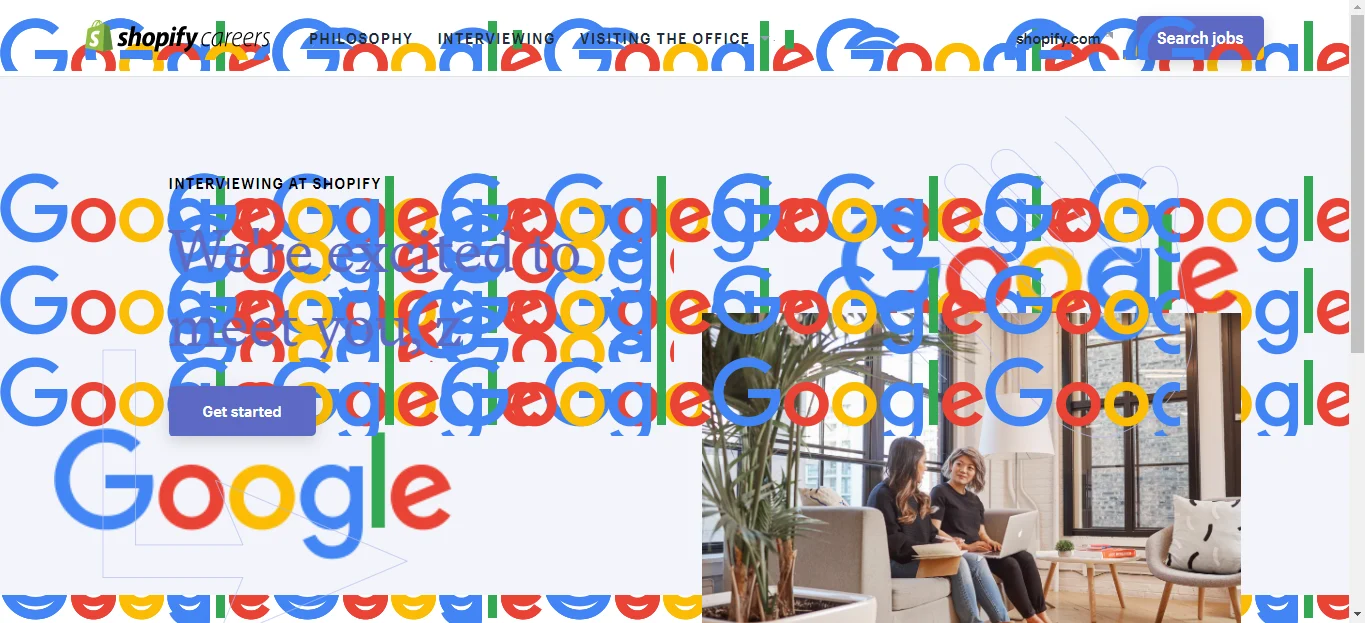
Impact
HTML injection, mostly CSS injection.
Not written yet. The AI write-up for this report has not been written yet. The Original tab links to the source.
How it worked
Root cause
Likely the candidate parameter was written into the page's HTML without encoding or filtering, apart from blocking the equal sign.
What the attacker needed
Victim opens a crafted link
The fix
The site was changed to insert the text properly, and the report was closed as resolved.
How it was found
- Open the interviewing site URL with a crafted candidate value containing HTML and CSS.
- Observe that the injected markup is rendered in the page, changing its styling.
Explained by bugbounty.wiki with AI from the original and checked against quotes from it; it can still be wrong. Read the original before relying on a detail.
Not written yet. The AI write-up for this report has not been written yet. The Original tab links to the source.
A web page can build its content from parts of the address bar, such as a name. If the site drops that text into the page without cleaning it, an attacker can add their own markup, like styling rules that change how the page looks. Here the browser stopped actual scripts from running, so the attacker could only change the page's appearance.
What is XSS?
Script an attacker supplies runs in another user's browser, on the target's origin, with that user's session.




