Same the Url
A user could create a profile page whose URL path matched the reserved /performance_report endpoint, even though the similar /graphql path was blocked. The reporter claims this path should not be usable as a page name, but does not show any concrete harm.

- Disclosed after 3 months
Summary:
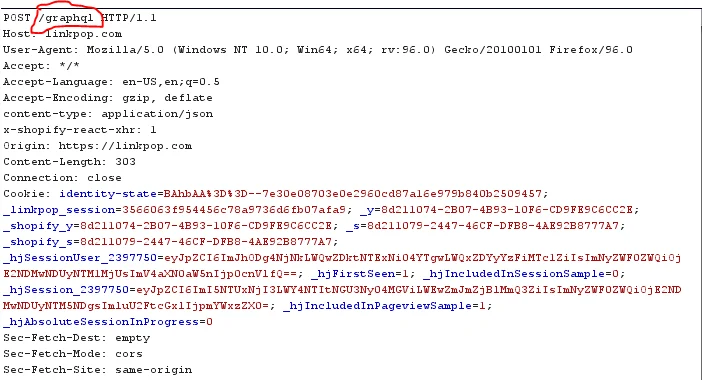
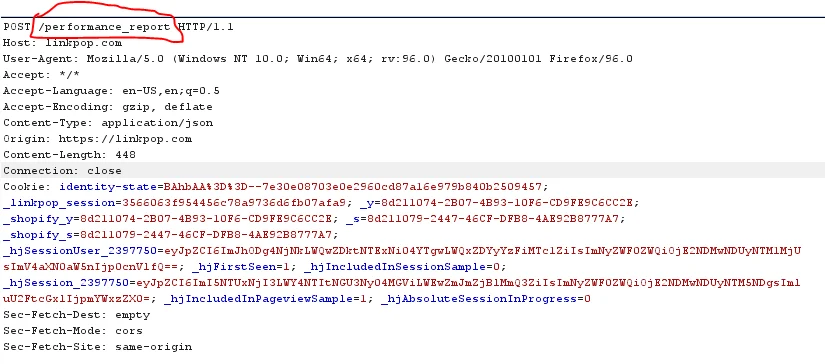
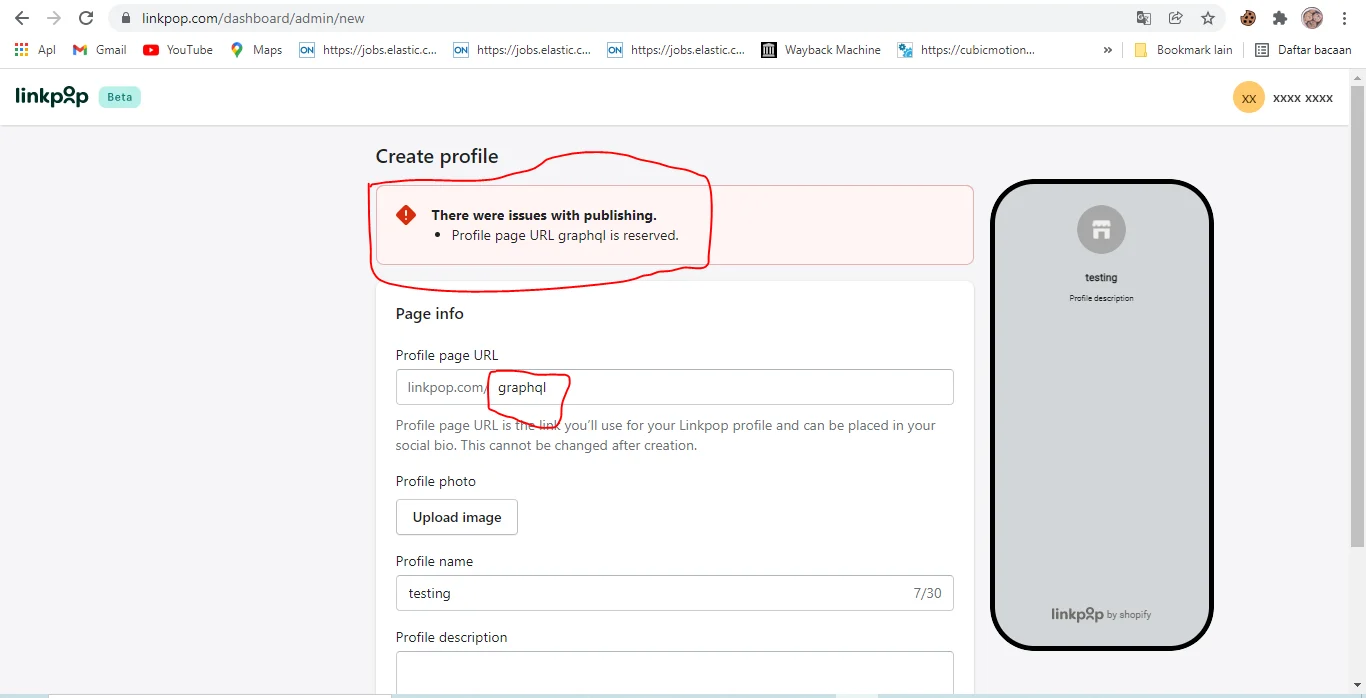
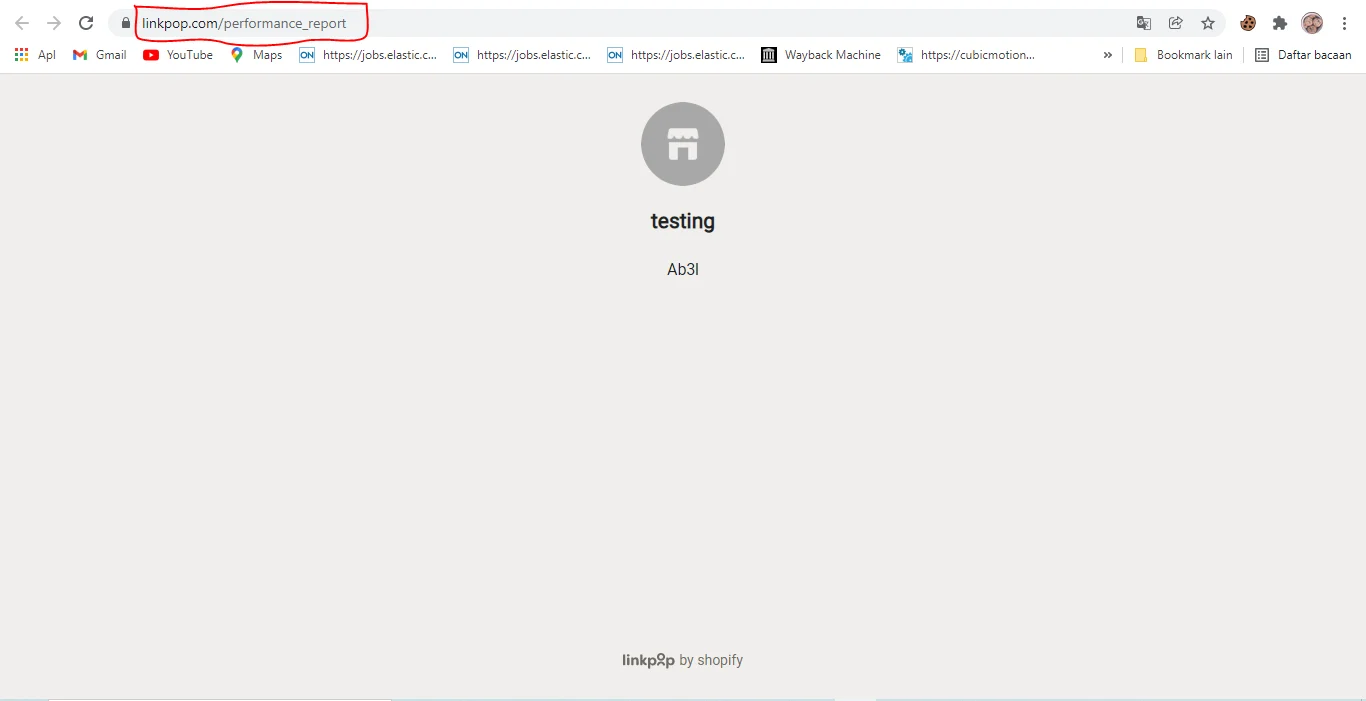
i found the /graphql path and /performance_report with the post method. when i will create page with name /graphql i am not allowed on the grounds it is reserved but i can create page with name performance_report. although both use the same method but only /graphql cannot be created.
Shops Used to Test:
https://linkpop.com/performance_report
Steps To Reproduce:
- login to https://linkpop.com
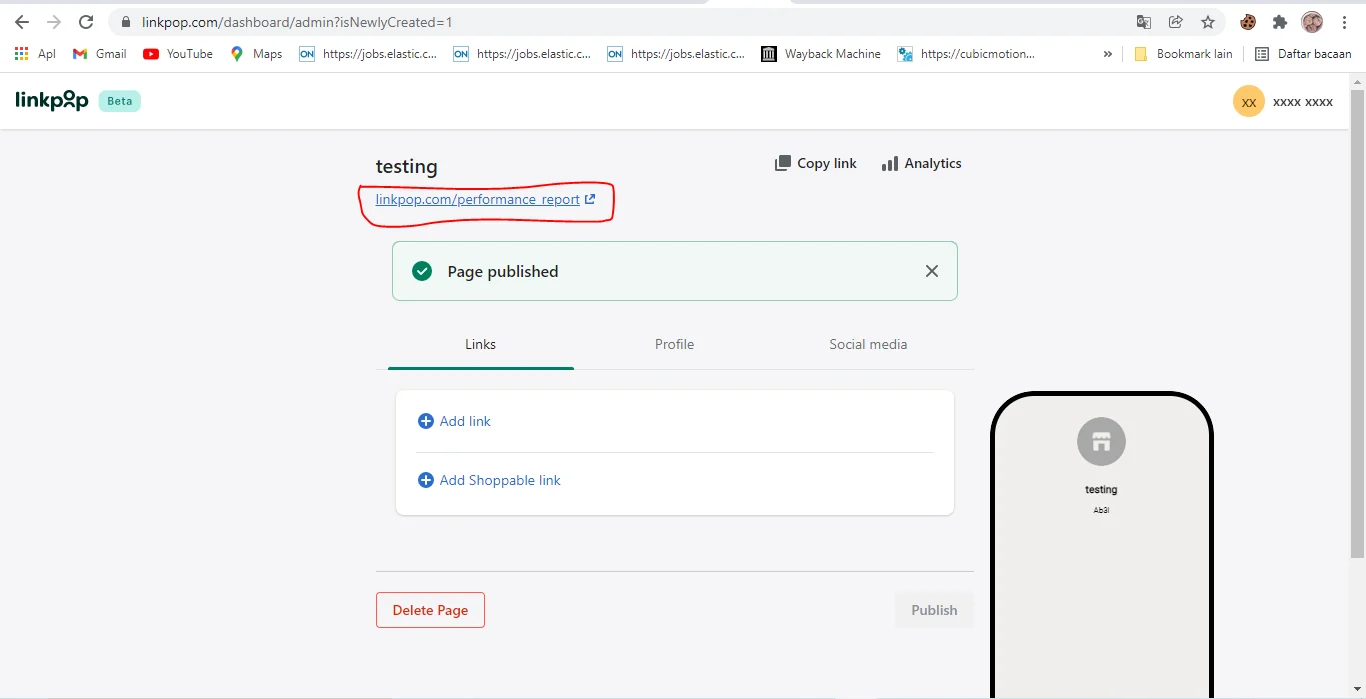
- create page and use performance_report to profile page url.
- and it will be created successfully
Best Regards, @4bel
Impact
It is clear that /performance_report should not be used like /graphql.
Attachments
What the report shows
The target is Linkpop, a Shopify product, and the researcher was looking at two paths that both accept the POST method: /graphql and /performance_report. The observation is a difference in how the platform treats those two names when a user creates a page and chooses the profile page URL.
When the researcher tried to create a page named /graphql, the platform refused, on the grounds that the name is reserved. When the same attempt was made with performance_report, the page was created successfully, even though both paths use the same method.
The shop used to demonstrate the behaviour was:
https://linkpop.com/performance_report
The reproduction steps as given are:
- Log in to
https://linkpop.com. - Create a page and use
performance_reportas the profile page URL. - The page is created successfully.
The report includes five attachments. The report includes five attachments.
The impact section states the researcher's position plainly: /performance_report should not be usable in the same way as /graphql. The report does not describe what either endpoint does when reached, what data it returns, or what an attacker could obtain by owning the page name. It also does not give a severity rating or a CVSS score. The disclosed record shows a bounty of 500.00 USD and a disclosure date of 21 April 2022.
Root cause
The report points to a reserved-name check that is applied to one path but not to another path that behaves similarly. The report does not explain why one name is blocked and the other is not. The researcher's own framing is the comparison: both paths use the same method, yet only /graphql is blocked from being created as a page name.
Impact
The issue as reported is that a user can register a profile page URL using a name that the researcher believes should be reserved. Any stronger impact claim would be speculation beyond what is written here.
How this kind of bug works
Many applications give users control over part of a URL: a username, a shop slug, a page name, a workspace handle. Those names live in the same namespace as the application's own routes. If a user can claim a name that the application also serves as an endpoint, requests intended for the application can be routed to the user's page, or the user's page can shadow the endpoint, depending on how the router and the reverse proxy resolve the conflict.
The usual defence is a reserved-name list that covers every route the application exposes, applied at the point where the name is validated, not at the point where it is rendered. The list has to be kept in step with the route table, which is why it is often incomplete: a new endpoint is added and the blocklist is not updated. Names that are not obviously routes, such as internal reporting or metrics paths, are the ones most often missed.
How to test for it
- Map the application's own paths. Look at the JavaScript bundles, the route table, error pages,
robots.txt, and any documentation or API references. Include paths that are not linked in the UI. - Identify every feature where the user chooses a name that becomes part of a URL: profile pages, shop names, page slugs, organisation handles.
- For each such feature, attempt to register a name that matches an application path. Start with the obvious ones and then try the less obvious internal paths.
- A positive result is a name that the application accepts even though the same name is refused elsewhere, or a name that resolves to the user's content when the application path is requested.
- Confirm the collision by requesting the resulting URL and observing which handler answers. A page that merely contains the string in its body is not a collision.
Common false positives: the name is accepted but the application still routes the path to its own handler, so the user's page is unreachable; the name is accepted only in a preview or draft state; the path is not actually served by the application; or the blocklist refusal is a client-side check that can be bypassed but has no server-side consequence.
How it is fixed
The standard fix is a single reserved-name list, enforced server-side at the point of name creation, that covers all application routes including internal ones. The list should be generated from or checked against the route table so that new endpoints are covered automatically. Where a name has already been claimed, the application should either migrate it or reject requests to the conflicting path in favour of the application handler. Case folding and normalisation should be applied before the check so that variants of a reserved name are also refused.
Hunting notes
This class of bug tends to hide wherever user-chosen names become URLs: multi-tenant platforms, link-in-bio products, storefront builders, and any application with custom domains or vanity paths. Recon signals include a route table in a JavaScript bundle that lists paths the UI never links to, error pages that reveal framework defaults, and features that already refuse some names, which shows a blocklist exists and invites testing of what it misses.
What happened, in plain words
Linkpop is a Shopify product where users can create a page and choose the profile page URL. Think of it like a building where tenants can pick their own door number: most numbers are free, but a few are already used by the building itself (the post room, the fire exit) and should be off limits.
The researcher noticed that Linkpop has two internal paths, /graphql and /performance_report, and that both accept the same kind of request (the POST method). A path is simply the part of a web address after the site name, for example the /performance_report in https://linkpop.com/performance_report. The POST method is one of the ways a browser or program can talk to a server: it sends data to it, rather than just asking for a page.
When the researcher tried to create a page whose name was /graphql, Linkpop refused, saying the name is reserved. When the same attempt was made with performance_report, the page was created without complaint. The researcher's point is the inconsistency: if one of these names is protected, the other should be too.
The shop used to demonstrate the behaviour was:
https://linkpop.com/performance_report
The reproduction steps as given are:
- Log in to
https://linkpop.com. - Create a page and use
performance_reportas the profile page URL. - The page is created successfully.
Step 3 is the result: the platform accepted it, which is exactly what did not happen with /graphql.
The report includes five attachments. The report includes five attachments.
The impact section states the researcher's position plainly: /performance_report should not be usable in the same way as /graphql. The report does not describe what either endpoint does when reached, what data it returns, or what an attacker could obtain by owning the page name. It also does not give a severity rating or a CVSS score. The disclosed record shows a bounty of 500.00 USD and a disclosure date of 21 April 2022.
In general, how this kind of bug works
Many applications give users control over part of a URL: a username, a shop name, a page name, a workspace handle. Those names live in the same namespace as the application's own routes. A route is the rule that tells the server which piece of code should answer a given path. If a user can claim a name that the application also serves as an endpoint, requests intended for the application can be routed to the user's page, or the user's page can shadow the endpoint, depending on how the router and the reverse proxy resolve the conflict. A reverse proxy is the server sitting in front of the application that forwards incoming requests to the right place.
The usual defence is a reserved-name list that covers every route the application exposes, applied at the point where the name is validated, not at the point where it is rendered. The list has to be kept in step with the route table, which is why it is often incomplete: a new endpoint is added and the blocklist is not updated. Names that are not obviously routes, such as internal reporting or metrics paths, are the ones most often missed.
How to test for it
- Map the application's own paths. Look at the JavaScript bundles, the route table, error pages,
robots.txt, and any documentation or API references. Include paths that are not linked in the UI. - Identify every feature where the user chooses a name that becomes part of a URL: profile pages, shop names, page slugs, organisation handles.
- For each such feature, attempt to register a name that matches an application path. Start with the obvious ones and then try the less obvious internal paths.
- A positive result is a name that the application accepts even though the same name is refused elsewhere, or a name that resolves to the user's content when the application path is requested.
- Confirm the collision by requesting the resulting URL and observing which handler answers. A page that merely contains the string in its body is not a collision.
Common false positives: the name is accepted but the application still routes the path to its own handler, so the user's page is unreachable; the name is accepted only in a preview or draft state; the path is not actually served by the application; or the blocklist refusal is a client-side check that can be bypassed but has no server-side consequence.
How it is fixed
The standard fix is a single reserved-name list, enforced server-side at the point of name creation, that covers all application routes including internal ones. The list should be generated from or checked against the route table so that new endpoints are covered automatically. Where a name has already been claimed, the application should either migrate it or reject requests to the conflicting path in favour of the application handler. Case folding and normalisation should be applied before the check so that variants of a reserved name are also refused.
Hunting notes
This class of bug tends to hide wherever user-chosen names become URLs: multi-tenant platforms, link-in-bio products, storefront builders, and any application with custom domains or vanity paths. Recon signals include a route table in a JavaScript bundle that lists paths the UI never links to, error pages that reveal framework defaults, and features that already refuse some names, which shows a blocklist exists and invites testing of what it misses.
Glossary
- Path: the part of a web address after the site name, such as
/performance_report. - Endpoint: a specific path on a server that accepts requests and does something with them.
- POST method: a way of sending data to a server, as opposed to simply asking for a page.
- Reserved name: a name the platform keeps for itself and refuses to give to users.
- Route: the rule that decides which piece of code answers a given path.
- Router: the component that matches an incoming path to a route.
- Reverse proxy: a server in front of the application that forwards requests to the right place.
- Namespace: the shared pool of names that both the application and its users draw from.
- Blocklist: a list of names or values that are explicitly refused.
- Route table: the full list of paths an application serves.
- Client-side check: a check performed in the browser, which a user can bypass.
- Server-side check: a check performed on the server, which the user cannot bypass.
- False positive: a result that looks like a bug but is not one in practice.
- CVSS: a standard scoring system for rating the severity of a security issue.
- Bounty: a payment made by a company for a valid security report.




