Skip to content
DoS Disclosed report Beginner CVE-2018-6389

Possibility of DoS attack at https://sifchain.finance// via CVE-2018-6389 exploitation

The WordPress load-scripts.php endpoint on the site returns a large concatenated JavaScript response to unauthenticated requests, so an attacker could repeatedly request it to exhaust server resources. The reporter states this could enable an application-level denial of service.

spyata Follow

Originally disclosed on HackerOne

Informational View original
  • Disclosed after 21 hours

There is possibility in /wp-admin/load-scripts.php script to generate large (~3Mb) amount of data via simple non-authenticated request to server. The vulnerability is registered as https://cve.mitre.org/cgi-bin/cvename.cgi?name=CVE-2018-6389

Details Detailed attack scenario is described for example here: https://baraktawily.blogspot.ru/2018/02/how-to-dos-29-of-world-wide-websites.html I have an Apache JMeter script which is able to simulate necessary loading for your site (can be provided to you if necessary).

URL:

https://sifchain.finance/wp-admin/load-scripts.php?load=eutil,common,wp-a11y,sack,quicktag,colorpicker,editor,wp-fullscreen-stu,wp-ajax-response,wp-api-request,wp-pointer,autosave,heartbeat,wp-auth-check,wp-lists,prototype,scriptaculous-root,scriptaculous-builder,scriptaculous-dragdrop,scriptaculous-effects,scriptaculous-slider,scriptaculous-sound,scriptaculous-controls,scriptaculous,cropper,jquery,jquery-core,jquery-migrate,jquery-ui-core,jquery-effects-core,jquery-effects-blind,jquery-effects-bounce,jquery-effects-clip,jquery-effects-drop,jquery-effects-explode,jquery-effects-fade,jquery-effects-fold,jquery-effects-highlight,jquery-effects-puff,jquery-effects-pulsate,jquery-effects-scale,jquery-effects-shake,jquery-effects-size,jquery-effects-slide,jquery-effects-transfer,jquery-ui-accordion,jquery-ui-autocomplete,jquery-ui-button,jquery-ui-datepicker,jquery-ui-dialog,jquery-ui-draggable,jquery-ui-droppable,jquery-ui-menu,jquery-ui-mouse,jquery-ui-position,jquery-ui-progressbar,jquery-ui-resizable,jquery-ui-selectable,jquery-ui-selectmenu,jquery-ui-slider,jquery-ui-sortable,jquery-ui-spinner,jquery-ui-tabs,jquery-ui-tooltip,jquery-ui-widget,jquery-form,jquery-color,schedule,jquery-query,jquery-serialize-object,jquery-hotkeys,jquery-table-hotkeys,jquery-touch-punch,suggest,imagesloaded,masonry,jquery-masonry,thickbox,jcrop,swfobject,moxiejs,plupload,plupload-handlers,wp-plupload,swfupload,swfupload-all,swfupload-handlers,comment-repl,json2,underscore,backbone,wp-util,wp-sanitize,wp-backbone,revisions,imgareaselect,mediaelement,mediaelement-core,mediaelement-migrat,mediaelement-vimeo,wp-mediaelement,wp-codemirror,csslint,jshint,esprima,jsonlint,htmlhint,htmlhint-kses,code-editor,wp-theme-plugin-editor,wp-playlist,zxcvbn-async,password-strength-meter,user-profile,language-chooser,user-suggest,admin-ba,wplink,wpdialogs,word-coun,media-upload,hoverIntent,customize-base,customize-loader,customize-preview,customize-models,customize-views,customize-controls,customize-selective-refresh,customize-widgets,customize-preview-widgets,customize-nav-menus,customize-preview-nav-menus,wp-custom-header,accordion,shortcode,media-models,wp-embe,media-views,media-editor,media-audiovideo,mce-view,wp-api,admin-tags,admin-comments,xfn,postbox,tags-box,tags-suggest,post,editor-expand,link,comment,admin-gallery,admin-widgets,media-widgets,media-audio-widget,media-image-widget,media-gallery-widget,media-video-widget,text-widgets,custom-html-widgets,theme,inline-edit-post,inline-edit-tax,plugin-install,updates,farbtastic,iris,wp-color-picker,dashboard,list-revision,media-grid,media,image-edit,set-post-thumbnail,nav-menu,custom-header,custom-background,media-gallery,svg-painter

Refference Hackerone report:# 752010

Variants to fix issue change default "admin" directory name (Security through obscurity) or apply some password protection to /wp-admin/ url or apply some rate-limiting (but DDoS is still possible) Other possible Fix https://github.com/Jetserver/CVE-2018-6389-FIX

Impact

DoS attack at application level.

Attachments
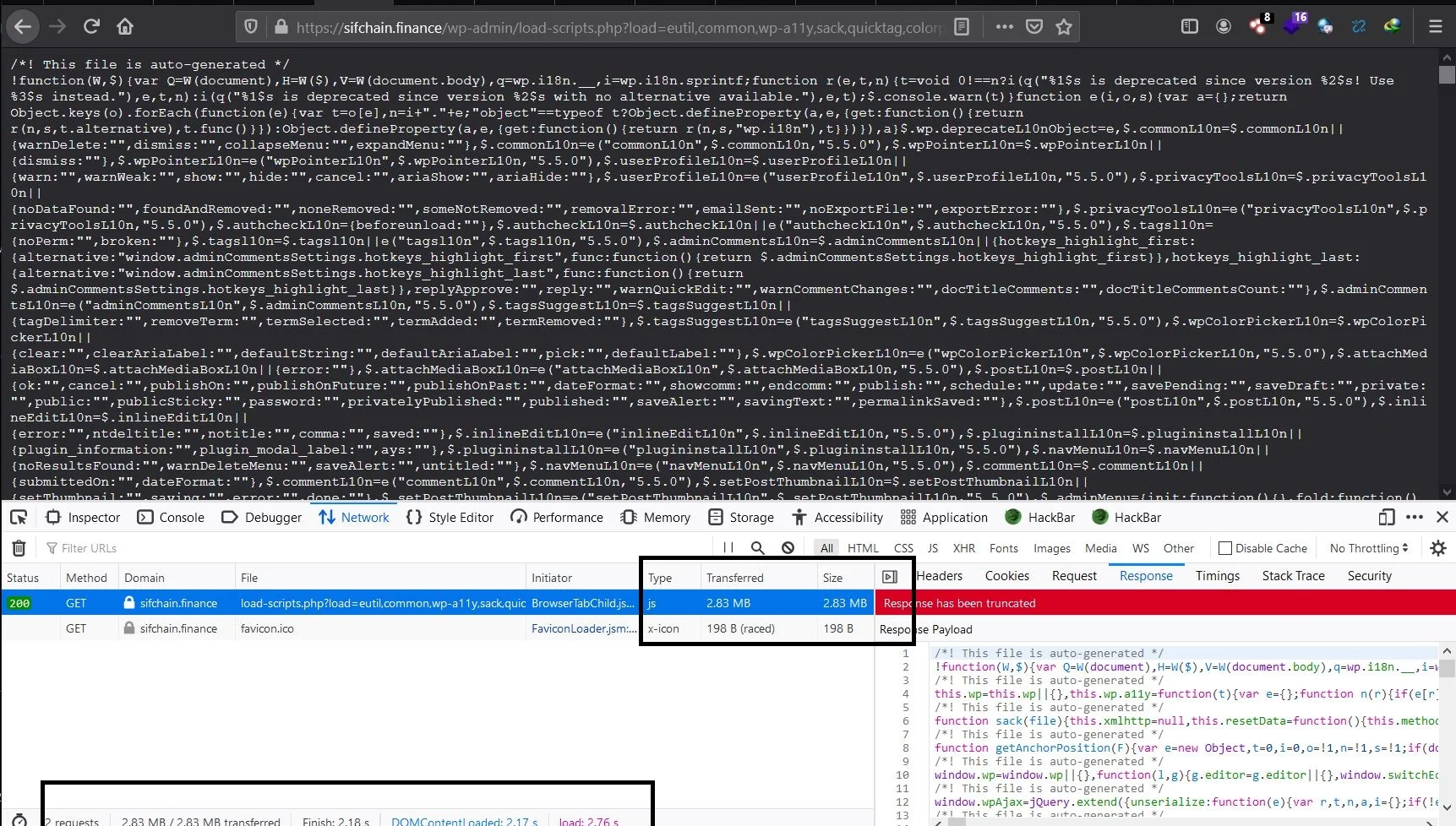
sifPOC.JPG
sifPOC.JPG From the original on HackerOne

The original report as published on HackerOne, by spyata. Images and videos are our own copies; raw HTML is shown as text. View it on HackerOne.

Not written yet. The AI write-up for this report has not been written yet. The Original tab links to the source.

How it worked

Root cause

Likely the WordPress load-scripts.php script concatenates many requested script files into one large response without authentication or rate limiting, allowing cheap requests to produce expensive output.

Impact

An attacker could cause an application-level denial of service, though the report only asserts the possibility and does not demonstrate a successful outage.

What the attacker needed

No authentication needed; ability to send many HTTP requests

The fix

The reporter suggests renaming the admin directory, password-protecting the admin path, or adding rate limiting, while noting that distributed attacks could still succeed; a referenced patch is also offered.

How it was found

  1. Send an unauthenticated request to the load-scripts.php endpoint with a long list of script names in the load parameter.
  2. Observe that the server returns a large concatenated JavaScript response of roughly three megabytes.
  3. Repeat the request many times, for example with a load-testing tool, to consume server resources.

Explained by bugbounty.wiki with AI from the original and checked against quotes from it; it can still be wrong. Read the original before relying on a detail.

Not written yet. The AI write-up for this report has not been written yet. The Original tab links to the source.

A website can be knocked offline by flooding it with requests that each make the server do a lot of work. Here, a WordPress file that bundles many scripts together sends back a large response without asking anyone to log in, so sending many such requests could overload the server. This is called a denial of service: making a service unavailable rather than stealing data.

What is DoS?

A request that exhausts resources or crashes a component. Many programs forbid testing it; reports usually show it from code, not by attacking.


More from Sifchain

View all

The newest disclosed reports for this program.

Similar reports

View all

Same bug class and techniques, clearest first.

Denial of service

The lesson behind this report.

A request that exhausts resources or crashes a component. Many programs forbid testing it; reports usually show it from code, not by attacking.
