Vulnerability : Email Spoofing
The domain's SPF record ends with a soft-fail qualifier and no DMARC record exists, so an attacker can send email that appears to come from the domain. The reporter demonstrated this by sending a forged email to a personal address.

- Disclosed after 7 months
Hi Team Hope you are doing well. I found vulnerability.
Issue: Email Spoofing
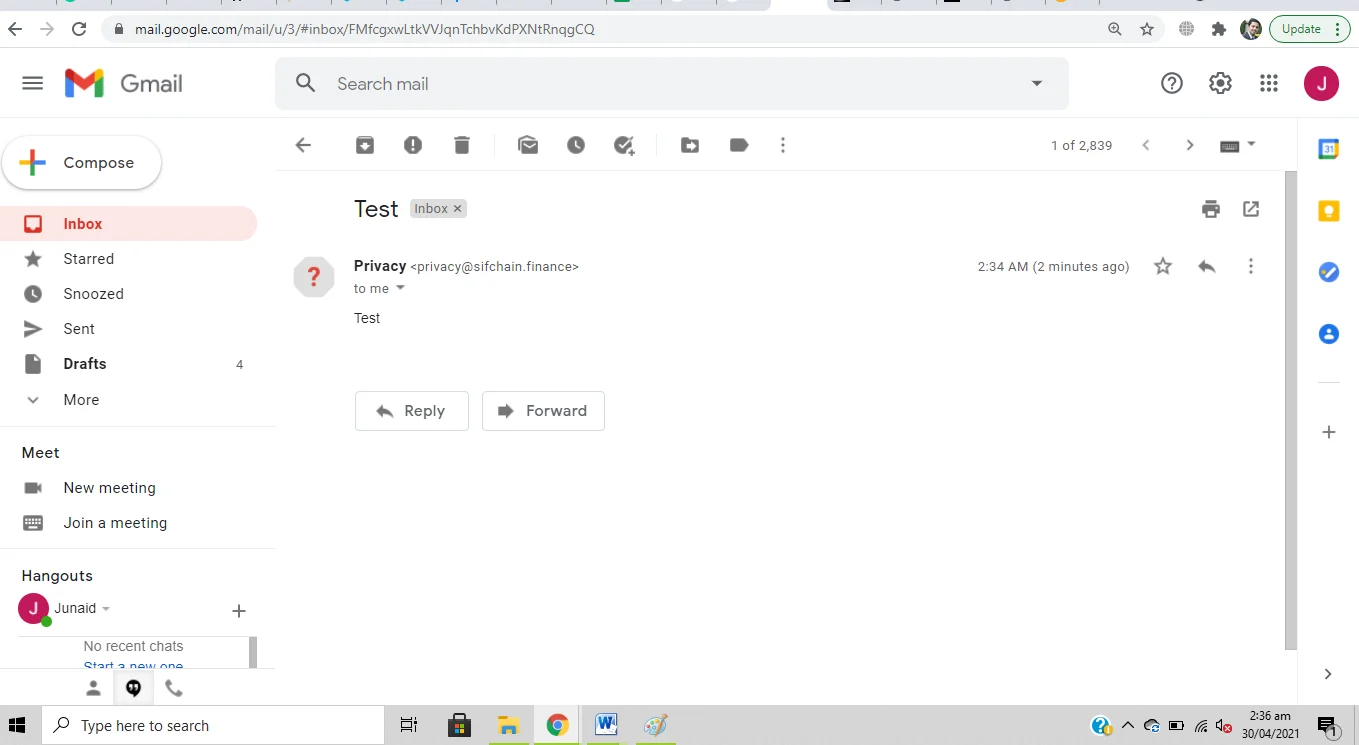
I just sent a forged email to [email protected] that appears to originate from [email protected]
I was able to do this because of SPF Soft Fail and I could not find DMARC record of this domain.
SPF record lookup and validation for: sifchain.finance Found v=spf1 record for sifchain.finance: v=spf1 include:_spf.google.com include:spf.autopilothq.com include:sendgrid.net ~all
As you can see the symbol at last which is (~all) is the issue, which should be replaced by Hyphen (-all) symbol.
Please refer to the digital ocean article for understanding. https://www.digitalocean.com/community/tutorials/how-to-use-an-spf-record-to-prevent-spoofing-improve-e-mail-reliability
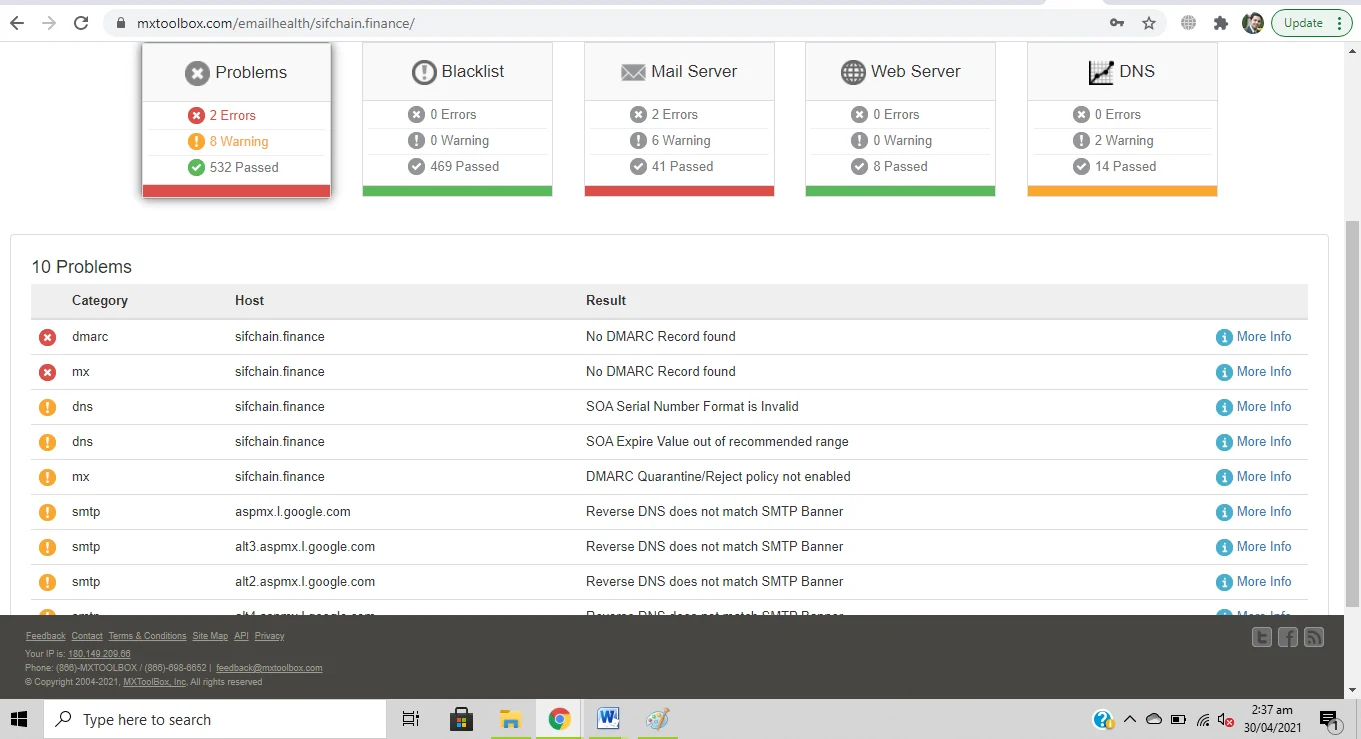
DMARC record lookup and validation for: sifchain.finance No DMARC Record Found
You can check your SPF Record from here https://www.kitterman.com/spf/validate.html
You can check your DMARC record form here https://mxtoolbox.com/emailhealth/sifchain.finance/
Also No DKIM Found
Please find the Attached Video of forged test email received as a proof of concept and Screenshot of forged email received and Domain Health Report.
Waiting for your response.
With Thanks and Regards Muhammad Tajammul
Impact
Email spoofing is the forgery of an email header so that the message appears to have originated from someone or somewhere other than the actual source. Email spoofing is a tactic used in phishing and spam campaigns because people are more likely to open an email when they think it has been sent by a legitimate source. The goal of email spoofing is to get recipients to open, and possibly even respond to, a solicitation
Attachments
Not written yet. The AI write-up for this report has not been written yet. The Original tab links to the source.
How it worked
Root cause
The SPF record uses a soft-fail qualifier (~all) instead of a hard-fail (-all), and no DMARC record is published to enforce alignment and rejection.
Impact
An attacker could send spoofed emails that appear to come from the domain, which may be used in phishing or spam campaigns.
What the attacker needed
None
The fix
The SPF record should use a hard-fail qualifier, and a DMARC record should be published.
How it was found
- Look up the SPF record for the domain and note the soft-fail qualifier.
- Check for a DMARC record and find none.
- Send a forged email from the domain to a test address and confirm it arrives.
Explained by bugbounty.wiki with AI from the original and checked against quotes from it; it can still be wrong. Read the original before relying on a detail.
Not written yet. The AI write-up for this report has not been written yet. The Original tab links to the source.
Email senders can be faked because the domain's DNS settings do not strictly tell receiving mail servers to reject messages from unauthorised servers. The SPF record uses a 'soft fail' setting that only marks suspicious mail, and there is no DMARC policy to enforce rejection. This lets an attacker send phishing emails that look like they come from the real domain.
What is Misconfiguration?
Settings left unsafe: exposed panels, open storage buckets, debug modes, default credentials.



