Leak of Internal IP addresses
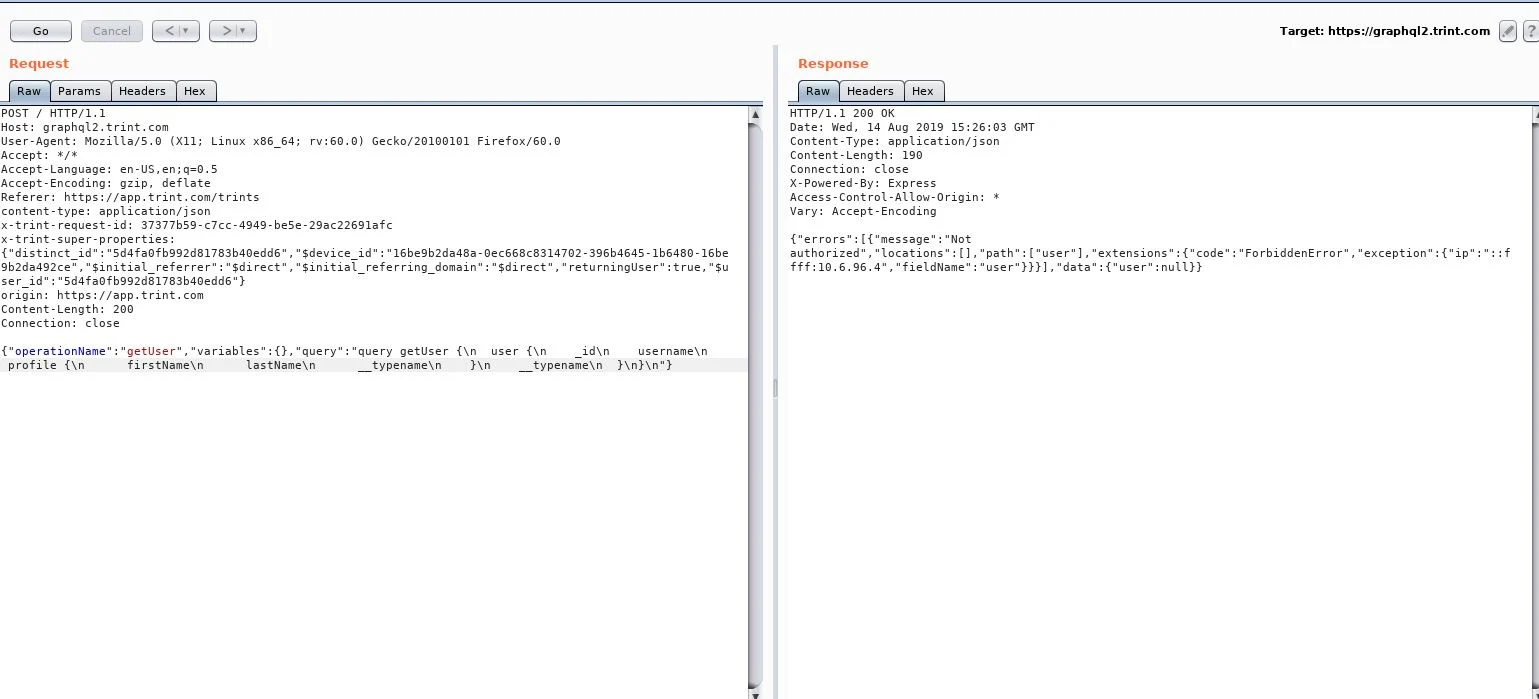
An unauthenticated request to a GraphQL endpoint with the getUser operation returned an error that included an internal IP address. An attacker could use this to learn about the internal network.

- Triaged in 14 days
- Fixed in 43 days
- Disclosed after 19 months
Summary:
The leak of Internal IP Addresses. IP Addresses:- 10.6.96.4 10.6.136.194 10.6.127.182
Assessment:
[add your assessment of the vulnerability]
Steps To Reproduce:
    1. Open request page of (graphql2.trint.com)  with "getUser" Operation name.
    2. Remove "authorization: Bearer" line and error will raise.
    3. You can see ("ip":"::ffff:10.6.127.182) and ("data":{"user":null}) in error.
It is happening only on "getUser" operation name.
Supporting Material/References:
[list any additional material (e.g. screenshots, logs, etc.)]
- [attachment / reference]
F555596
Impact
The leak of Internal IP Addresses will allow the attacker to get more information about the server.
Attachments
Not written yet. The AI write-up for this report has not been written yet. The Original tab links to the source.
How it worked
Root cause
Likely the GraphQL error handler includes the client's IP address in error responses when authentication is missing.
Impact
The leak of internal IP addresses could allow an attacker to gather more information about the server and its network.
What the attacker needed
Access to the GraphQL endpoint
Explained by bugbounty.wiki with AI from the original and checked against quotes from it; it can still be wrong. Read the original before relying on a detail.
Not written yet. The AI write-up for this report has not been written yet. The Original tab links to the source.
When a server makes a mistake, it sometimes shows an error message that contains extra details. Here, the error included the server's internal address, which is normally hidden. That address can help an attacker map the internal network.
What is Info disclosure?
Data the application should keep private (personal data, internal details, other users' records) reaches someone it should not.




