XSS At "pages.et.uber.com"
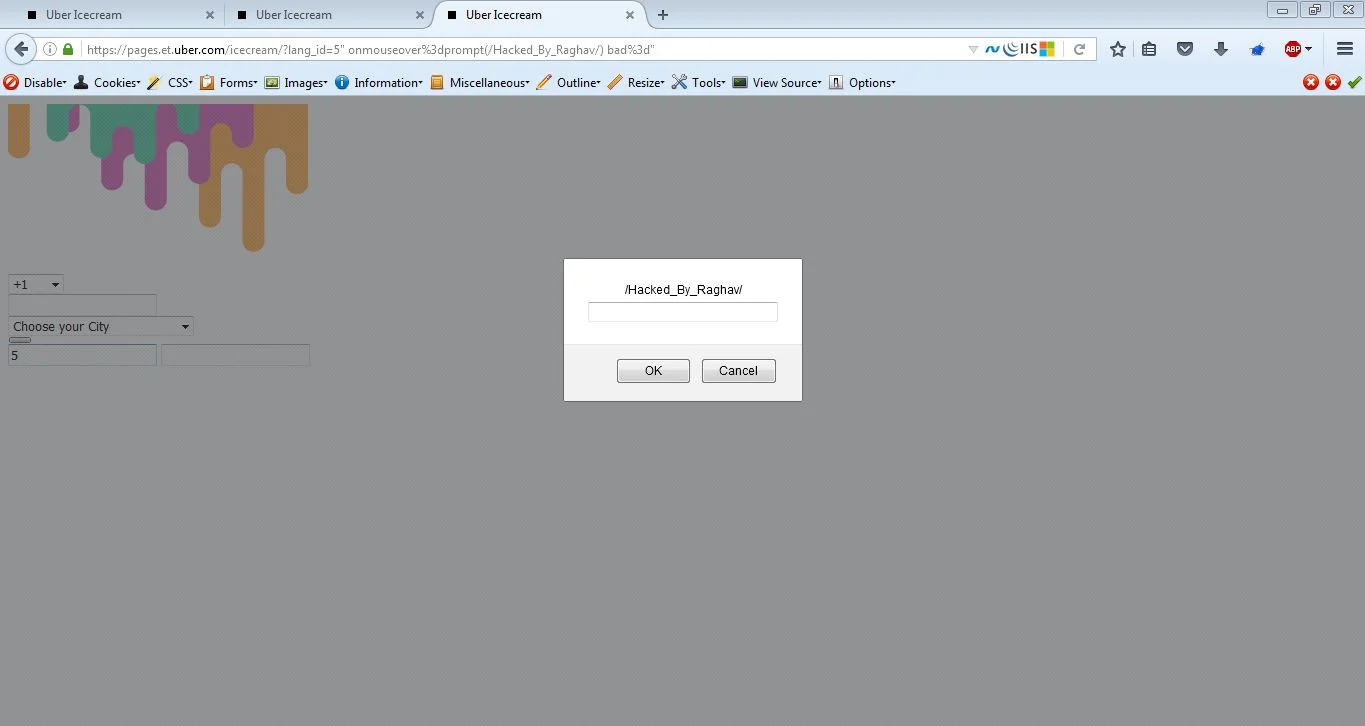
A parameter on an Uber subdomain was reflected into the page without proper encoding, allowing an attacker to inject an event handler that executes script when the victim hovers over a crafted element. This could let an attacker run arbitrary JavaScript in the victim's browser, potentially stealing cookies or performing actions on their behalf.
 Originally disclosed on HackerOne
- Disclosed after 17 days
Vulnerable Domain :
Vulnerable Link :
https://pages.et.uber.com/icecream/?lang_id=5
Edited Link With Payload :
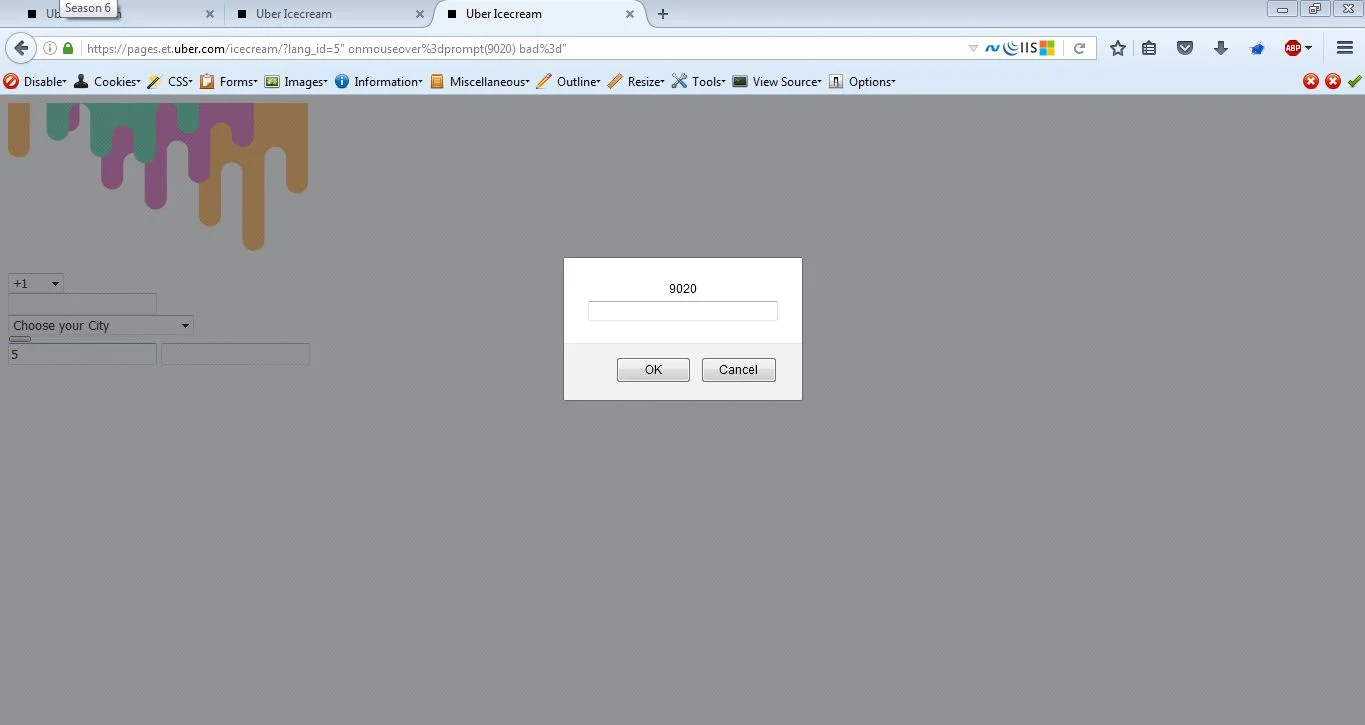
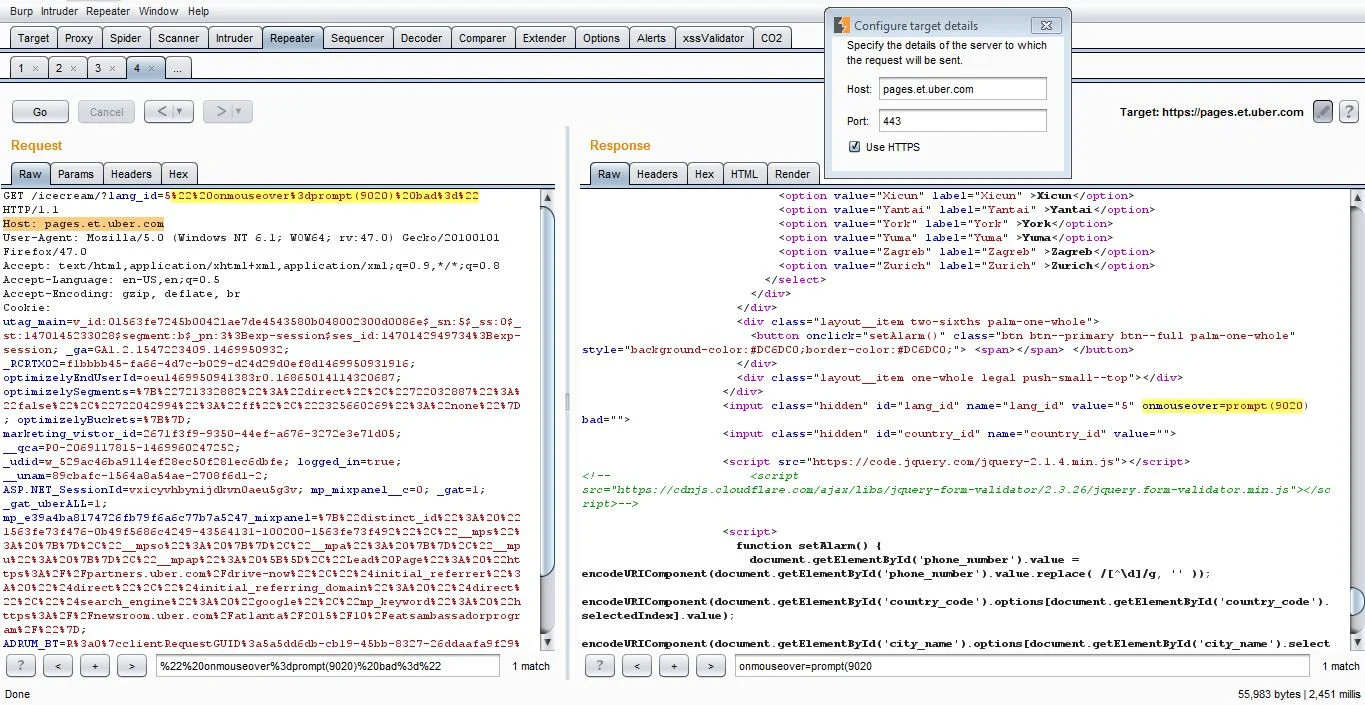
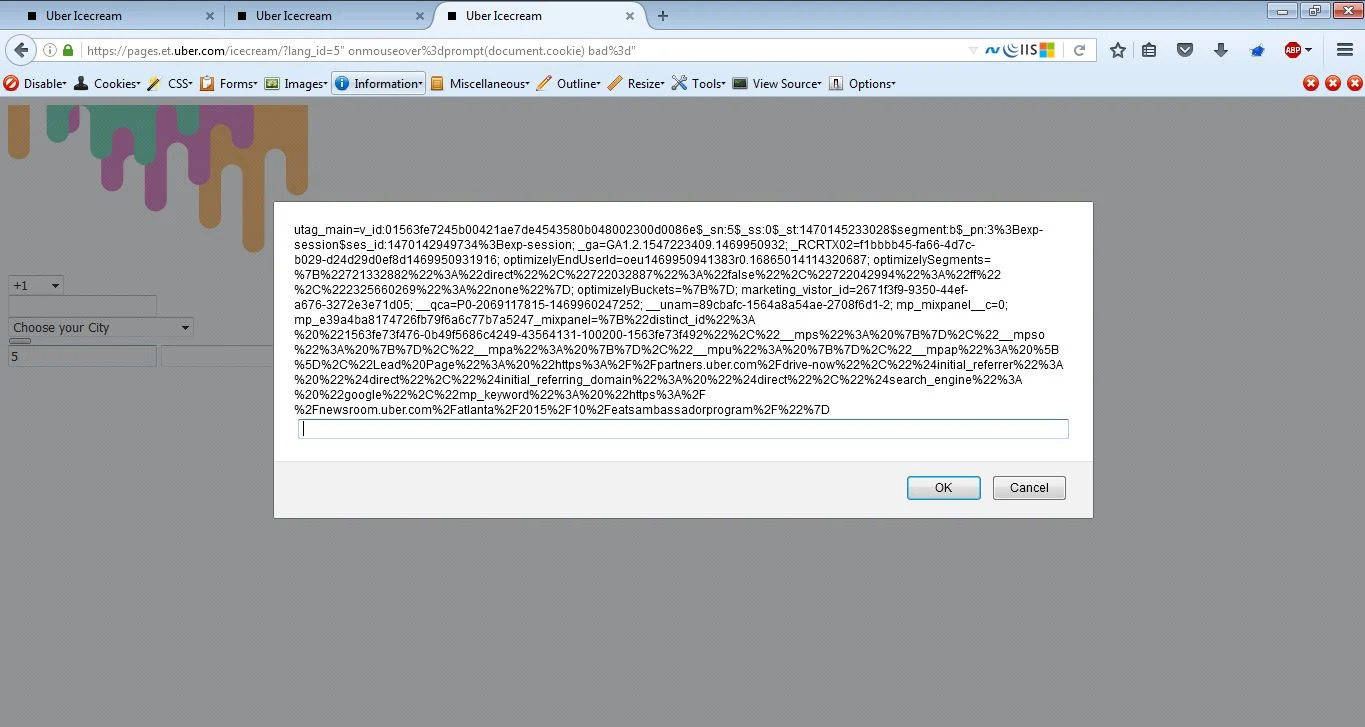
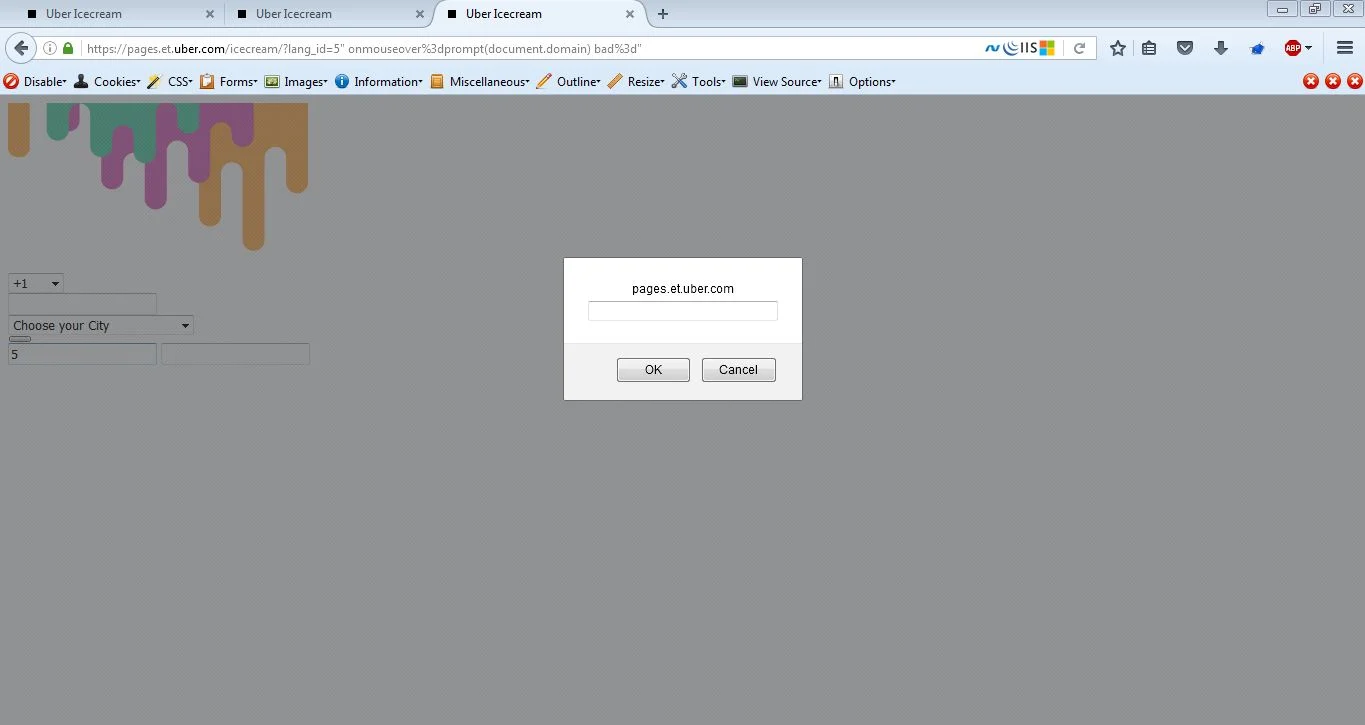
https://pages.et.uber.com/icecream/?lang_id=5%22%20onmouseover%3dprompt(document.domain)%20bad%3d%22 https://pages.et.uber.com/icecream/?lang_id=5%22%20onmouseover%3dprompt(document.cookie)%20bad%3d%22 https://pages.et.uber.com/icecream/?lang_id=5%22%20onmouseover%3dprompt(9020)%20bad%3d%22
Payload Used :
" onmouseover%3dprompt(9020) bad%3d" " onmouseover%3dprompt(document.domain) bad%3d" " onmouseover%3dprompt(document.cookie) bad%3d"
Attachments
Not written yet. The AI write-up for this report has not been written yet. The Original tab links to the source.
How it worked
Impact
An attacker could execute arbitrary JavaScript in a victim's browser when they hover over a crafted element, potentially stealing cookies or performing actions as the victim.
What the attacker needed
Victim clicks a crafted link; victim hovers over the affected element
How it was found
- Visit the vulnerable page with a normal lang_id value.
- Modify the lang_id parameter to include a double quote, an onmouseover event handler, and a dummy attribute.
- Load the modified URL and hover over the affected element to trigger the JavaScript prompt.
Explained by bugbounty.wiki with AI from the original and checked against quotes from it; it can still be wrong. Read the original before relying on a detail.
Not written yet. The AI write-up for this report has not been written yet. The Original tab links to the source.
The website took a value from the address bar and put it directly into the page's HTML without cleaning it. By adding special characters, an attacker can break out of the intended attribute and add their own code, which runs when the victim moves their mouse over a certain element. This is called cross-site scripting (XSS) and can be used to steal session cookies or do things as the logged-in user.
What is XSS?
Script an attacker supplies runs in another user's browser, on the target's origin, with that user's session.





