reopen #128853 (Information disclosure at lite.uber.com)
An OAuth callback on lite.uber.com returned a full Node.js stack trace when a session error occurred, exposing internal file paths and library details. The reporter also noted that an internal Jira instance was reachable and its REST API could be queried.

- Disclosed after 3 months
Issue in #128853 occurs again.
- go to https://login.uber.com/oauth/v2/authorize?response_type=code&redirect_uri=https%3A%2F%2Flite.uber.com%2Fauth%2Fcallback&scope=profile%20history%20places%20history_lite%20request_receipt%20request%20payment_baidu_wallet&client_id=y-JJyZ_RABnEwbJQq4VdQPORo4EKqv0j
- Enter your login and password
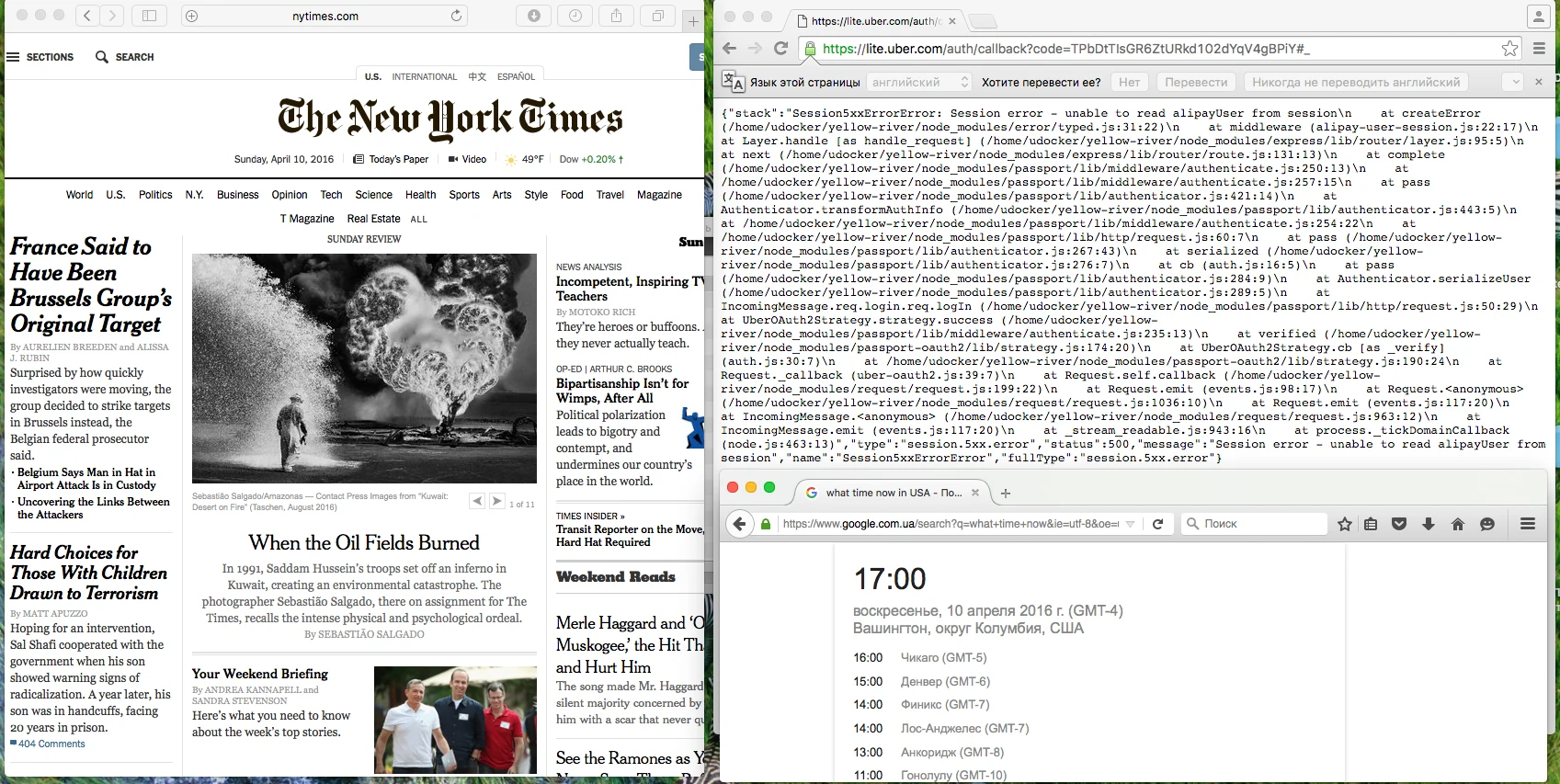
- You will redirect to lite.uber.com with trace from nodejs
{"stack":"Session5xxErrorError: Session error - unable to read alipayUser from session\n at createError (/home/udocker/yellow-river/node_modules/error/typed.js:31:22)\n at middleware (alipay-user-session.js:22:17)\n at Layer.handle [as handle_request] (/home/udocker/yellow-river/node_modules/express/lib/router/layer.js:95:5)\n at next (/home/udocker/yellow-river/node_modules/express/lib/router/route.js:131:13)\n at complete (/home/udocker/yellow-river/node_modules/passport/lib/middleware/authenticate.js:250:13)\n at /home/udocker/yellow-river/node_modules/passport/lib/middleware/authenticate.js:257:15\n at pass (/home/udocker/yellow-river/node_modules/passport/lib/authenticator.js:421:14)\n at Authenticator.transformAuthInfo (/home/udocker/yellow-river/node_modules/passport/lib/authenticator.js:443:5)\n at /home/udocker/yellow-river/node_modules/passport/lib/middleware/authenticate.js:254:22\n at /home/udocker/yellow-river/node_modules/passport/lib/http/request.js:60:7\n at pass (/home/udocker/yellow-river/node_modules/passport/lib/authenticator.js:267:43)\n at serialized (/home/udocker/yellow-river/node_modules/passport/lib/authenticator.js:276:7)\n at cb (auth.js:16:5)\n at pass (/home/udocker/yellow-river/node_modules/passport/lib/authenticator.js:284:9)\n at Authenticator.serializeUser (/home/udocker/yellow-river/node_modules/passport/lib/authenticator.js:289:5)\n at IncomingMessage.req.login.req.logIn (/home/udocker/yellow-river/node_modules/passport/lib/http/request.js:50:29)\n at UberOAuth2Strategy.strategy.success (/home/udocker/yellow-river/node_modules/passport/lib/middleware/authenticate.js:235:13)\n at verified (/home/udocker/yellow-river/node_modules/passport-oauth2/lib/strategy.js:174:20)\n at UberOAuth2Strategy.cb [as _verify] (auth.js:30:7)\n at /home/udocker/yellow-river/node_modules/passport-oauth2/lib/strategy.js:190:24\n at Request._callback (uber-oauth2.js:39:7)\n at Request.self.callback (/home/udocker/yellow-river/node_modules/request/request.js:199:22)\n at Request.emit (events.js:98:17)\n at Request.<anonymous> (/home/udocker/yellow-river/node_modules/request/request.js:1036:10)\n at Request.emit (events.js:117:20)\n at IncomingMessage.<anonymous> (/home/udocker/yellow-river/node_modules/request/request.js:963:12)\n at IncomingMessage.emit (events.js:117:20)\n at _stream_readable.js:943:16\n at process._tickDomainCallback (node.js:463:13)","type":"session.5xx.error","status":500,"message":"Session error - unable to read alipayUser from session","name":"Session5xxErrorError","fullType":"session.5xx.error"}
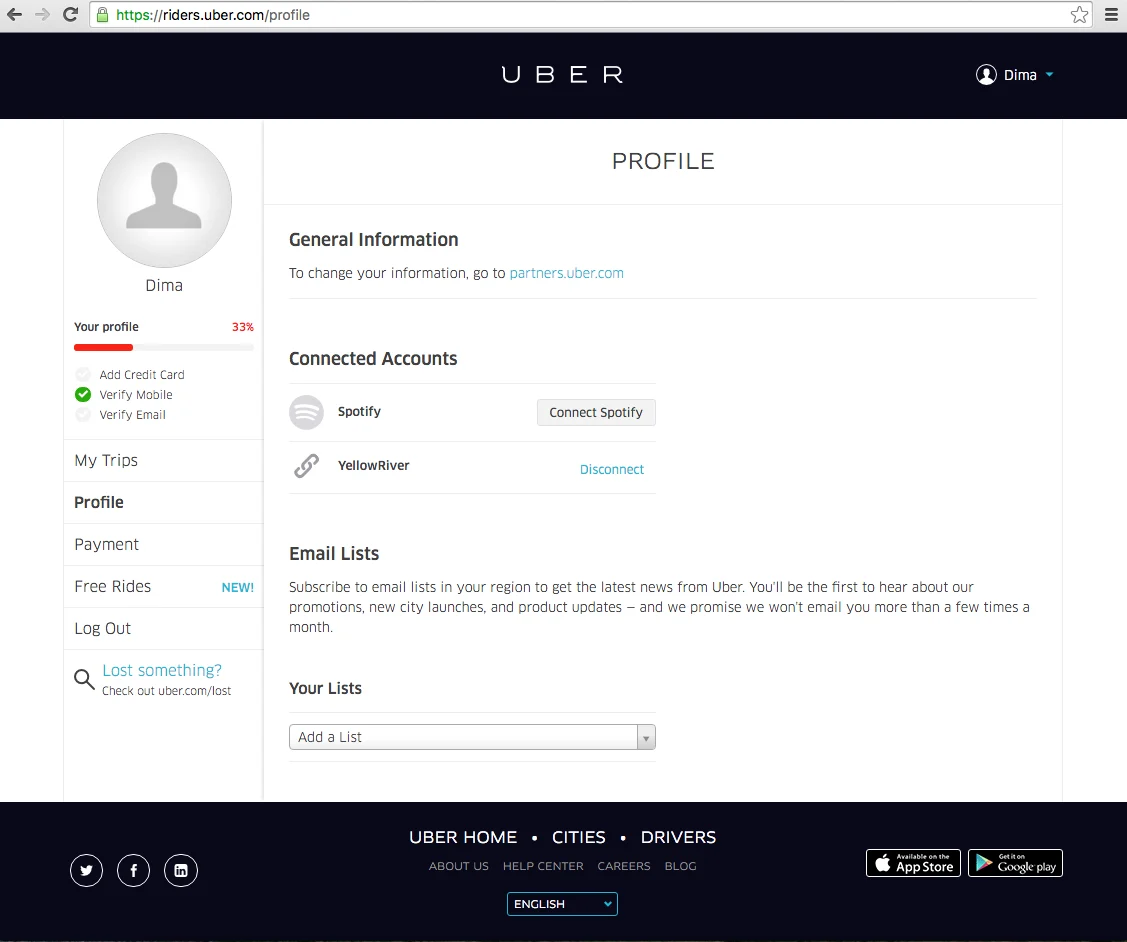
Error occurs when user want to connect YellowRiver app to his account with/without Alipay as payment method.
Files attached.
And one more thing: You have some internal resources, which can be find easy. For example JIRA at jira.uber.com (with redirect to jira.uberinternal.com) And by using API JIRA I can find something like this: https://jira.uberinternal.com/rest/api/2/dashboard?maxResults=20&startAt=20
I think internal resources must be internal. You are not responsible for third-party products. But sometimes can be this #114476
Attachments
Not written yet. The AI write-up for this report has not been written yet. The Original tab links to the source.
How it worked
Root cause
Likely the application returned raw error details to the client instead of a generic error page, and an internal Jira instance was exposed without network restrictions.
Impact
An attacker could learn internal file paths and application structure, and could reach an internal Jira instance and its API.
What the attacker needed
A user account; victim logs in via the OAuth flow
How it was found
- Visit the OAuth authorisation URL for the YellowRiver app.
- Log in with a username and password.
- Get redirected to lite.uber.com, which shows a Node.js stack trace.
Explained by bugbounty.wiki with AI from the original and checked against quotes from it; it can still be wrong. Read the original before relying on a detail.
Not written yet. The AI write-up for this report has not been written yet. The Original tab links to the source.
When a website hits an error, it sometimes shows a detailed technical message instead of a friendly one. Here that message included the server's file paths and software names, which helps an attacker learn how the system is built. The reporter also found an internal work-tracking site that should not have been reachable from the internet.
What is Info disclosure?
Data the application should keep private (personal data, internal details, other users' records) reaches someone it should not.




