Resource Consumption DOS on Edgemax v1.10.6
The web management portal of EdgeMax v1.10.6 stores the beaker.session.id cookie value as a cache file in /var/run/beaker/container_file/ without limiting the number of files. An attacker can send many requests with unique cookie values to fill the /run mount, causing the portal to return errors and eventually the device to stop responding until power cycled.

- Triaged in 4 days
- Fixed in 9 months
- Paid in 5 days
- Disclosed after 11 months
Resource consumption Denial of service.
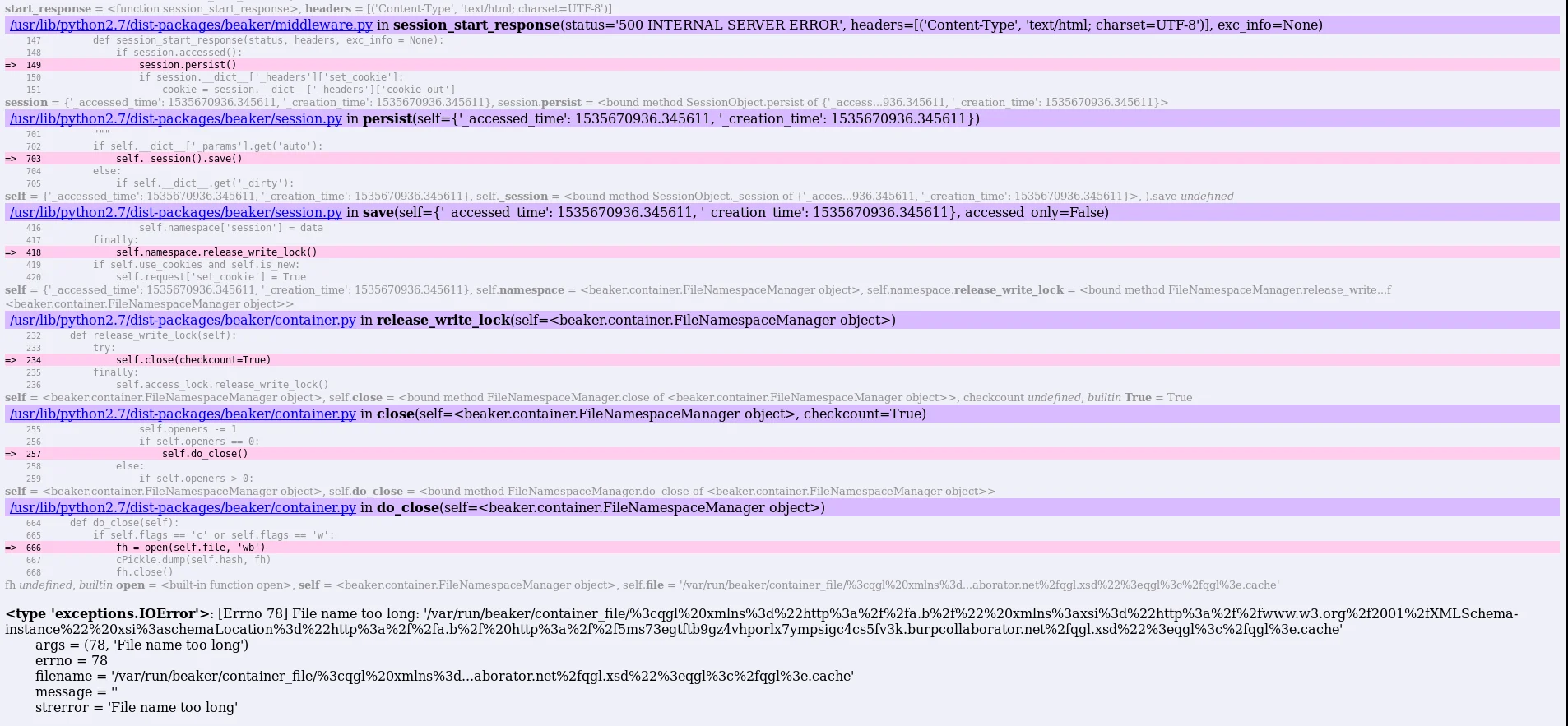
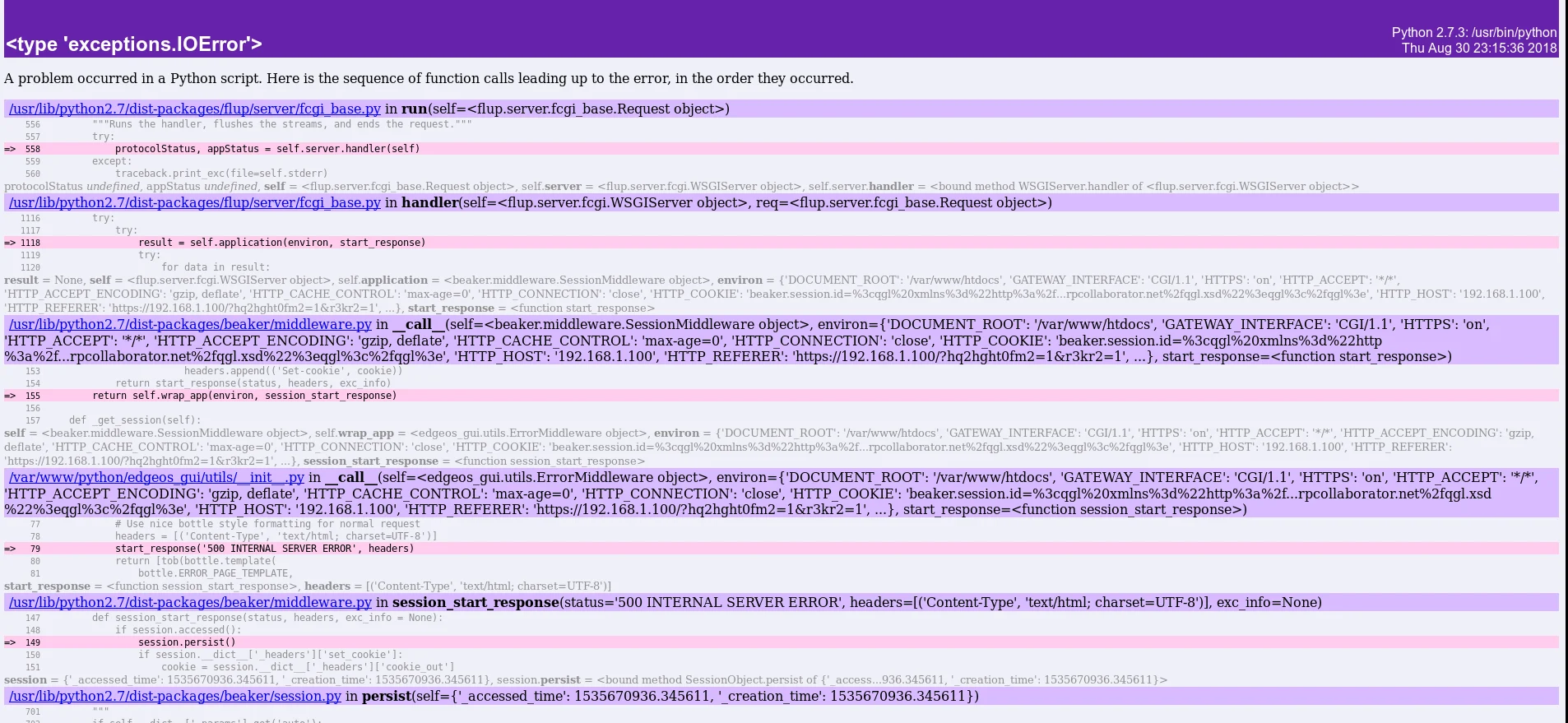
1: The request below shows that when you feed the beaker.session.id cookie variable a payload of 250 characters or more, the web management portal will produce an error page showing full path disclosure and more as shown in screenshots error1.png and error2.png.
GET / HTTP/1.1 Host: 192.168.1.100 User-Agent: Mozilla/5.0 (X11; Linux x86_64; rv:52.0) Gecko/20100101 Firefox/52.0 Accept: text/html,application/xhtml+xml,application/xml;q=0.9,/;q=0.8 Accept-Language: en-US,en;q=0.5 Accept-Encoding: gzip, deflate Cookie: beaker.session.id=v8iG24fDKn8x5uD3V2uICZA1FJEoUJpqH5VTa03xB5blDRNOe5AfFp2GNIBpDX8th1IO8sS5ejsz4Swm175nUvipwU211S4n4RtCv0A6r18fsgJbrrbmhFT9k2cAXF3yyg0Uu0B0wPOWP7BOrMVnXp44aHoXSfJ06ZXk7HrD5J5R9AZIgQLmGutM9ESNxw3CVJtW4Rfxeh7JE2AD04B3g78FxRgBxY82I2Gzf6ZPMsc39d37LM90dd9cFA Connection: close Upgrade-Insecure-Requests: 1 Cache-Control: max-age=0
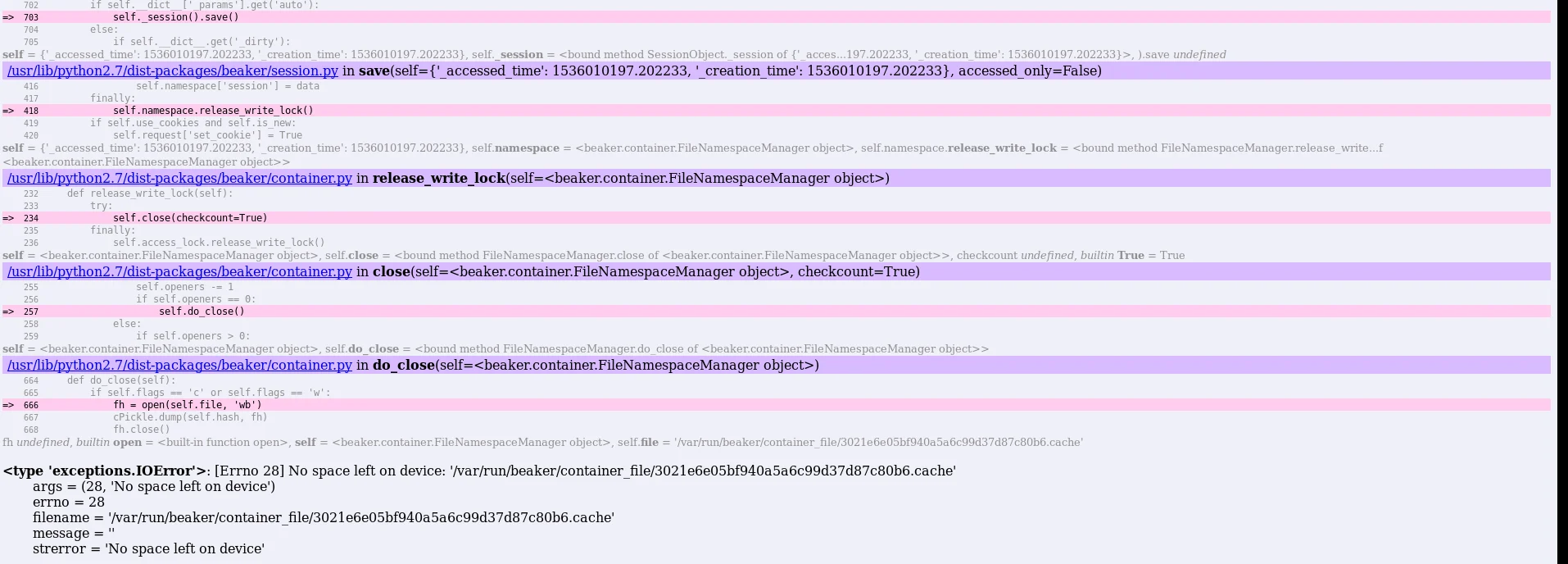
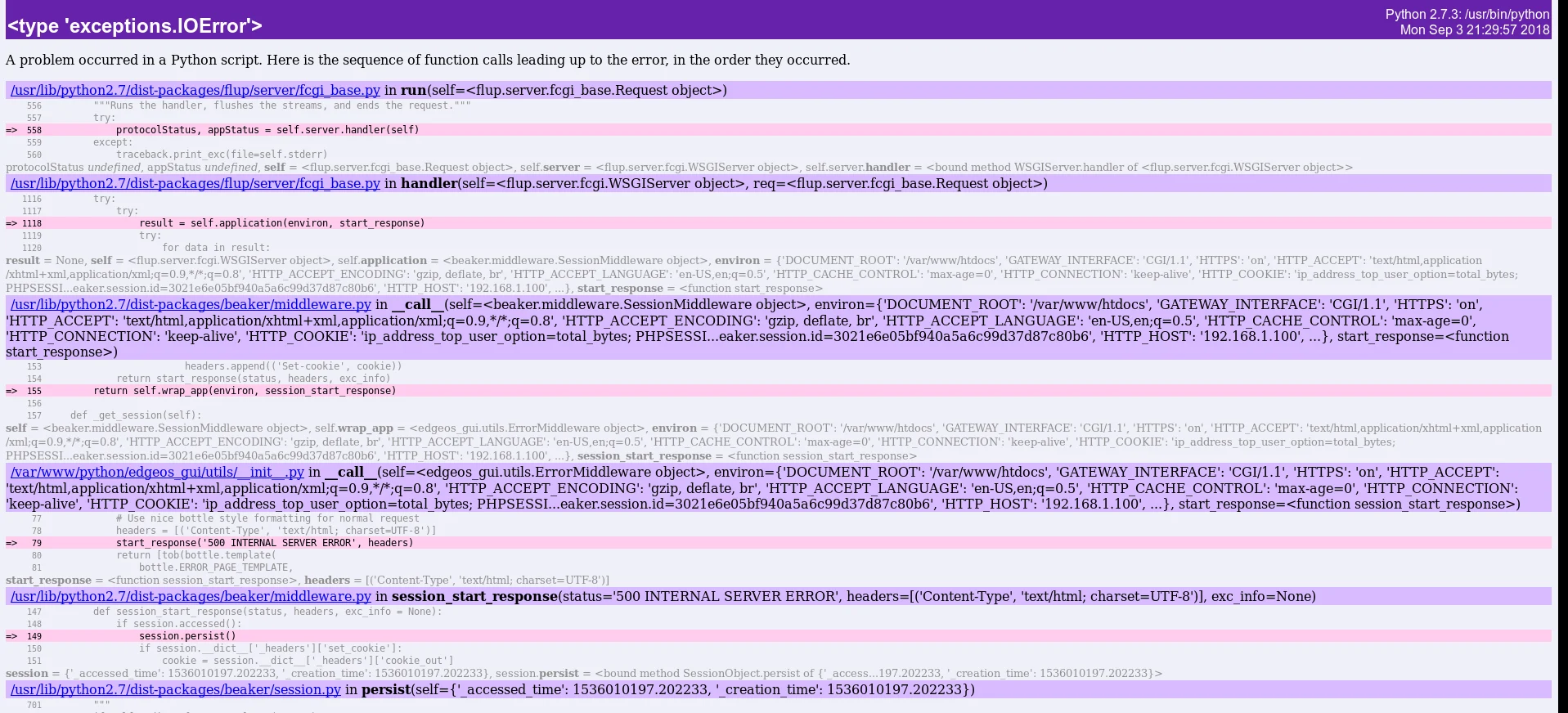
2: When providing a valid length payload of 249 characters or less it will be stored as a *.cache filename in the /var/run/beaker/container_file/ directory,this can easily be turned in to a denial of service by filling up the space of the device with unique beaker.session.id requests. The web portal will display either a 500 error as shown in DOS1.png or a python error screen as shown in DOS2.1.png and DOS2.2.png. Typically the web portal will stop functioning after the /run mount has reached 50% by sending requests using iterations of 1-15681 as a beaker.session.id variable, however any length of payload can be used up to 249 characters. This can be recovered from by deleting all files within the /var/run/beaker/container_file/ directory.
Although once the /run mount can not accept any more files /var/log will start to fill up with complaints about not being able to write to /var/run/beaker/container_file/, then after /var/log fills up the device will stop responding all together until it has been power cycled.
3: I have created a video showing you how it is accomplished, I stopped the video at only 7% resources consumed on the /run mount as the video would be pretty long if we waited until the edgerouter went offline. I am hoping this is enough for you to be able to reproduce this. I am thinking that this could be fairly bad if made in to a python script along with google dorks and automation. Or even a python script that someone has to only enter in an IP address and it will take the router offline in about 5 minutes or so until the router owner unplugs and plugs it back in.
Impact
Any resources served by the edgemax device will be unavailable until the physical device has it's power cycled, then it should function as normal. However it would be easy to just perform the attack again after it has been brought back online.
Attachments

Not written yet. The AI write-up for this report has not been written yet. The Original tab links to the source.
How it worked
Root cause
Likely the web application creates a cache file for each unique beaker.session.id cookie value without limiting the number of files or cleaning them up, allowing disk exhaustion.
Impact
Any resources served by the EdgeMax device become unavailable until the device is physically power cycled, and the attack can be repeated easily after recovery.
What the attacker needed
Network access to the web portal; ability to send many HTTP requests
The fix
The text offers no fix; it only notes recovery by deleting files in the container_file directory.
How it was found
- Send a request to the web portal with a beaker.session.id cookie value of 249 characters or less.
- Repeat the request many times with different unique cookie values to create many cache files.
- Observe the /run mount filling up and the portal returning 500 errors or Python error screens.
- Continue until the /run mount reaches about 50% and the portal stops functioning.
- Further requests cause /var/log to fill with errors, and the device stops responding until power cycled.
Explained by bugbounty.wiki with AI from the original and checked against quotes from it; it can still be wrong. Read the original before relying on a detail.
Not written yet. The AI write-up for this report has not been written yet. The Original tab links to the source.
The router's web admin page saves a small file on the device for each visitor, named after a cookie value. The page does not limit how many such files can be created. By sending many requests with different cookie values, an attacker can fill the storage space, making the admin page fail and eventually the whole router stop working until it is restarted.
What is DoS?
A request that exhausts resources or crashes a component. Many programs forbid testing it; reports usually show it from code, not by attacking.




