Directory traversal at https://nightly.ubnt.com
The report claims that a directory traversal vulnerability exists on the nightly.ubnt.com server, allowing an attacker to read sensitive files such as /etc/passwd and /etc/hosts. The reporter used automated tools (Acunetix and IronWasp) to view these files, but could not reproduce the issue manually in browsers.

- Triaged in 47 hours
- Fixed in 5 days
- Paid in 4 days
- Disclosed after 5 months
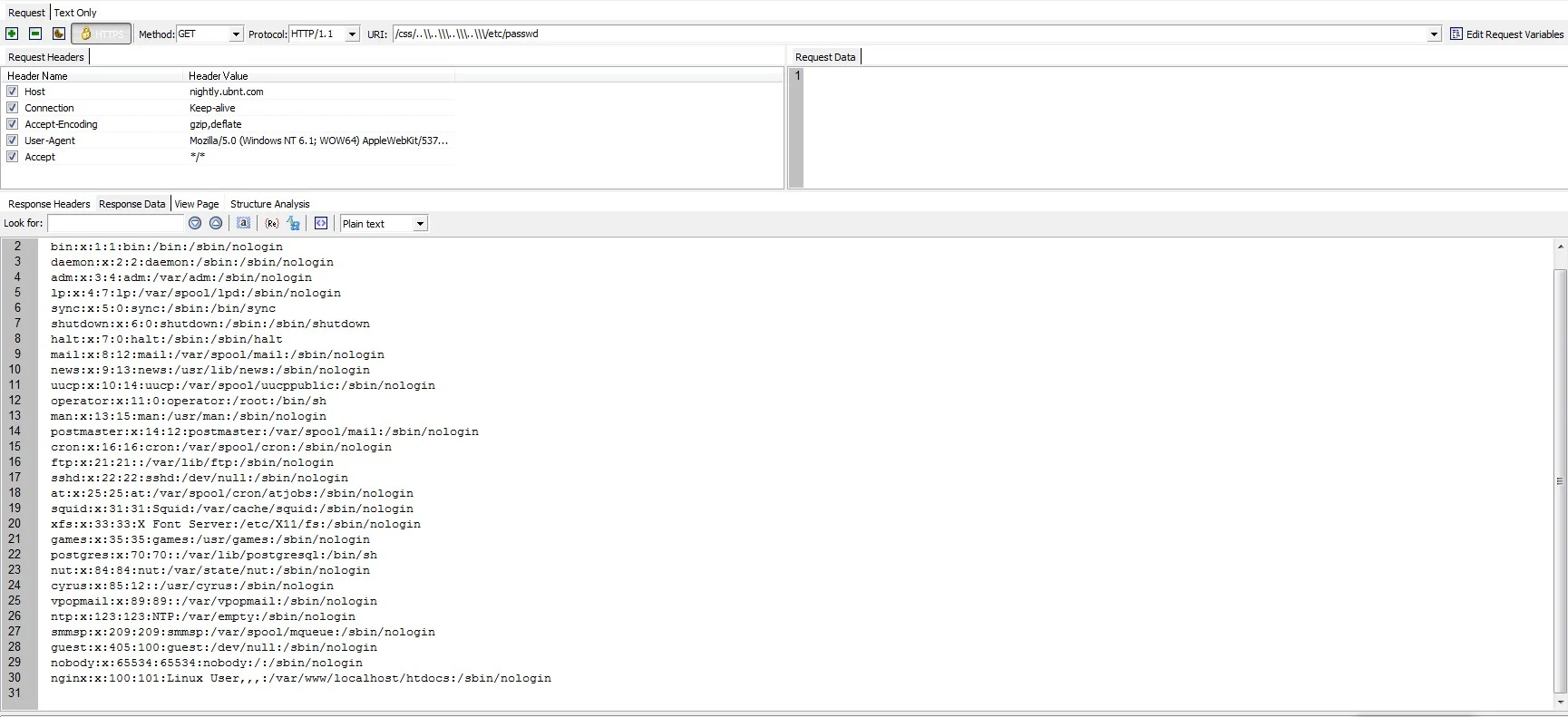
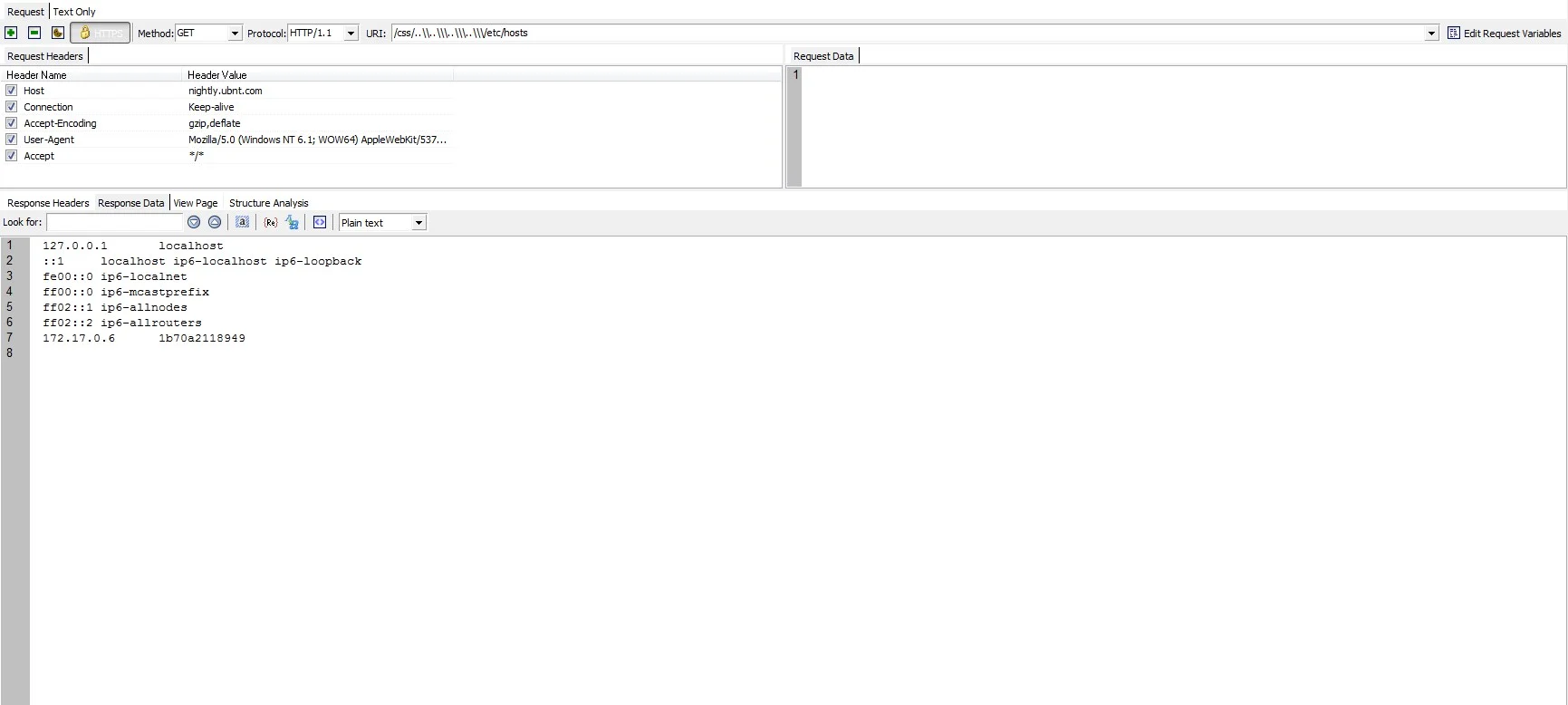
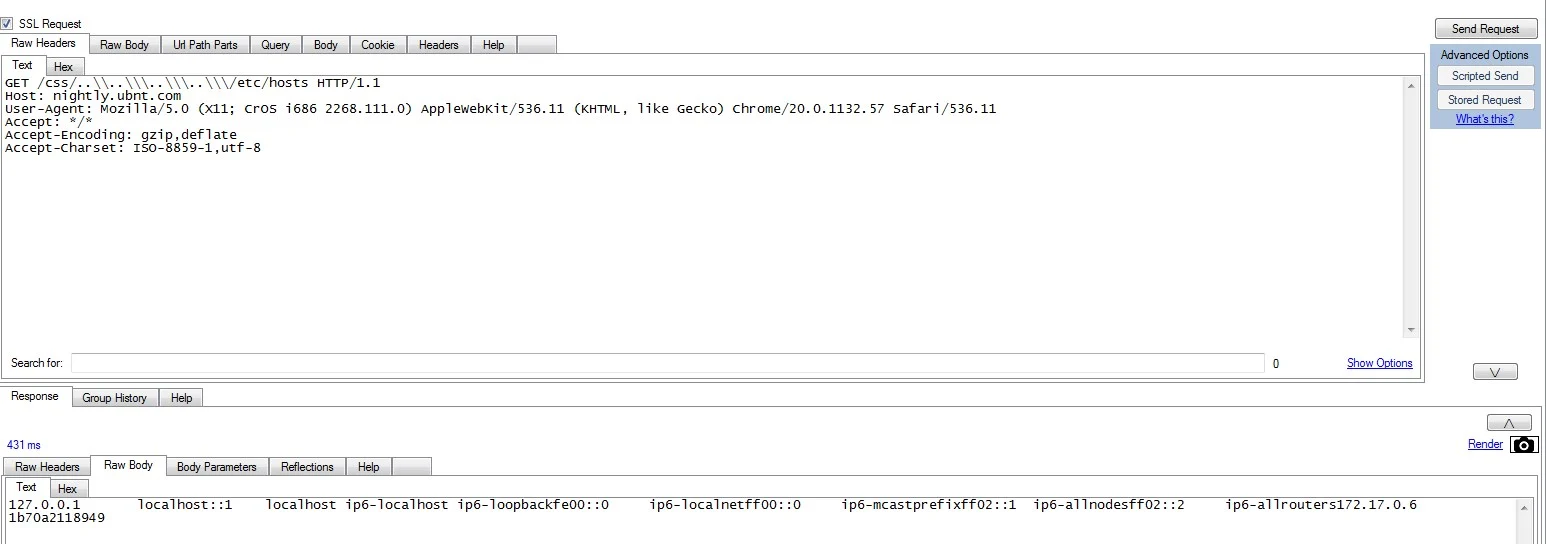
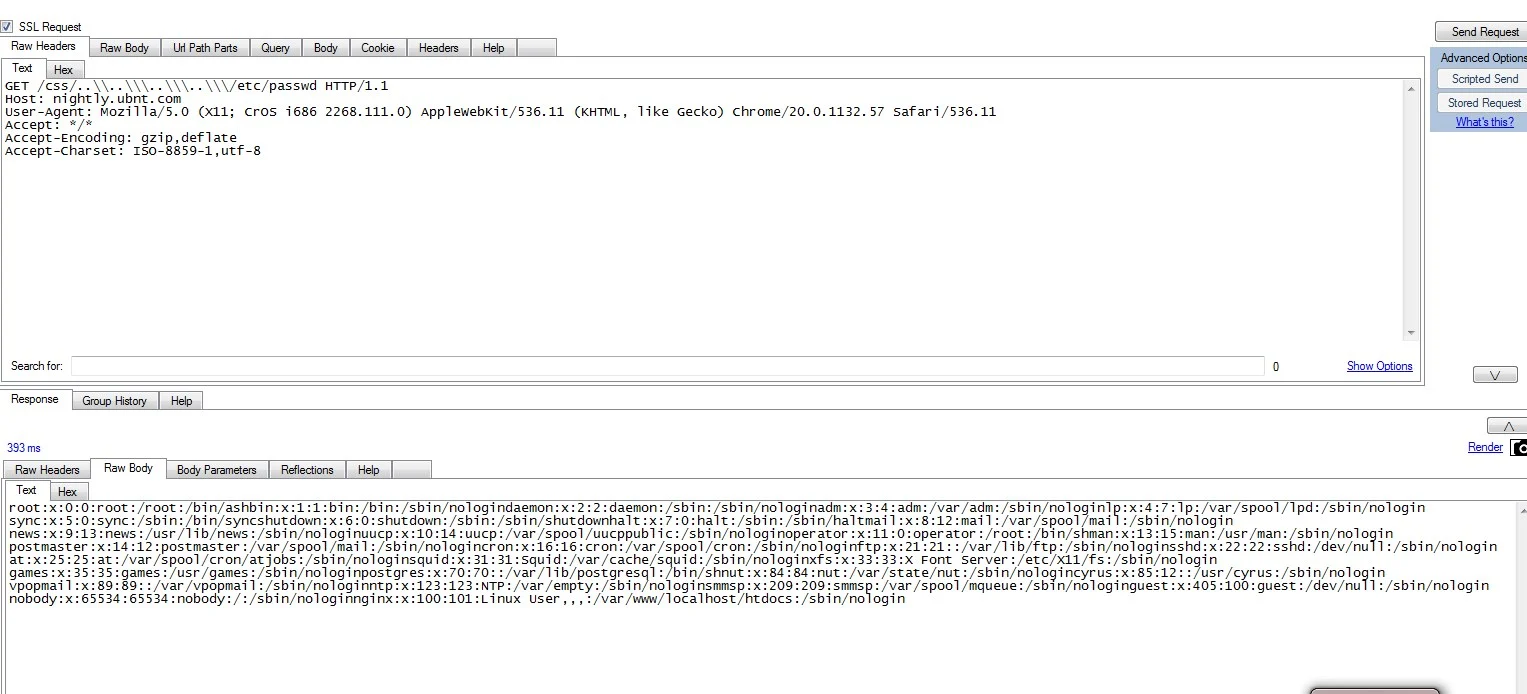
From within the http request function of the Acunetix and IronWasp programs I was able to view the passwd and hosts files at https://nightly.ubnt.com.
Please see the attached screenshots for proof.
I have tried to reproduce from within firefox and internet explorer without much luck however if you need it I will try to come up with a work around.
For reference the response header is as follows: HTTP/1.1 200 OK Date: Thu, 18 May 2017 13:35:08 GMT Content-Type: application/octet-stream Content-Length: 1339 Connection: keep-alive X-Powered-By: Express Strict-Transport-Security: max-age=15552000; includeSubDomains Last-Modified: Wed, 25 May 2016 20:30:37 GMT
Attachments
Not written yet. The AI write-up for this report has not been written yet. The Original tab links to the source.
How it worked
Root cause
Likely the server failed to properly sanitise file path input, allowing traversal sequences to access files outside the web root.
Impact
An attacker could read sensitive system files, potentially exposing user credentials or network configuration, though the reporter could not reproduce it in standard browsers.
What the attacker needed
Use of specialised tools like Acunetix or IronWasp
Explained by bugbounty.wiki with AI from the original and checked against quotes from it; it can still be wrong. Read the original before relying on a detail.
Not written yet. The AI write-up for this report has not been written yet. The Original tab links to the source.
Directory traversal is a flaw where a web server lets someone request files outside the intended folder, like reading system files. Here, the reporter says they could read password and host files using security tools, but not by typing the request in a normal browser. This suggests the server might be misconfigured to allow such access, but the evidence is limited to screenshots.
What is Path traversal?
Input that builds a file path escapes the intended folder, reading or writing files the application should never touch.





