research
An authorization bypass on a Google subdomain exposed a debug dashboard, and further directory enumeration revealed a local file inclusion (LFI) vulnerability that allowed reading files such as /proc/self/environ and /proc/version on production servers with admin privileges. The attacker could read sensitive system files but could not escalate to remote code execution.
 Published on omespino.com
It was in Google VRP program and why you can always check for dirs in 301 / 302 / 403 / 404 status pages because you will surprise that some times some directories listing will work:
The full write-up lives on its author's site
It belongs to its author, so we link to it rather than copy it. The other two tabs are our own rewrites, checked against it.
Context
This is a story about a Google VRP finding on springboard.google.com. The researcher describes it as his first P1 and his greatest find so far. The write-up is split into two rounds: a first report about an authorisation bypass on a directory of the subdomain, and a second round in which the same access was escalated to a local file inclusion (LFI) on production servers.
The feature involved is a debug-style dashboard. In the first round the researcher reaches https://springboard.google.com/REDACTED_DIR and finds an "OnContent Debug for" mini dashboard with a form. In the second round, a deeper directory, https://springboard.google.com/REDACTED_DIR/ANOTHER_DIR, exposes a panel labelled "Redacted status main" (FrameworkInfo), with a "Show REDACTED" option that takes a file parameter. That parameter is what turns into the LFI.

Setup
The environment is minimal, as the report states:
- Any browser (the researcher used the latest version of Google Chrome).
- No authentication or Google account was needed.
The only tool named is wfuzz, used for directory enumeration. The report gives no wordlist, no command line and no version for it.
Finding it
The starting observation is a general one: it is worth checking directories on pages that return 301, 302, 403 or 404 status codes, because sometimes a directory listing will work there. The researcher applied that idea to springboard.google.com.
Visiting the root of the subdomain does not show the application. It redirects to a Cloud Search error page:
https://springboard.google.com/
which lands on:
https://cloudsearch.google.com/cloudsearch/error?et=6
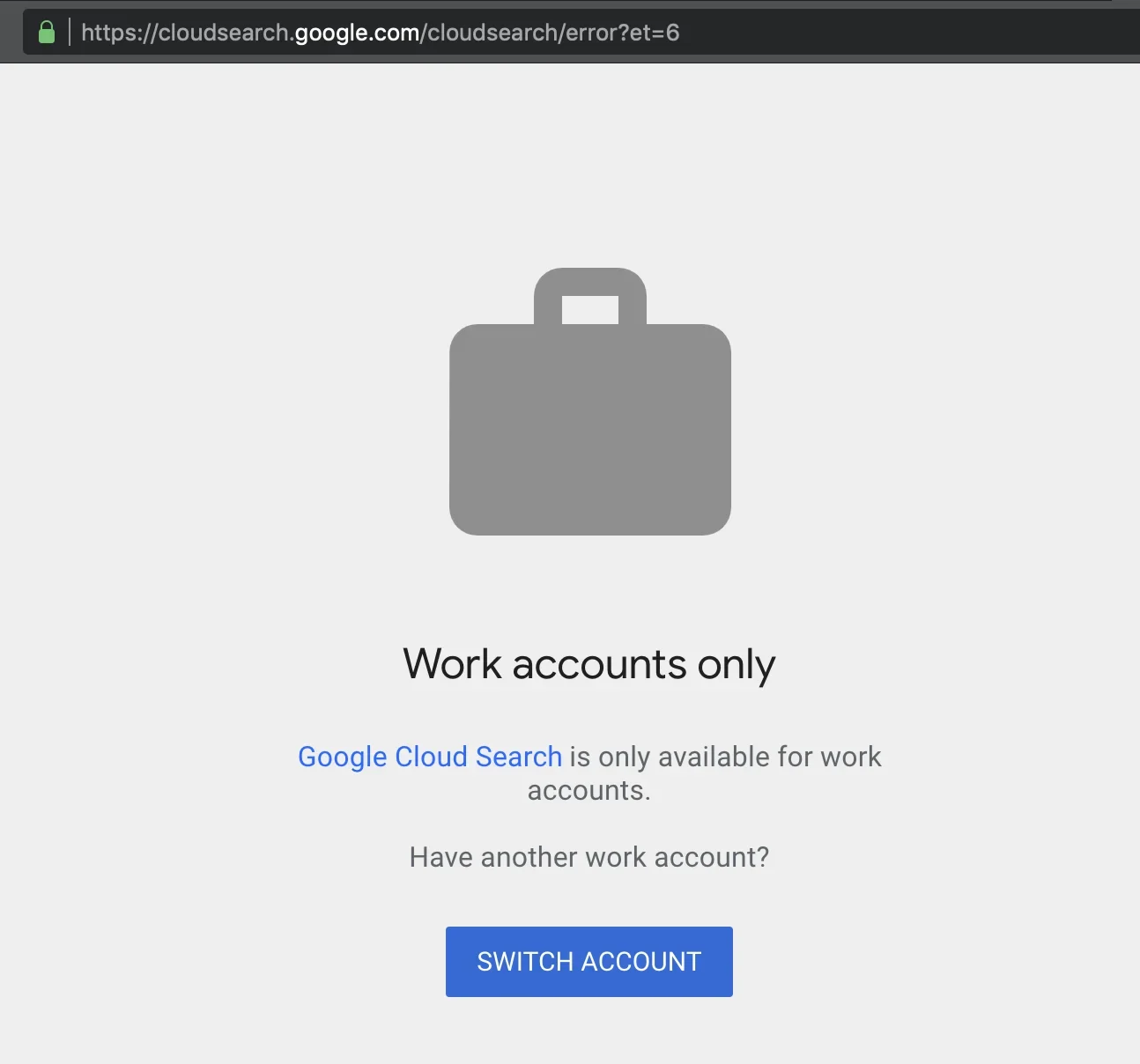
Because of that redirect, the directory brute force was run against the original host before the redirect happened. The researcher used wfuzz to brute force a directory list on https://springboard.google.com/ and filtered the non-302 redirect responses, which gave him https://springboard.google.com/REDACTED_DIR. That left https://springboard.google.com/REDACTED_DIR, which looked wrong because it was not supposed to be reachable without authorisation.
Navigating to that directory returns a mini dashboard with a form:
https://springboard.google.com/REDACTED_DIR
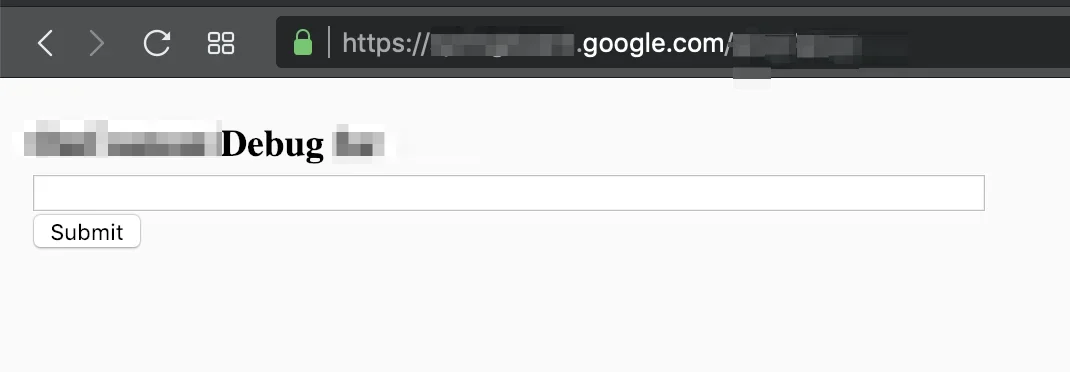
This was reported as an authorisation bypass. Three days later the researcher received a message saying that at first glance it might not be severe enough to qualify for a reward, though the panel would look at it shortly. After a week the VRP panel replied that, as part of the Vulnerability Reward Program, it did not meet the bar for a financial reward.
Exploitation
Step 1: go deeper into the exposed directory
Since the bypass was not going to be rewarded on its own, the researcher went back to the same host and ran further directory enumeration with wfuzz. This surfaced a second directory under the first one, and with it a panel that was far more interesting than the original form.
The panel is the "Redacted status main" (FrameworkInfo) dashboard, reachable at:
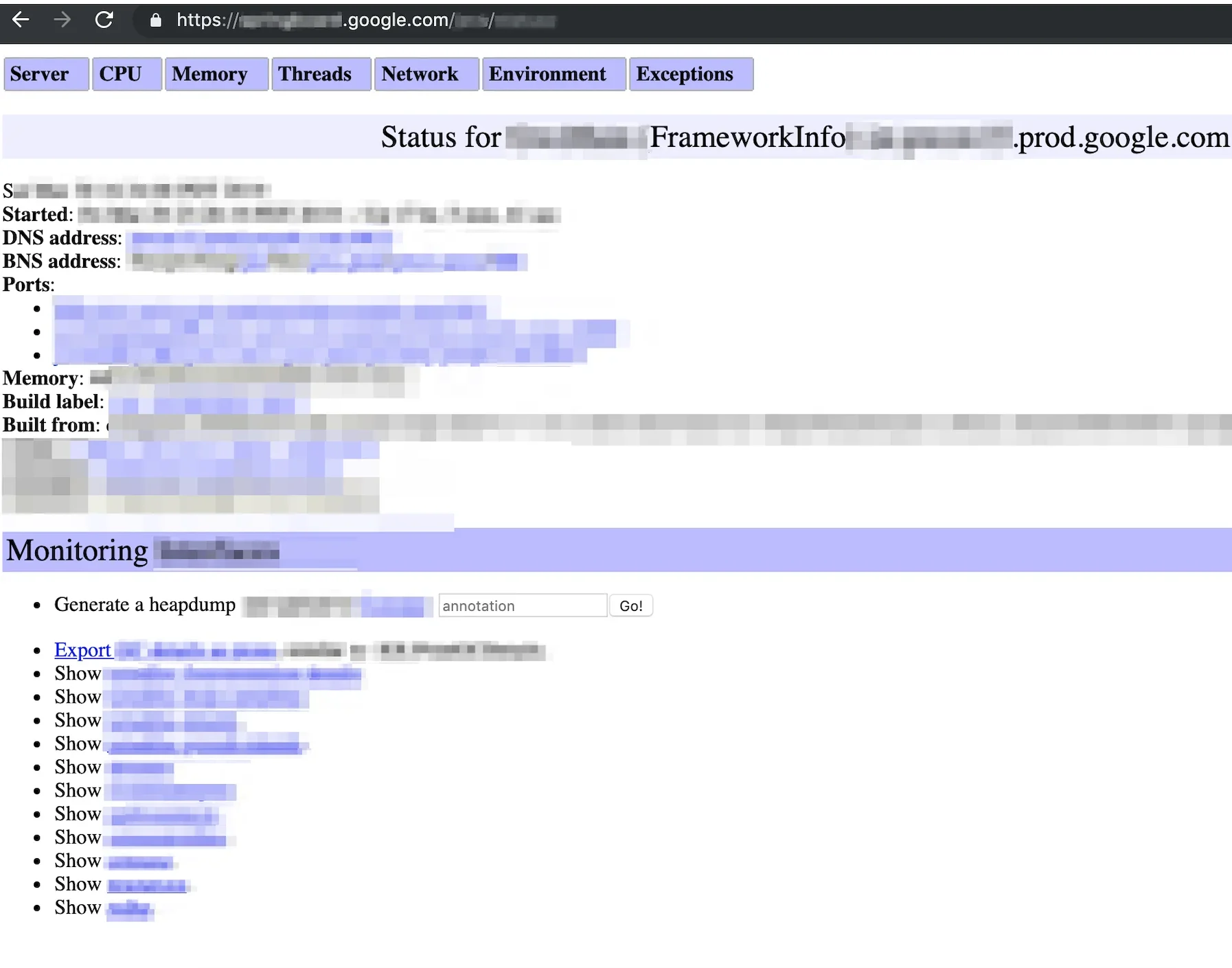
Step 2: use the file parameter
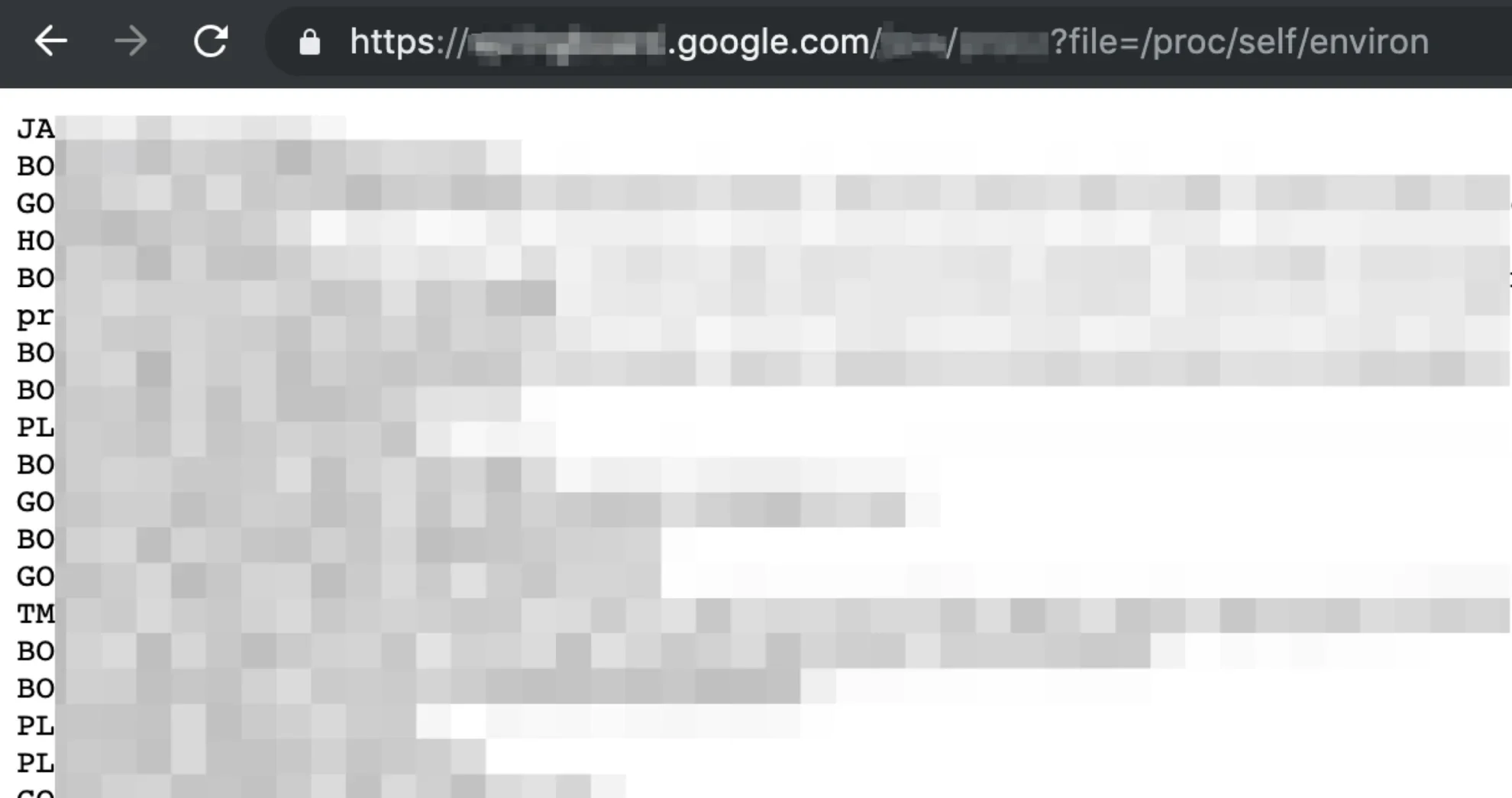
The last option on that panel is "Show REDACTED". Selecting it redirects to the same URL with a file parameter appended, and the value of that parameter is read and displayed:
With that request, /proc/self/environ is loaded into the page.
Step 3: confirm it is a full LFI
To be sure the inclusion was not limited to one path, the researcher loaded another file, /proc/version, and it worked as expected.

The report notes that each refresh of /proc/self/environ returned a different hostname, which is why the researcher describes the issue as affecting production servers in the plural. The access was running as the gxx-xxxx user, with admin privileges.
Limits of the escalation
The researcher tried to escalate the LFI to RCE without success. The report describes the environment as very hardened: reading /proc/*/fd, SSH keys, server keys or any logs was not possible.
Root cause
The report does not describe the server-side code, so the exact mistake is not stated. What the behaviour shows is a debug-style panel that is reachable without authentication and that takes a user-supplied path in the file parameter and returns the contents of that path. The authorisation bypass on the parent directory is what exposes the panel in the first place; the LFI is the panel's own handling of the parameter. Why the existing defences did not stop it is not explained in the report beyond the observation that the directory was reachable and that the panel was open.
Impact
An unauthenticated attacker, with any browser and no Google account, could read files from Google production servers through the exposed panel. The report shows /proc/self/environ and /proc/version being read, with the hostname changing between requests, and the process running as the gxx-xxxx user with admin privileges. The researcher was not able to turn this into RCE, and could not read /proc/*/fd, SSH keys, server keys or logs, so the impact is limited to what the LFI could reach on those hardened hosts.
Fix
The report does not say what was changed. It only records that the bugs were fixed by the time the researcher asked the team about the reward decision on 17 April 2019.
Variants to test
- Directories behind redirects. Run directory enumeration against the original host before any redirect is followed, and filter out the redirect responses. A positive result is a directory that returns content instead of bouncing to an error page, as
REDACTED_DIRdid here. - Debug panels under exposed directories. Once a directory is reachable without authentication, enumerate below it for status or framework panels. A positive result is a panel such as the FrameworkInfo dashboard with options that take a path or file argument.
- File parameters on debug panels. For any parameter that names a file, try
/proc/self/environand/proc/version. A positive result is the file contents rendered in the response, and a changing hostname across refreshes indicates multiple back-end hosts. - Escalation checks after an LFI. Try
/proc/*/fd, SSH keys, server keys and logs. A negative result on a hardened host, as in this report, tells you how far the inclusion actually reaches.
Timeline
| Date | Event |
|---|---|
| Mar 22, 2019 | Report sent to Google VRP, covering only the authorisation bypass |
| Mar 22, 2019 | Google triaged the bug |
| Mar 25, 2019 | Bug accepted |
| Mar 25, 2019 | Reply that the bug was in revision in the Google VRP panel |
| Mar 30, 2019 | LFI found and a new POC sent in the same report |
| Apr 1, 2019 | Message that another bug would be filed with the LFI information |
| Apr 4, 2019 | Message that the first bug was not eligible for a financial reward |
| Apr 17, 2019 | Researcher asked the team about eligibility, since both bugs were in the same report and had been fixed |
| Apr 23, 2019 | Reply apologising for the confusion and asking the researcher to wait for a new reward decision on the LFI part |
| May 21, 2019 | $13,337 bounty and permission to publish the write-up received |
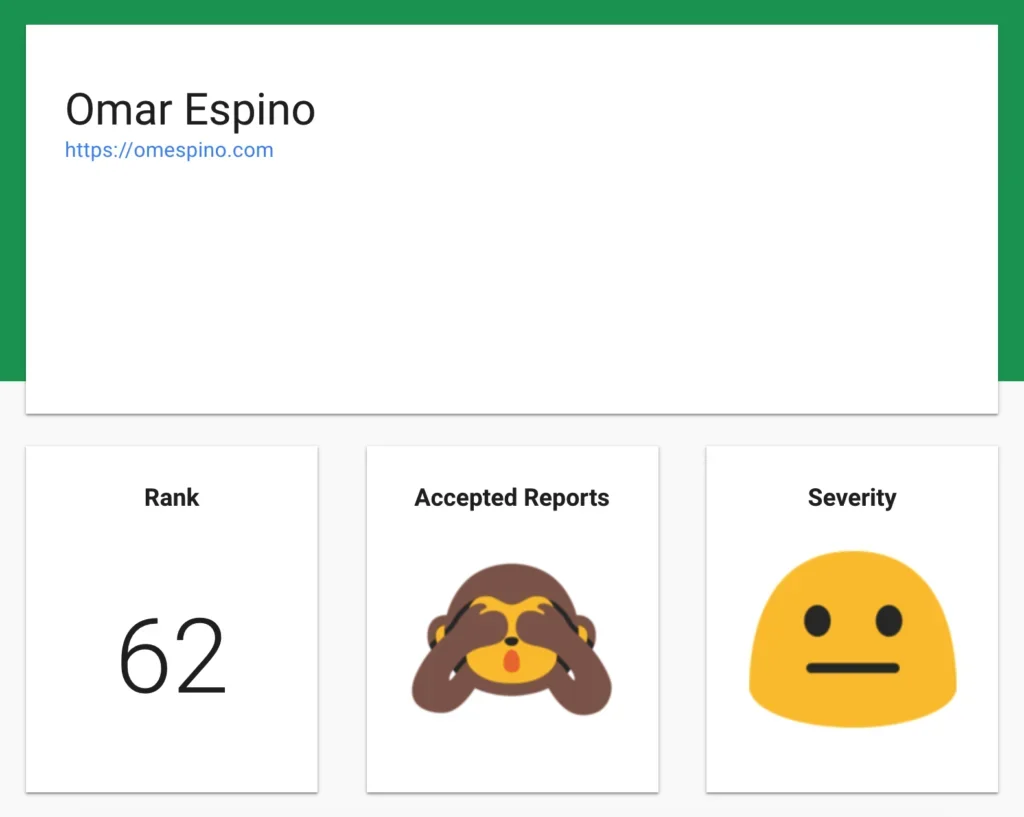
The researcher was ranked 62nd in the Google HOF in May 2019.
What happened, in plain words
A security researcher found a page on a Google website that was not supposed to be visible to the public. At first it looked like a small mistake: a page that anyone could open without logging in. Google told him that on its own it probably would not earn a reward. So he kept digging, found a second, deeper page behind the first one, and discovered that this second page could be told to read files from the server it was running on. That is a much more serious problem. He reported it and received a bounty of $13,337 USD. This is his first P1.
The story has two rounds. In the first round he reports the open page (an authorisation bypass). In the second round he turns that same access into a local file inclusion (LFI) on Google production servers. A few terms before we start:
- A bug bounty programme (here Google VRP, the Vulnerability Reward Program) is a scheme where a company pays people for reporting security problems in its systems instead of punishing them.
- A server is a computer that holds a website and answers requests from browsers. Production servers are the real ones serving real users, as opposed to test machines.
- An authorisation bypass means reaching something you are not allowed to reach, without logging in or without the right permissions.
- A local file inclusion (LFI) is a bug where a web page can be tricked into reading a file that lives on the server itself and showing its contents back to you. Think of a hotel receptionist who, when you ask for "the guest list", hands you whatever document you name from the back office instead of checking whether you are allowed to see it.
Setup
The report says the environment was minimal:
- Any browser (the researcher used the latest version of Google Chrome).
- No authentication or Google account was needed.
The only tool named is wfuzz, used for directory enumeration. Directory enumeration (also called directory brute forcing) means taking a long list of common folder names and asking the website for each one in turn, to see which ones exist. It is like trying every flat number in a building to see which doors open. The report gives no wordlist, no command line and no version for wfuzz.
Finding it
The starting observation is a general one: it is worth checking directories on pages that return 301, 302, 403 or 404 status codes, because sometimes a directory listing will work there. A status code is the short number a web server sends back with every response. 200 means "here is the page". 301 and 302 mean "the page has moved, go here instead" (a redirect). 403 means "forbidden". 404 means "not found". The point is that a redirect or an error page can hide a real folder underneath.
The researcher applied that idea to springboard.google.com. Visiting the root of the subdomain does not show the application. It redirects to a Cloud Search error page:
https://springboard.google.com/
which lands on:
https://cloudsearch.google.com/cloudsearch/error?et=6
Line by line: the first line is the address of the main page of the springboard.google.com site. The second line is where the browser ends up after the redirect: a page on cloudsearch.google.com (a different Google service) that shows an error, with ?et=6 being a parameter telling that page which error to display. So a normal visitor sees only an error and never the real application.
Because of that redirect, the directory brute force was run against the original host before the redirect happened. If you let your tool follow the redirect, every single request ends on the same error page and you learn nothing. By asking the original host directly and filtering the non-302 redirect responses, the researcher got https://springboard.google.com/REDACTED_DIR. He used wfuzz to brute force a directory list on https://springboard.google.com/ and filtered the non-302 redirect responses, which gave him https://springboard.google.com/REDACTED_DIR. That left https://springboard.google.com/REDACTED_DIR, which looked wrong because it was not supposed to be reachable without authorisation. The real folder name is hidden in the report as REDACTED_DIR.
Navigating to that directory returns a mini dashboard with a form:
https://springboard.google.com/REDACTED_DIR
Line by line: this is just the site address followed by the folder name that the brute force revealed. Opening it in a browser shows a small control panel with a form on it, instead of the error page a normal visitor gets.
This was reported as an authorisation bypass. Three days later the researcher received a message saying that at first glance it might not be severe enough to qualify for a reward, though the panel would look at it shortly. After a week the VRP panel replied that, as part of the Vulnerability Reward Program, it did not meet the bar for a financial reward.
Exploitation
Step 1: go deeper into the exposed directory
Since the bypass was not going to be rewarded on its own, the researcher went back to the same host and ran further directory enumeration with wfuzz. The reasoning: the folder exists for a reason, it is not supposed to be public, so there may be more behind it. This surfaced a second directory under the first one, and with it a panel that was far more interesting than the original form.
The panel is the "Redacted status main" (FrameworkInfo) dashboard, reachable at:
Line by line: same host, then the first folder, then a second folder inside it (hidden as ANOTHER_DIR). A dashboard here is a page that shows status information about the system, the kind of page normally kept for administrators. "FrameworkInfo" suggests it belongs to the software framework the site is built on.
Step 2: use the file parameter
The last option on that panel is "Show REDACTED". Selecting it redirects to the same URL with a file parameter appended, and the value of that parameter is read and displayed:
Line by line: everything up to the ? is the same dashboard address. After the ? comes a parameter: a name (file) and a value (/proc/self/environ), joined by =. Parameters are how a browser passes extra instructions to a page, for example a search term. Here the instruction is a file path. /proc/self/environ is a special file on Linux systems (the operating system most web servers run) that holds the environment variables of the running process: settings such as the hostname and configuration values. self means "the process asking", so each server shows its own settings.
With that request, /proc/self/environ is loaded into the page. In other words, the dashboard took the path from the URL and read that file from the server's disk, then printed it in the browser. That is the LFI.
Step 3: confirm it is a full LFI
To be sure the inclusion was not limited to one path, the researcher loaded another file, /proc/version, and it worked as expected. /proc/version is another special Linux file that states which version of the operating system kernel is running. If only one hard-coded file could be read, this second test would have failed. It did not, which shows the page reads whatever path you give it.
The report notes that each refresh of /proc/self/environ returned a different hostname, which is why the researcher describes the issue as affecting production servers in the plural. A hostname is the name a machine uses to identify itself on a network. If the name changes on every refresh, your requests are being answered by several different machines behind the same address, which is normal for a large website. The access was running as the gxx-xxxx user, with admin privileges. A user on a server is an account that programs run under, and admin privileges means that account has broad rights over the machine.
Limits of the escalation
The researcher tried to escalate the LFI to RCE without success. RCE stands for remote code execution: making the server run commands of your choosing, which is the step after reading files. The report describes the environment as very hardened: reading /proc/*/fd, SSH keys, server keys or any logs was not possible. /proc/*/fd are the open file handles of running processes, SSH keys are the credential files used to log in to servers remotely, and logs are the records servers keep of what happened. A hardened system is one where extra protections have been switched on to limit the damage of exactly this kind of bug.
Root cause
The report does not describe the server-side code, so the exact mistake is not stated. What the behaviour shows is a debug-style panel that is reachable without authentication and that takes a user-supplied path in the file parameter and returns the contents of that path. The authorisation bypass on the parent directory is what exposes the panel in the first place; the LFI is the panel's own handling of the parameter. Why the existing defences did not stop it is not explained in the report beyond the observation that the directory was reachable and that the panel was open.
Impact
An unauthenticated attacker, with any browser and no Google account, could read files from Google production servers through the exposed panel. The report shows /proc/self/environ and /proc/version being read, with the hostname changing between requests, and the process running as the gxx-xxxx user with admin privileges. The researcher was not able to turn this into RCE, and could not read /proc/*/fd, SSH keys, server keys or logs, so the impact is limited to what the LFI could reach on those hardened hosts.
Fix
The report does not say what was changed. It only records that the bugs were fixed by the time the researcher asked the team about the reward decision on 17 April 2019.
Variants to test
- Directories behind redirects. Run directory enumeration against the original host before any redirect is followed, and filter out the redirect responses. A positive result is a directory that returns content instead of bouncing to an error page, as
REDACTED_DIRdid here. - Debug panels under exposed directories. Once a directory is reachable without authentication, enumerate below it for status or framework panels. A positive result is a panel such as the FrameworkInfo dashboard with options that take a path or file argument.
- File parameters on debug panels. For any parameter that names a file, try
/proc/self/environand/proc/version. A positive result is the file contents rendered in the response, and a changing hostname across refreshes indicates multiple back-end hosts. - Escalation checks after an LFI. Try
/proc/*/fd, SSH keys, server keys and logs. A negative result on a hardened host, as in this report, tells you how far the inclusion actually reaches.
Timeline
| Date | Event |
|---|---|
| Mar 22, 2019 | Report sent to Google VRP, covering only the authorisation bypass |
| Mar 22, 2019 | Google triaged the bug |
| Mar 25, 2019 | Bug accepted |
| Mar 25, 2019 | Reply that the bug was in revision in the Google VRP panel |
| Mar 30, 2019 | LFI found and a new POC sent in the same report |
| Apr 1, 2019 | Message that another bug would be filed with the LFI information |
| Apr 4, 2019 | Message that the first bug was not eligible for a financial reward |
| Apr 17, 2019 | Researcher asked the team about eligibility, since both bugs were in the same report and had been fixed |
| Apr 23, 2019 | Reply apologising for the confusion and asking the researcher to wait for a new reward decision on the LFI part |
| May 21, 2019 | $13,337 bounty and permission to publish the write-up received |
Triaged means the company has looked at the report and confirmed it is worth investigating. A POC (proof of concept) is the set of steps that demonstrates the bug. The researcher was ranked 62nd in the Google HOF in May 2019. The HOF is the Hall of Fame: a public list of researchers who have reported valid bugs.
Glossary
- Bug bounty programme: a scheme where a company pays researchers for reporting security problems in its systems.
- Google VRP: Google's Vulnerability Reward Program, the bug bounty programme described here.
- P1: the highest priority rating for a bug report in many bug bounty programmes.
- Bounty: the money paid for a valid report.
- Server: a computer that holds a website and answers requests from browsers.
- Production servers: the real machines serving real users, as opposed to test systems.
- Subdomain: a section of a domain, such as
springboard.google.comundergoogle.com. - Status code: the number a web server returns with each response, such as 200 (OK), 302 (redirect), 403 (forbidden) or 404 (not found).
- Redirect: a response telling the browser to go to a different address instead.
- Directory enumeration / brute forcing: asking a website for many common folder names in turn to discover which exist.
- wfuzz: a tool for sending many requests automatically, used here for directory enumeration.
- Authorisation bypass: reaching something you are not allowed to reach, without logging in or without the right permissions.
- Authentication: proving who you are, usually by logging in.
- Dashboard: a page showing status or control information about a system, usually meant for administrators.
- Parameter: an extra instruction passed in a URL after
?, in the formname=value. - LFI (local file inclusion): a bug where a web page can be made to read a file on the server and show its contents.
- RCE (remote code execution): a bug where an attacker can make the server run commands of their choosing.
/proc/self/environ: a special Linux file holding the environment variables of the running process./proc/version: a special Linux file stating the version of the running kernel./proc/*/fd: the open file handles of running processes on Linux.- Hostname: the name a machine uses to identify itself on a network.
- User (on a server): an account that programs run under on a machine.
- Admin privileges: broad rights over a machine, beyond those of a normal user.
- SSH keys: credential files used to log in to servers remotely.
- Hardened: configured with extra protections to limit the damage of attacks.
- POC (proof of concept): the steps that demonstrate a bug.
- Triaged: confirmed by the company as worth investigating.
- HOF (Hall of Fame): a public list of researchers who have reported valid bugs.






