Vimeo.com - reflected xss vulnerability
A reflected cross-site scripting flaw existed in the section_type parameter of a Vimeo page, where user input was inserted into the HTML without filtering. An attacker could craft a link that, when opened by a victim, would execute JavaScript in the victim's browser and potentially access cookies or session tokens.
 Originally disclosed on HackerOne
- Fixed in 28 hours
- Paid in 8 days
- Disclosed after 2 months
Hi.
I want to report a Reflected xss vulnerability that I found in www.vimeo.com website and which can affect the safety of your users. This vulnerability allows an attacker to inject in web pages javascript content for sending malicious scripts to an unsuspecting user. This flaw can access any cookies, session tokens, or other sensitive information retained by victim's browser and used with that site.
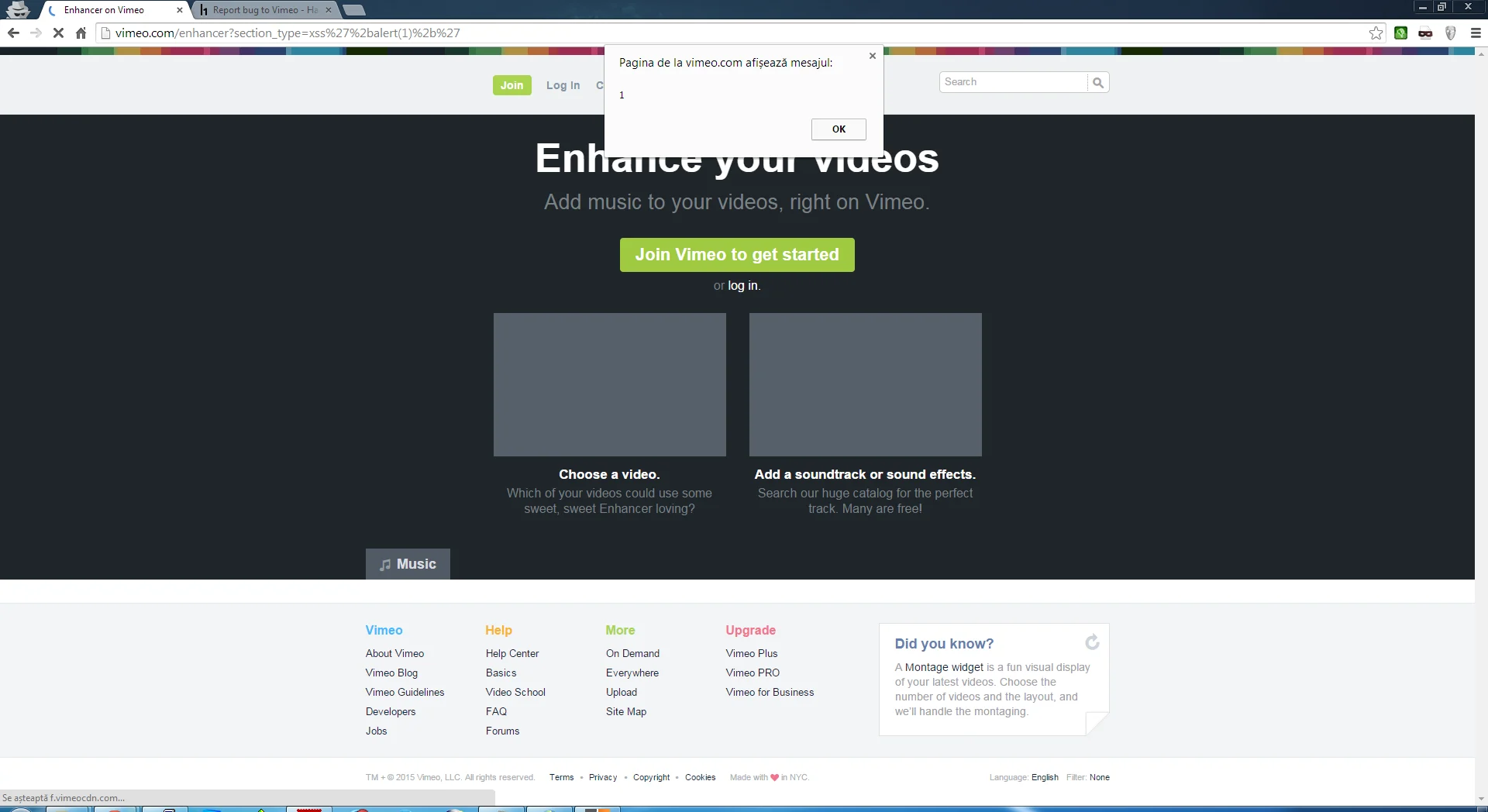
PoC Link: http://vimeo.com/enhancer?section_type=xss%27%2bprompt(1)%2b%27
Type: GET XSS
Vulnerable Parameter: section_type
Steps for reproducing this flaw: Open the PoC Link in any web browser and you will see that the value of section_tab GET parameter is inserted in the html page without being filtered. As a result, the javascript function alert() used as a payload for this PoC will be called.
Regards, Coltuneac Alexandru
Attachments
Not written yet. The AI write-up for this report has not been written yet. The Original tab links to the source.
How it worked
Root cause
Likely the application inserted the section_type parameter value into the HTML response without proper output encoding or filtering.
Impact
An attacker could execute arbitrary JavaScript in a victim's browser and potentially access cookies, session tokens, or other sensitive information, though the report does not demonstrate actual data theft.
What the attacker needed
Victim clicks a crafted link
How it was found
- Open the provided PoC link in any web browser.
- Observe that the section_type parameter value appears in the HTML page unfiltered.
- See that the JavaScript alert() payload executes.
Explained by bugbounty.wiki with AI from the original and checked against quotes from it; it can still be wrong. Read the original before relying on a detail.
Not written yet. The AI write-up for this report has not been written yet. The Original tab links to the source.
When a website takes something you type in a link and puts it directly onto the page without cleaning it first, an attacker can put their own code there. That code runs in the victim's browser as if the website itself had written it, so it can read things like login cookies. This is called reflected cross-site scripting because the malicious input is bounced back to the victim through a link.
What is XSS?
Script an attacker supplies runs in another user's browser, on the target's origin, with that user's session.